

Non Emergency Illness Treatment Options
Non-emergency illness treatment provides prompt medical evaluation for conditions that are uncomfortable but not life-threatening, according to healthcare guidelines. Urgent care centers serve as a middle ground for patients who cannot wait for a primary care appointment but do not require the critical resources of an emergency room.
This model of care addresses the gap between long-term primary management and emergency interventions. It allows patients to receive same-day opinions for symptoms that interfere with work, sleep, or family care without turning a medical visit into an all-day process.
In the Tri-Cities, this practical approach is frequently used by working adults and families to manage sudden illnesses. The goal is to secure an evaluation and start treatment faster than a standard primary care schedule allows.
What counts as non-emergency illness treatment?
Non-emergency treatment covers health problems that require a medical provider’s attention soon but do not involve immediate danger to life or limb. These conditions are often time-sensitive in a practical sense, meaning a patient may not need an ambulance but cannot wait a week for a visit.

Common examples include respiratory issues like sore throats, coughs, congestion, and sinus pressure. Providers also treat ear pain, pink eye, nausea, vomiting, mild dehydration, rashes, and minor allergic reactions.
Urinary symptoms, including burning, frequency, or pelvic discomfort, also fall into this category. These issues are treated promptly to prevent a simple infection from becoming more serious.
When should you choose urgent care over the ER?
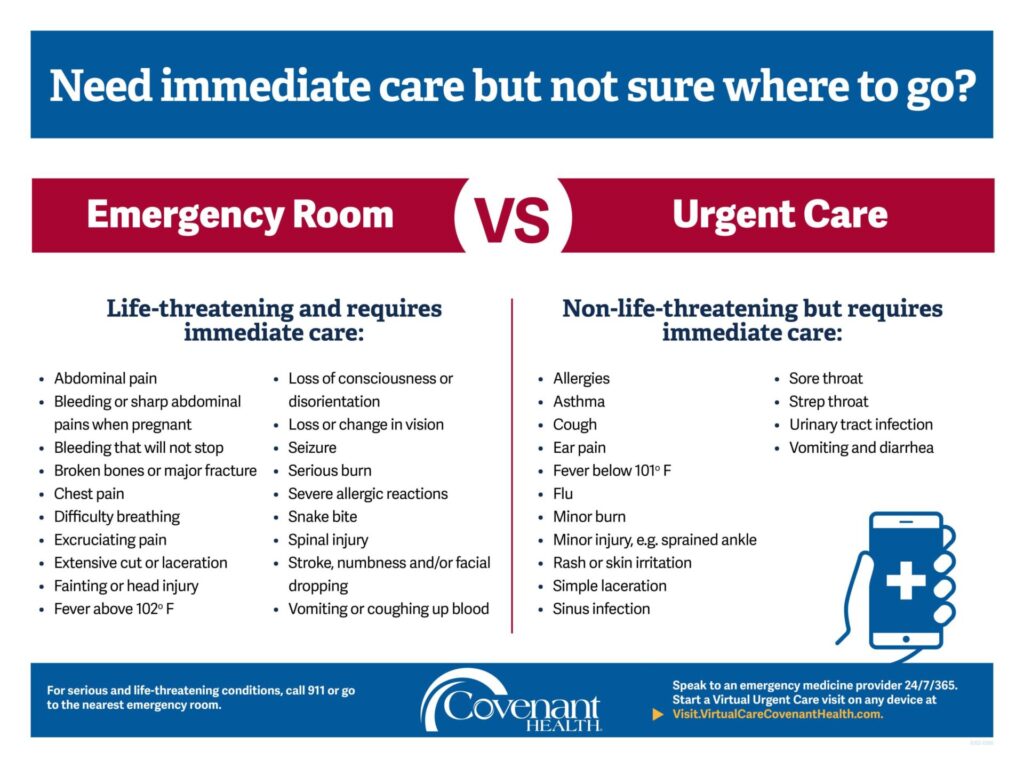
The decision depends on urgency rather than panic. Urgent care is designed for the “middle ground”—problems that are real and uncomfortable but not critical. Emergency rooms are built for chest pain, severe breathing trouble, stroke symptoms, and major trauma.

Urgent care makes sense when symptoms worsen or interfere with normal life. For adults, this may be a sinus infection that has become painful or a lingering cough with fever. For parents, it often involves children with ear pain, rashes, or sore throats before school or sports.
These clinics can perform basic in-clinic evaluations to reduce guesswork. Available testing often includes rapid strep tests, flu tests, COVID testing, and urinalysis.
What happens during an urgent care visit?
The process is designed to be straightforward. Patients walk in and provide a history of their symptoms, including how long the illness has lasted, current medications, and allergies.
Medical providers begin by recording vital signs, such as temperature and blood pressure. Following a physical examination, the provider determines if the patient requires testing, a prescription, or further follow-up care.
Outcomes vary based on the diagnosis. Some patients leave with home care instructions and warning signs to monitor, while others receive a work or school note and a treatment plan.
When does a non-emergency become an emergency?
The line between urgent and emergency care can shift if symptoms ramp up quickly. Emergency care is required immediately for fainting, seizure activity, sudden confusion, major bleeding, or severe abdominal pain.
Serious allergic reactions, specifically swelling of the lips or throat, are treated as emergencies. Similarly, trouble breathing or signs of a stroke require an ER visit.
High fever is often a gray area. A fever alone may not be an emergency, but it requires urgent medical attention if combined with a stiff neck, severe pain, dehydration, lethargy, or shortness of breath.
Why timing matters for everyday illness
Delaying treatment in hopes that symptoms will pass can turn a manageable issue into a disruptive one. For example, an untreated sore throat may lead to extra days of missed school, and dehydration from vomiting can develop faster than expected.
Early intervention may shorten the course of an illness and improve overall comfort. It also provides practical benefits, such as determining if a patient is contagious or obtaining medical clearance for work.
If a patient can breathe normally, stay awake, and keep themselves safe, urgent care is a strong first stop. If the condition feels rapidly worsening or potentially dangerous, the safest next step is to seek emergency care.
Frequently Asked Questions
What are common examples of non-emergency illnesses?
Common examples include sore throats, sinus pressure, ear pain, pink eye, coughs, congestion, nausea, vomiting, mild dehydration, rashes, minor allergic reactions, flu-like symptoms, and painful urination.
When should someone go to the ER instead of urgent care?
The ER is necessary for severe chest pain, trouble breathing, fainting, seizures, sudden confusion, stroke symptoms, major trauma, major bleeding, or severe allergic reactions involving the lips or throat.
What testing is typically available at urgent care?
Providers may recommend and perform rapid strep tests, flu tests, COVID testing, and urinalysis to narrow down the cause of an illness.
How do you decide when a symptom has moved from “annoying” to “urgent” in your own household?