
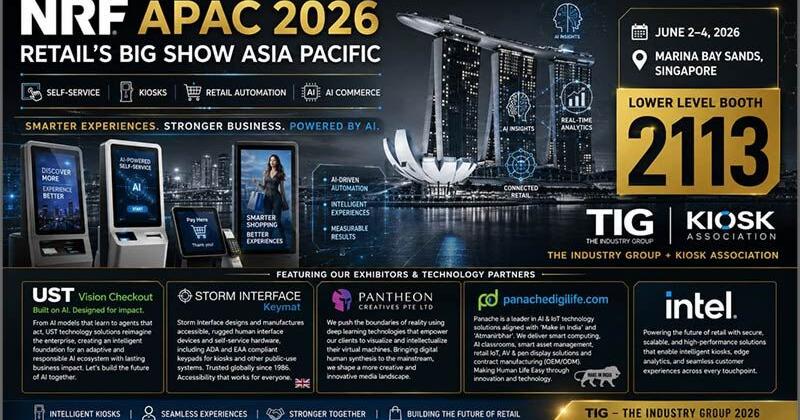
NRF Singapore 2026: Retail Automation Highlights | International
The Evolution of the Self-Service Experience: Beyond the Touchscreen
For years, the retail kiosk was little more than a glorified vending machine or a digital directory. But we are currently witnessing a fundamental shift. The industry is moving away from static interfaces toward “intelligent hubs” that can think, learn, and react in real-time.
The integration of AI agents—systems that don’t just provide information but actually execute tasks—is the new frontier. Imagine a kiosk that doesn’t just show you a product catalog but analyzes your style preferences via a quick camera scan and suggests a curated outfit, then automatically checks local inventory and reserves the items for you.
This transition from “self-service” to “assisted-service” is bridging the gap between the efficiency of e-commerce and the tactile nature of physical shopping. Retailers are no longer just trying to reduce labour costs; they are trying to enhance the customer’s emotional connection to the brand through seamless technology.
The Shift Toward Hyper-Personalization
Data is the fuel for this evolution. By leveraging edge computing and AI, kiosks can now offer hyper-personalized experiences. For instance, when a loyalty member taps their phone on a terminal, the interface can instantly pivot to show their favorite items, recent orders, and personalized discounts.
According to recent industry trends, personalized retail experiences can increase conversion rates by up to 15%. This isn’t just about convenience; it’s about making the customer feel seen and valued in a crowded marketplace.
Accessibility: The New Gold Standard in Retail Design
Inclusive design is no longer a “nice-to-have” or a legal checkbox—it is a business imperative. As global populations age and awareness of neurodiversity grows, the demand for ADA (Americans with Disabilities Act) and EAA (European Accessibility Act) compliant hardware has skyrocketed.

True accessibility goes beyond adding a braille keypad. It involves height-adjustable screens for wheelchair users, high-contrast visual modes for the visually impaired, and intuitive haptic feedback for those with sensory processing needs.
When a retailer invests in inclusive hardware, they aren’t just helping a small percentage of the population; they are improving the user experience for everyone. A screen that is easier to reach for a person in a wheelchair is also easier to use for a parent holding a child.
The Rise of Digital Humans and Immersive Retail
We are moving toward an era of “Digital Human Synthesis.” Instead of interacting with a flat menu, customers will soon engage with photorealistic AI avatars. These digital humans can mimic facial expressions, maintain eye contact, and provide a level of empathy that a standard voice assistant cannot.
This technology is particularly potent in the luxury sector. Imagine a digital concierge in a high-end boutique that can speak 50 languages fluently and provide expert styling advice based on current global fashion trends. This removes the language barrier and ensures a consistent brand voice across every global location.
Case in point: Several leading Asian markets are already experimenting with AI-driven virtual hosts to manage crowd flow and provide product demonstrations, reducing the pressure on floor staff while maintaining a high-touch feel.
IoT and the “Phygital” Storefront
The term “Phygital”—the blending of physical and digital experiences—is becoming the blueprint for modern retail. This is powered by the Internet of Things (IoT) and smart computing devices that turn the entire store into an interactive interface.
Smart shelves can notify staff when stock is low or trigger a digital display to change pricing in real-time based on demand. Meanwhile, IoT-enabled kiosks can communicate with a customer’s smartphone to guide them through the store via an augmented reality (AR) map, leading them directly to the items on their digital shopping list.
This ecosystem creates a feedback loop of data. Retailers can now see exactly where customers linger, which kiosks are most effective, and where the bottlenecks occur, allowing for data-driven store layouts that maximize sales per square foot.
For more insights on the intersection of hardware and software, explore our guide on the future of retail automation or visit Intel’s Newsroom to see the latest in processing power driving these AI models.
Frequently Asked Questions
Q: Will AI kiosks replace human retail staff?
A: Not entirely. Instead, they shift the human role from transactional tasks (like processing payments) to experiential tasks (like personalized consulting and complex problem solving).

Q: What is the most important factor in choosing a self-service kiosk?
A: Accessibility and reliability. If a kiosk is difficult to use or frequently offline, it becomes a liability rather than an asset.
Q: How does IoT actually improve the customer experience?
A: It removes friction. Whether it’s reducing wait times through smart queuing or providing instant product information via a scan, IoT makes the shopping journey faster and more intuitive.
Join the Conversation
Is your business ready for the “Next Now” of retail? Are you prioritizing AI efficiency or inclusive design in your customer journey?
Share your thoughts in the comments below or subscribe to our newsletter for weekly deep dives into the future of commerce!