
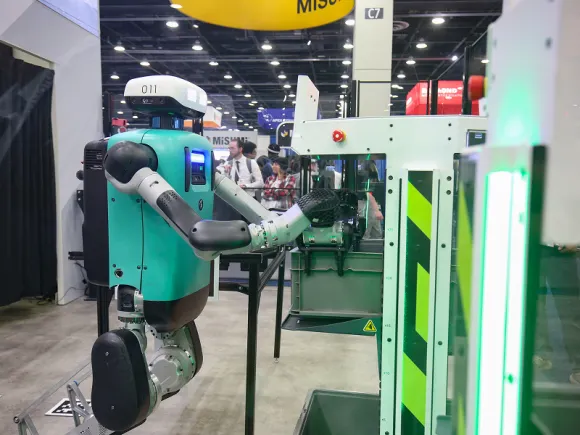
Nvidia and ABB Robotics advance partnerships, Standard Bots raises $200M
Industrial robotics is shifting toward “physical AI,” where machines learn through demonstration and human data rather than rigid coding. Major players like Nvidia, ABB, and Fanuc are integrating AI toolchains to improve robot perception and dexterity, as evidenced by new partnerships and upcoming product debuts at Automate 2026, according to company news releases.
How is physical AI changing industrial robotics?
Physical AI allows robots to perceive, reason, and act in dynamic environments. Unlike traditional automation, which follows fixed scripts, these systems use computing platforms to handle complex tasks. Nvidia is expanding its partnership with South Korea-based Doosan Group to apply this technology to industrial tasks like sanding and depalletizing, according to a company news release.
The application extends beyond the factory floor. Doosan Group plans to integrate Nvidia’s tech into its Bobcat brand equipment, aiming for higher autonomy in landscaping, construction, and agriculture.
Standard Bots uses a distinct approach to physical AI by teaching robots through demonstration. This method expands the range of automatable tasks. According to RoboStrategy CEO Andrew Kang, this positions the company to define the next generation of industrial robotics. Standard Bots reports it is on track to secure 10% of U.S. industrial robot deployments by next year.
What role does human dexterity play in future automation?
Closing the gap between human and robot dexterity is a primary goal for the next wave of automation. ABB Robotics has partnered with Psyonic, a California-based bionics firm, to use data from human prosthetic use to train robots. The collaboration combines Psyonic’s Ability Hand with ABB’s GoFa collaborative robot.
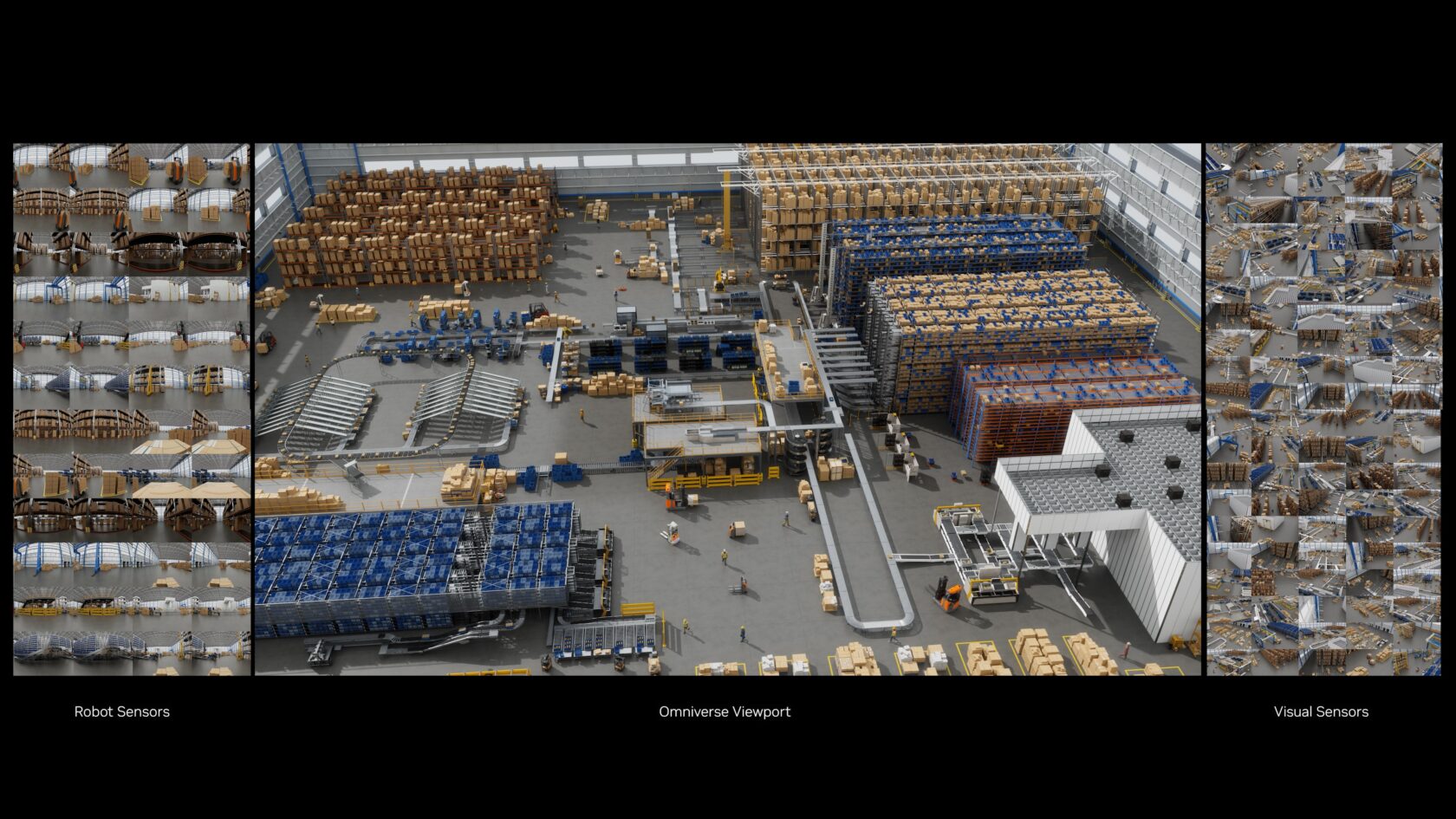
ABB Robotics President Marc Segura stated that this partnership helps robots learn and understand the world as humans do. The companies are targeting high-precision sectors, including aerospace, life sciences, automotive, and logistics.
This represents a shift in training methodology. While Standard Bots focuses on demonstration, ABB is moving toward a “physical AI toolchain.” This stack includes data generation, training, validation, and optimization to ensure industrial-grade accuracy, according to Segura.
Which companies are leading the shift to AI-driven manufacturing?
Several global leaders are debuting hardware and software designed for AI integration at Automate 2026 in Chicago. These advancements focus on payload capacity, precision welding, and cyber-secure software.
Heavy-Duty Hardware and Specialized Tasks
Kawasaki Robotics is introducing the MXP360L, an industrial arm with a 360-kilogram payload capacity. The company is also debuting the RL030N, an eight-axis robot specifically for physical AI applications, and a live weld inspection system developed with Five DyAG.
Fanuc America is focusing on specialized industrial profiles. Its CRX-3iA collaborative robot now features a vertical-up welding profile for structural steel I-beams. Fanuc is also demonstrating physical AI for real-time bolt tightening on moving engine blocks and vision-guided barcode scanning.
Software and Infrastructure
Teradyne Robotics, the parent company of Universal Robots and Mobile Industrial Robots, is showcasing its PolyScope X software. According to the company, the platform is built to be “AI-ready” and cyber-secure, specifically targeting AI data centers and electronics manufacturers.
Comparison: Approaches to Robot Learning
The industry is currently split between two primary methods of achieving physical AI:
| Approach | Primary Method | Key Example |
|---|---|---|
| Demonstration | Robots learn by mimicking human movement. | Standard Bots |
| Data-Driven/Synthetic | Use of synthetic data and bionic motion logs. | ABB / Psyonic |
Frequently Asked Questions
What is physical AI in robotics?
Physical AI is the integration of AI models into robotic hardware, allowing machines to perceive their environment and reason through tasks autonomously rather than following pre-programmed paths.
How is bionics helping industrial robots?
Companies like ABB and Psyonic use data from bionic prosthetic hands to teach industrial robots the nuances of human touch and dexterity, making it easier to automate complex gripping tasks.
What is the significance of the Automate 2026 event?
It is North America’s largest robotics and automation event, where companies like Fanuc, Kawasaki, and Teradyne debut new AI-integrated hardware and software.
Do you think physical AI will replace human oversight in precision manufacturing, or will it remain a collaborative tool? Let us know your thoughts in the comments or subscribe to our newsletter for more industry insights.