
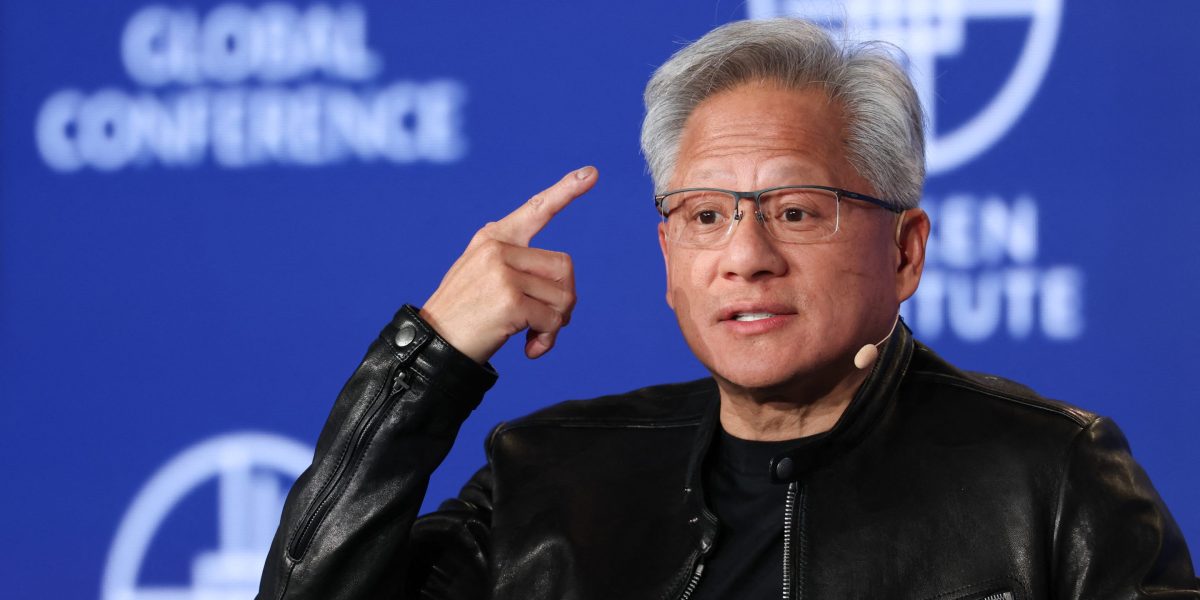
Nvidia CEO Jensen Huang: Why Arts and Humanities Still Matter in the Age of AI
Jensen Huang, CEO of Nvidia, suggests that the specific field of study for future students may no longer be the deciding factor in their success. While artificial intelligence continues to reshape the professional landscape, Huang argues that journalism, the arts and design will remain essential.
The Role of Humanities in a Technical Era
Huang believes that the core skills that historically mattered will continue to be valuable in the future. He specifically noted that storytelling will remain just as important even in a world dominated by advanced AI.
Rather than pushing children into AI-focused careers, Huang advises students to consider how technology can elevate their specific craft, learning, and purpose. This perspective is shared by other industry leaders, including Anthropic cofounders Jack Clark and Daniela Amodei.
Clark, who studied English literature and creative writing, noted that his education in history and storytelling has been essential to his work. Amodei, a literature graduate from the University of California, Santa Cruz, argues that the humanities may become more important than ever for developing critical thinking and communication skills.
China’s Divergent Educational Strategy
While tech leaders emphasize the humanities, China is taking a different approach by eliminating certain arts degrees. Authorities claim these programs are no longer justified in the AI era.

The Communication University of China in Beijing recently cut five undergraduate degrees, including fashion design, comics, new media art, visual communication design, and photography. These are no longer offered as standalone programs and are instead being integrated into technology-infused disciplines.
Liao Xiangzhong, a top official at the university, stated that photography no longer makes sense as a standalone degree because everyone can now be a self-media creator. He further characterized a four-year major in translation as a “huge waste of national resources” because the field has been largely replaced by AI.
To replace these programs, the university added degrees in intelligent audiovisual engineering, intelligent imaging art, and intelligent engineering and creative design. Similar cuts to majors like animation, broadcasting, film literature, and drama have occurred at Nanchang University, East China Normal University, and Jilin University.
Future Implications for Global Education
The tension between these two philosophies could lead to vastly different workforce capabilities. If the approach seen in China continues, more universities may likely integrate arts into technical frameworks to avoid “oversaturated” fields.

Conversely, if the view held by Huang and Anthropic leaders prevails, there may be a renewed emphasis on the humanities to fill gaps in AI’s current capabilities. This could result in a future where the most competitive professionals are those who can blend high-level STEM knowledge with advanced communication skills.
Frequently Asked Questions
What degrees did the Communication University of China eliminate?
The university cut standalone undergraduate degrees in photography, comics, visual communication design, new media art, and fashion design.
What is Jensen Huang’s educational background?
Huang studied electrical engineering as an undergraduate at Oregon State University and earned a master’s degree in electrical engineering from Stanford.
Why does Liao Xiangzhong believe translation degrees are no longer viable?
Liao stated that translation has been largely replaced by AI, making a four-year major in a specific language a waste of national resources.
Do you believe the humanities will become more or less valuable as AI continues to evolve?