
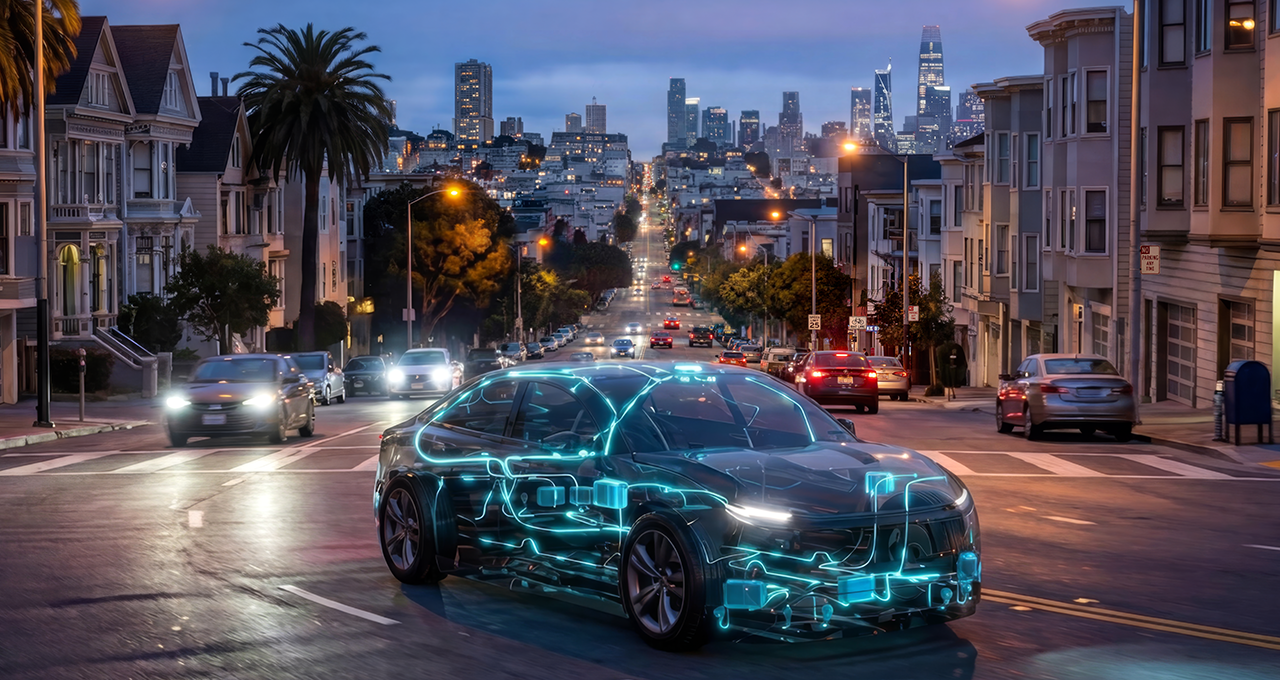
NVIDIA Halos: Building a Safe Software Foundation for Robotaxis
The global robotaxi industry is shifting from experimental prototypes to commercial-scale deployment as new partnerships integrate standardized safety architectures. According to NVIDIA, recent collaborations involving Uber, Foxconn, VinFast, and HUMAIN aim to scale level 4 autonomous vehicle operations in markets ranging from Munich to Saudi Arabia using the DRIVE Hyperion platform. This transition relies on the newly introduced Halos Operating System, which provides a safety-certified foundation designed to meet stringent regulatory requirements for autonomous public transport.
How are companies scaling robotaxi fleets globally?
Major automotive and tech firms are moving away from bespoke, one-off vehicle builds in favor of unified software foundations. NVIDIA reports that Uber and Autobrains are launching a robotaxi program in Munich, while Foxconn is deploying fleets in Taiwan using the DRIVE Hyperion platform. In Southeast Asia, VinFast is integrating the same hardware-software stack to support level 4 autonomous vehicles. Furthermore, HUMAIN is expanding this footprint into the Middle East, specifically targeting the Saudi Arabian market. These partnerships suggest a trend toward platform-based scaling, where companies rely on pre-certified technology stacks to accelerate deployment rather than building proprietary systems from scratch.
The Halos Safety Evaluation Framework (SEF) draws on more than 330 research papers and 1,000 patents to provide developers with a validated roadmap for moving from driver assistance systems to full autonomy.
What technical challenges prevent autonomous vehicles from scaling?
Regulators and developers prioritize system reliability over simple AI performance. According to NVIDIA, scaling level 4 autonomy requires solving four concurrent challenges: a safety-certifiable operating system, standardized hardware interfaces, AI that operates within verifiable guardrails, and validation at scale before vehicles enter public traffic. Industry discussions often focus on perception and decision-making, but current certification standards require proof that the system can isolate faults. The Halos OS addresses this through a hypervisor layer, which ensures that non-critical software failures cannot interfere with primary vehicle controls.
How does software standardization impact sensor integration?
Standardized middleware is replacing the manual, high-labor process of integrating individual cameras, radar, and lidar. The Halos SDK includes a sensor abstraction layer that decouples the autonomous driving stack from specific hardware drivers. NVIDIA states that this allows developers to swap or upgrade sensors without triggering a complete rebuild of the application code. This modular approach provides a deterministic scheduler for predictable timing and zero-copy communication, which moves data between processes without the latency issues that often plague high-performance autonomous systems.
Pro Tip: The Role of Explainable AI
When deploying autonomous fleets, regulators increasingly demand transparency. Look for platforms that combine rule-based safety functions with “explainable” AI models, such as the NVIDIA Alpamayo family, which allows for chain-of-thought reasoning to audit how a vehicle plans its next move in complex traffic.
Frequently Asked Questions
What is a level 4 autonomous vehicle?
A level 4 vehicle is capable of performing all driving tasks under specific conditions without human intervention, meaning it can operate safely even if the driver is not present.
Why is ISO 26262 ASIL D certification important?
This is the highest level of automotive safety integrity. It confirms that the system is engineered to minimize the risk of catastrophic failure, making it a prerequisite for many global regulatory bodies approving robotaxi operations.
How do robotaxis handle unexpected road conditions?
Robotaxis utilize “world model” perception combined with rule-based safety guardrails. These functions are designed to keep vehicle behavior within pre-defined, safe boundaries regardless of the AI’s real-time decisions.
Are you interested in the future of autonomous transit? Subscribe to our newsletter for weekly updates on the regulatory and technical shifts shaping the next generation of transportation.