
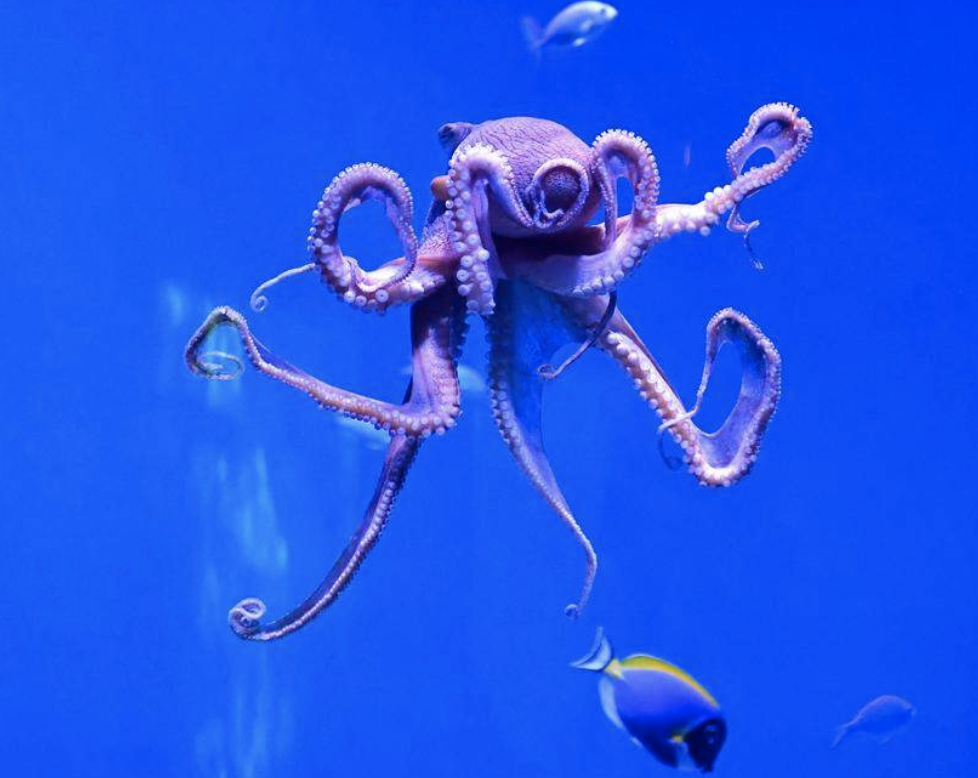
Octopuses Are Punching Lazy Fish During Team Hunts | The Transmission
The Social Cephalopod: How Octopuses are Rewriting the Rules of Animal Intelligence
For decades, the scientific consensus was clear: octopuses are the ultimate loners of the ocean. They were viewed as brilliant but isolated geniuses, spending their lives in solitary confinement within the crevices of the reef. However, recent observations in the Red Sea have shattered this narrative.
The discovery that octopuses not only cooperate with other fish species to hunt but actively “police” their partners by punching those who don’t contribute suggests a level of social complexity we previously thought impossible for invertebrates.
Beyond the Solitary Myth: A New Era of Marine Sociology
The revelation that octopuses can organise multi-species hunting groups marks a pivot in how we study animal cognition. We are moving away from studying species in isolation and toward a “network-based” understanding of marine ecosystems.
Future research is likely to focus on interspecies diplomacy. If an octopus can signal a fish to scout a crevice and then punish that fish for laziness, it implies a shared understanding of goals and expectations—a primitive form of a social contract.
This trend mirrors findings in other complex animals. For instance, researchers have long documented the symbiotic relationship between groupers and moray eels. However, the octopus’s ability to actively manage the “performance” of its partners adds a layer of leadership and management previously unseen in cephalopods.
The “Fairness” Factor: Enforcement and Social Contracts
The most startling aspect of the Red Sea research isn’t the cooperation, but the punishment. The act of punching a “slacker” fish suggests that octopuses possess a concept of reciprocity.
In the world of evolutionary biology, reciprocity is a cornerstone of advanced intelligence. When an organism can distinguish between a helpful partner and a “cheater,” it indicates a high capacity for memory and social evaluation.
As we look forward, biologists will likely investigate whether this behavior is learned or instinctive. If young octopuses learn who the “reliable” fish are through experience, it opens the door to the possibility of intergenerational knowledge transfer—the passing of social maps from one generation to the next.
Where Marine Biology Meets Artificial Intelligence
The octopus’s unique intelligence—distributed, flexible, and capable of managing external “agents” (the fish)—is becoming a blueprint for the next generation of AI. Unlike traditional centralized AI, “Swarm Intelligence” and distributed computing mimic the way an octopus manages its limbs and its environment.
We are seeing a trend where roboticists study cephalopod behavior to create autonomous underwater vehicles (AUVs) that can cooperate with other drones to map the ocean floor. The ability to “delegate” tasks to a partner and monitor their efficiency is exactly what engineers are trying to programme into multi-agent AI systems.
For more on how nature inspires technology, check out our guide on biomimicry in modern engineering.
Ethical Shifts: Redefining Sentience
As we uncover these social complexities, the legal and ethical status of cephalopods is bound to change. In several jurisdictions, including the UK, octopuses are already being recognized as sentient beings.
The evidence of social management and emotional response (such as frustration leading to a punch) strengthens the argument for stricter welfare laws. If these animals are capable of forming “partnerships” and feeling the sting of betrayal or laziness from a peer, their capacity for suffering is far greater than previously assumed.
This shift will likely lead to a complete overhaul of how cephalopods are treated in laboratory settings, moving toward a model of ethical cognitive research that prioritizes mental stimulation and social interaction.
Frequently Asked Questions
Are all octopuses social?
While many species remain solitary, the Red Sea findings suggest that social plasticity exists. It is likely that different species have varying levels of sociality depending on their environment and food sources.
Do octopuses communicate with fish using a language?
Not a language in the human sense, but they use visual cues, skin color changes, and physical gestures (like the “punch”) to communicate intent and expectations.
Why do they punch the fish?
The punching behavior is a form of negative reinforcement. It discourages “free-riding” and ensures that the fish remains focused on the cooperative goal of finding prey.
What do you think?
Does the ability to “police” partners make the octopus the smartest invertebrate in the ocean, or is this just a clever survival tactic? We want to hear your theories!
Leave a comment below or subscribe to our newsletter for more deep-dives into the mysteries of the ocean.