
Osstem Implant Showcases Digital Dentistry and Production Excellence to European Dental Experts
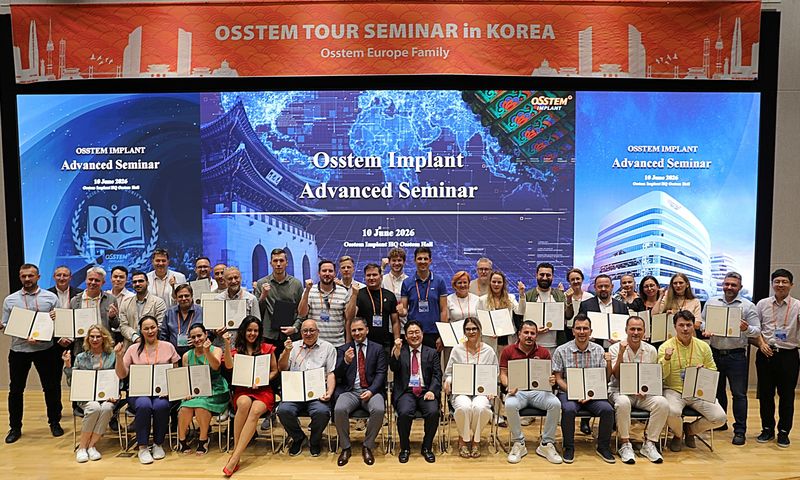
Osstem Implant recently hosted 70 dentists from nine European countries for a six-day “Osstem Europe Tour Seminar 2026,” providing an in-depth look at the company’s manufacturing standards and digital dental technology. The event, led by the firm’s Czech subsidiary, included site visits to production facilities in Busan and technical demonstrations at the company’s Seoul headquarters to bridge the gap between clinical practice and industrial production.
The manufacturing facilities visited by the European delegation in Busan maintain an annual production capacity of 20 million sets of implants, with the entire product line meeting the European Union’s Medical Device Regulation (CE MDR) standards.
Why European Clinical Standards Matter
The visit aimed to demonstrate that South Korean dental manufacturing processes align with the rigorous expectations of European practitioners. According to Osstem Implant, the tour included participants from Lithuania, Bulgaria, Poland, Estonia, Latvia, Croatia, Slovakia, Bosnia and Herzegovina, and Norway. By touring the K1 and K2 production plants, visiting dentists were able to inspect the quality control systems firsthand.
Justinas Pletkus, a dentist from Lithuania, stated that viewing the production process directly increased his confidence in the brand. Similarly, Silwia Ziura from Poland noted that the company’s research and development capabilities and digital solutions sufficiently met the high standards required by European dental professionals.
Samantha Carter notes that for international medical firms, the “factory floor” experience is a critical instrument of trust. When practitioners from highly regulated markets like Europe inspect production lines, they are looking for objective evidence of compliance—such as CE MDR certification—to validate their clinical choices. This shift toward “total solutions”—which integrate hardware like 3D printers and scanners with clinical education—suggests a transition where manufacturers move from being simple product suppliers to becoming comprehensive partners in a clinic’s digital workflow.
Future Prospects for European Market Expansion
Following the success of this tour, Osstem Implant plans to intensify its regional marketing and academic education initiatives across Europe. The company intends to leverage the clinical data and relationships fostered during the event to strengthen its position in the European market.
This initiative follows a pattern of large-scale international outreach, including the “Osstem World Meeting 2026” held in Bangkok this April, which drew 1,200 attendees from 40 countries. Jo Min-ki, head of the company’s Czech subsidiary, stated that the firm will continue to prioritize academic, clinical, and sales activities to elevate the profile of Korean implant technology in Europe. The company previously hosted 1,500 dentists from 22 countries at its Korean headquarters in 2023, indicating a consistent strategy of using face-to-face academic exchange to secure market share.
Frequently Asked Questions
Which countries participated in the 2026 European tour?
The tour included dental professionals from Lithuania, Bulgaria, Poland, Estonia, Latvia, Croatia, Slovakia, Bosnia and Herzegovina, and Norway.

What was the primary objective of the factory visits in Busan?
The visits were designed to allow European clinicians to inspect the company’s research, development, and quality control systems, specifically focusing on the CE MDR-certified production lines.
What kind of technology was demonstrated at the Seoul headquarters?
Participants engaged with digital dental equipment, including oral scanners, 3D printers, and milling machines, as well as “model dental” setups that demonstrate end-to-end clinic management, from interior design to post-treatment care.
How do you believe the integration of digital technology in manufacturing will change the way dentists choose their clinical suppliers in the coming years?