
Palo Alto San Antonio Road Plan: Balancing Office Space and Housing
Palo Alto City Council voted 6-1 to advance a “core scenario” for the San Antonio Road planning area, which includes 750,000 square feet of office and research-and-development space in the CTI subarea. According to city planning staff, this commercial hub will help fund public parks and infrastructure for a residential area featuring over 4,000 homes.
Why is the CTI subarea central to the plan?
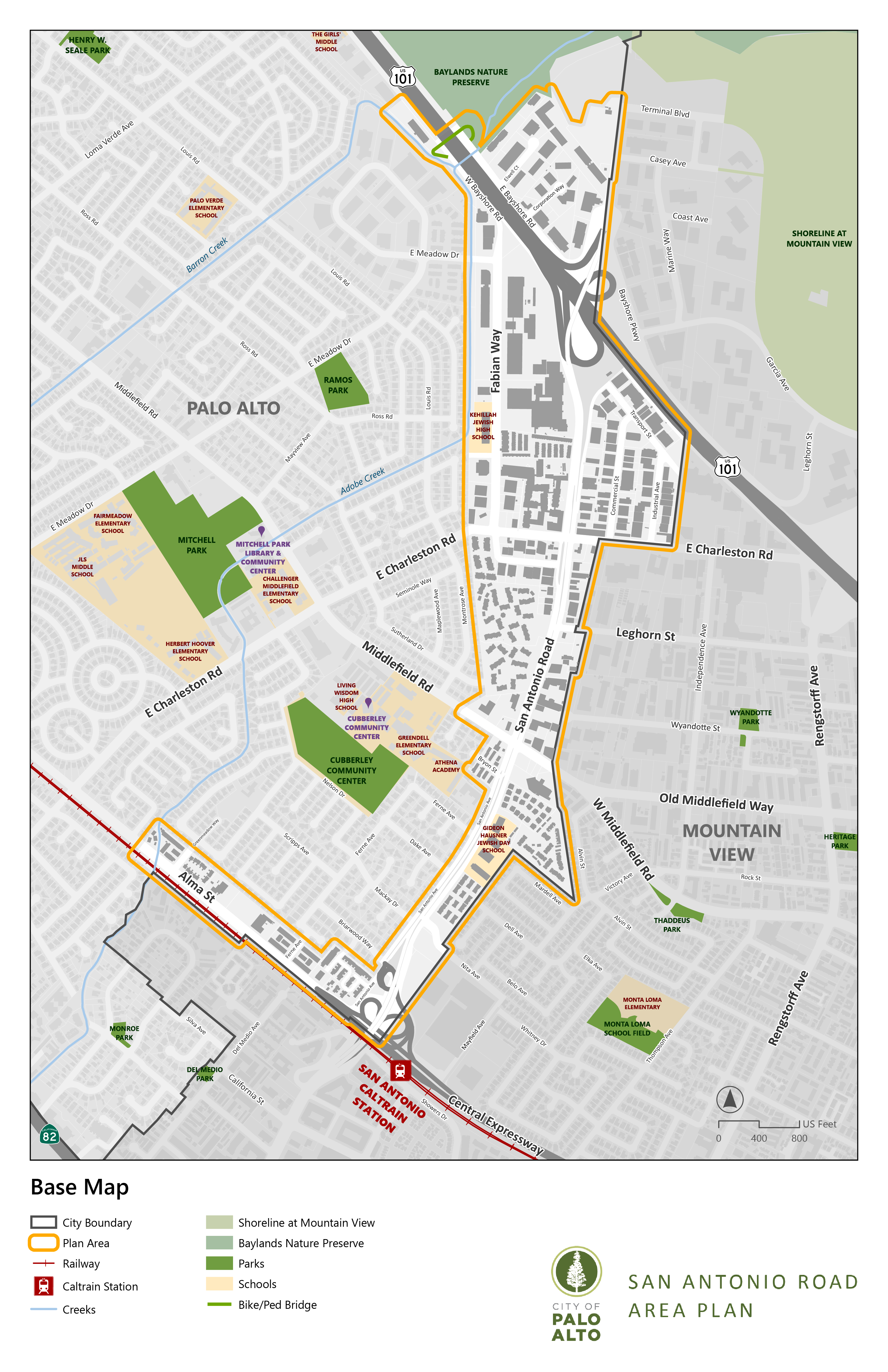
The CTI subarea—named for Commercial Street, Transport Street, and Industrial Avenue—is designated as a commercial hub where buildings may reach 90 feet. Planning Director Jonathan Lait stated that office development generates an economic return for developers. This profitability allows the city to negotiate fees to fund retail, mobility interests, and affordable housing.
A report from the Department of Planning and Development Services identified office development in this subarea as a mechanism to improve project feasibility. Staff argued that replacing current low-density buildings with a denser complex would keep employment levels steady while funding public benefits.
What are the concerns regarding the jobs-housing imbalance?
Councilmembers requested further analysis to ensure the development does not worsen the city’s historically high jobs-housing imbalance. Councilmember Keith Reckdahl, the sole dissenting vote, argued the city should prioritize housing over jobs in both the CTI subarea and the broader neighborhood.

Reckdahl rejected the strategy of relying on developer fees for community amenities. He stated the community would be better off paying for parks independently rather than allowing 4,000 jobs in a small area in exchange for “very little money.”
How does this compare to previous planning efforts?
Disagreements over commercial space have stalled prior city visions. During the planning of the northern section of the Ventura neighborhood, a stakeholder group split over proposals from consultants and staff to include commercial growth. By the time the city approved the Ventura vision in 2024, most participating residents had dropped out of the process.
Councilmember George Lu suggested that redistributing commercial space in the San Antonio Plan is reasonable. Lu noted that Class A office space is generally beneficial, particularly when located next to the freeway to reduce traffic impacts on surrounding residential neighborhoods.
What may happen next for park and infrastructure development?
City staff may need to adjust park allocations based on council feedback. The current core scenario envisions a 3- to 3.5-acre park in the North Fabian area and 1.5 acres of outdoor space in the CTI area.
Councilmember Julie Lythcott-Haims urged the city to increase these figures to align with the 4- to 5-acre standard for parks. She stated that compromises on quality-of-life amenities could make the neighborhoods on the south Palo Alto border with Mountain View feel “less than.”
Frequently Asked Questions
What is the “core scenario” for San Antonio Road?
It is a planning proposal that includes the creation of over 4,000 homes and the development of 750,000 square feet of office and R&D space in the CTI subarea.
Who opposed the plan and why?
Councilmember Keith Reckdahl voted against the scenario, arguing the city should focus on housing instead of jobs and should not depend on developer fees to fund parks.
Where is the CTI subarea located?
It is located next to U.S. Highway 101, just north of East Charleston Road and south of San Antonio Road.
Do you believe city governments should rely on developer fees to fund public parks and infrastructure?