
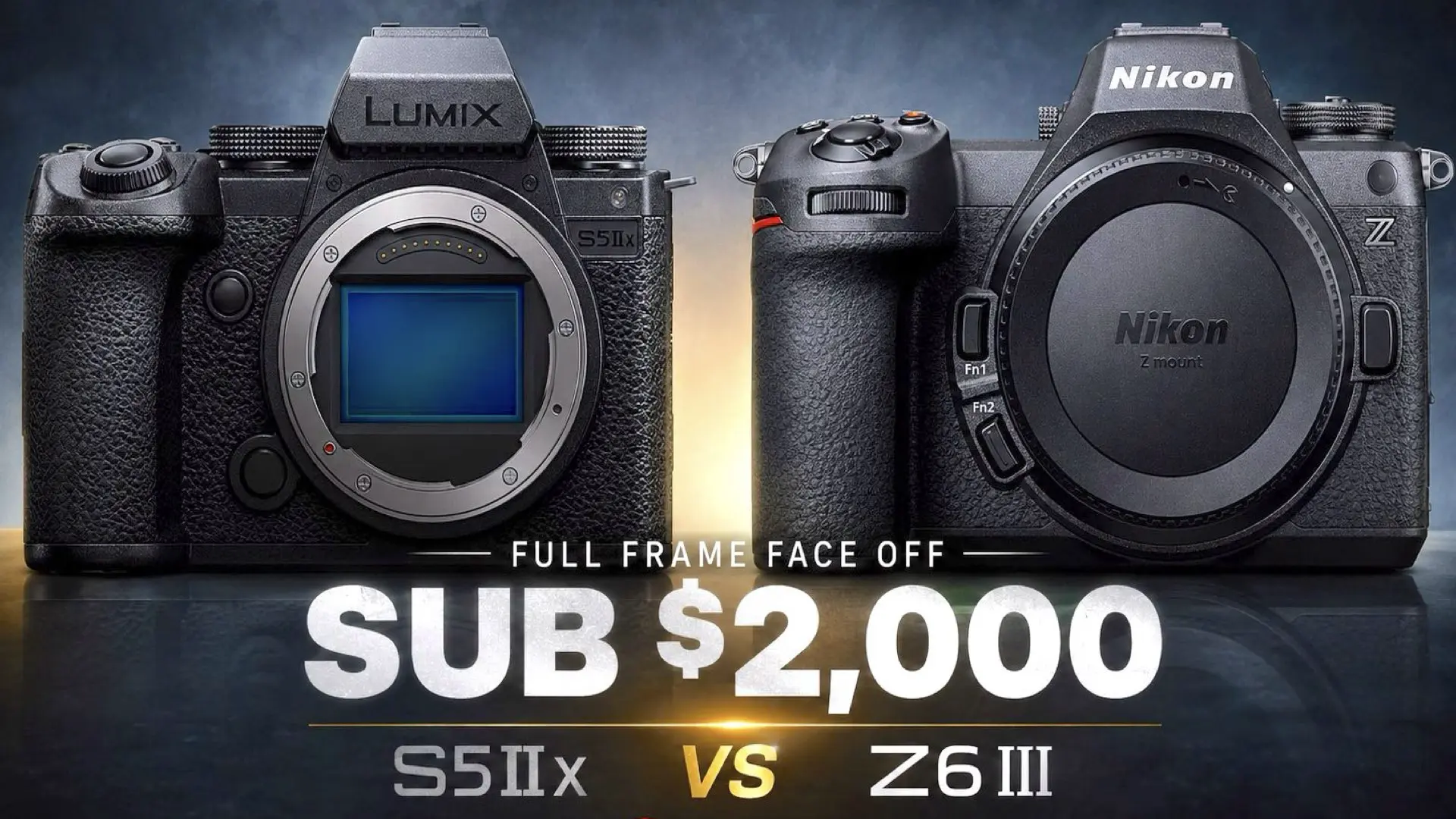
Panasonic S5IIX vs Nikon Z6 III: Cinema Workflow or Faster Sensor
The landscape for full-frame mirrorless cameras priced under $2,000 has shifted dramatically. Filmmakers and content creators are no longer forced to choose between a basic hybrid body and an expensive cinema camera.
The Panasonic LUMIX S5IIX and Nikon Z6 III have emerged as two distinct paths for professionals seeking high-end video capabilities without the cinema-tier price tag. While both produce professional images, they prioritize different aspects of the production process.
Cinema Workflow vs. Hybrid Speed
The Panasonic LUMIX S5IIX is designed as a compact cinema tool. It features a 24.2MP full-frame sensor and utilizes the L Mount system with phase hybrid autofocus and active stabilization.
Its primary appeal lies in production flexibility, offering 6K open gate recording and 10-bit internal video. It also supports ProRes recording to external USB SSDs and HDMI RAW output for Blackmagic RAW and ProRes RAW workflows.
In contrast, the Nikon Z6 III focuses on aggressive hybrid performance. It is built around a 24.5MP partially stacked CMOS sensor, which provides a faster readout than its predecessor, the Z6 II.
This sensor technology enables 6K RAW recording, 5.4K ProRes 422 HQ, and Full HD at 240 fps. The Z6 III effectively integrates flagship behaviors from the Z8 and Z9 into a more accessible body.
The Impact on Modern Production
For years, a clear divide existed between hybrid mirrorless cameras and dedicated cinema bodies. Cinema cameras offered superior cooling, codecs, and ports, while mirrorless options were often limited by overheating or recording times.
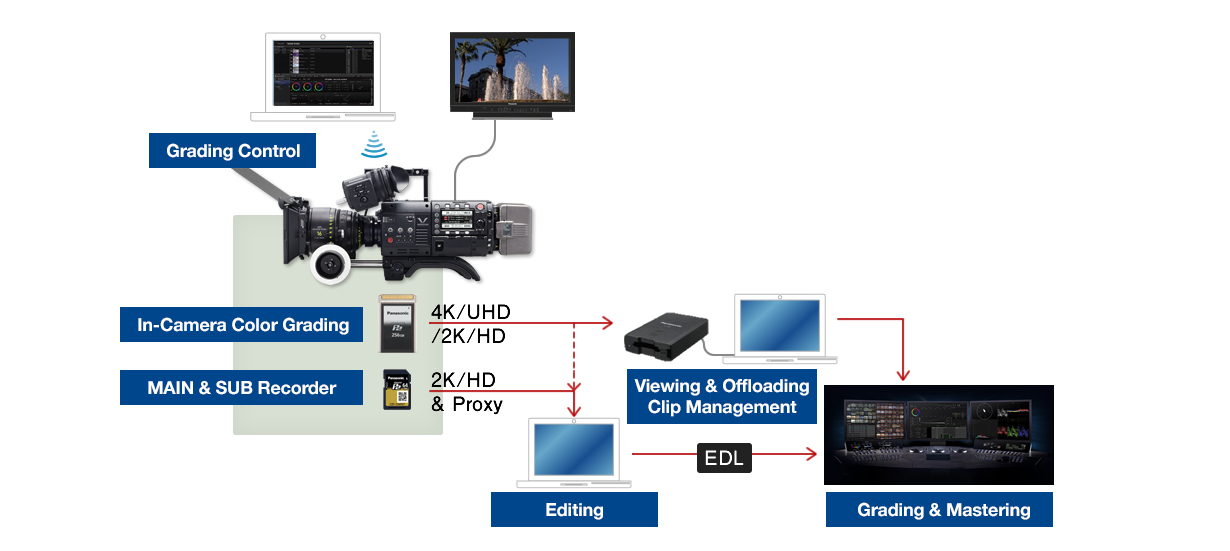
The S5IIX and Z6 III demonstrate that this wall is thinning. Advanced video infrastructure is becoming a standard expectation for documentary shooters, wedding filmmakers, and YouTubers.
The Nikon Z6 III’s faster readout reduces rolling shutter and improves autofocus responsiveness. This makes it a stronger choice for those capturing fast-moving subjects, such as in sports, wildlife, or event photography.
The Panasonic S5IIX is more natural for controlled shoots, branded content, and music videos. Its ability to record ProRes to a USB SSD transforms it into an editor-friendly tool that fits professional post-production pipelines.
Ecosystems and Future Outlook
Lens choice remains a critical factor in the decision. The Panasonic L Mount provides access to glass from Panasonic, Sigma, and Leica, offering various cinema-style options.
Nikon’s Z Mount continues to grow, offering strong native optical quality and compatibility paths for existing Nikon users.
As professional features migrate into more affordable bodies, the gap between hybrid and cinema tools may continue to shrink. Future developments could see even more flagship-level sensor technology becoming standard in the creator-priced market.
Frequently Asked Questions
Which camera is better for high-speed action?
The Nikon Z6 III is better suited for action, sports, and wildlife due to its partially stacked sensor, which allows for faster readout, reduced rolling shutter, and high-speed burst shooting.

What is “open gate” recording on the Panasonic S5IIX?
Open gate recording uses the full height of the sensor, giving filmmakers the flexibility to crop the footage into various aspect ratios for different platforms, such as TikTok, Instagram, and YouTube.
Do these cameras replace dedicated cinema cameras?
Not entirely. They still have limitations compared to larger cinema bodies regarding on-set durability, professional audio expansion, rigging, and power systems.
If you had to choose between a cinema-focused workflow and high-speed hybrid performance, which would be more critical for your current projects?