
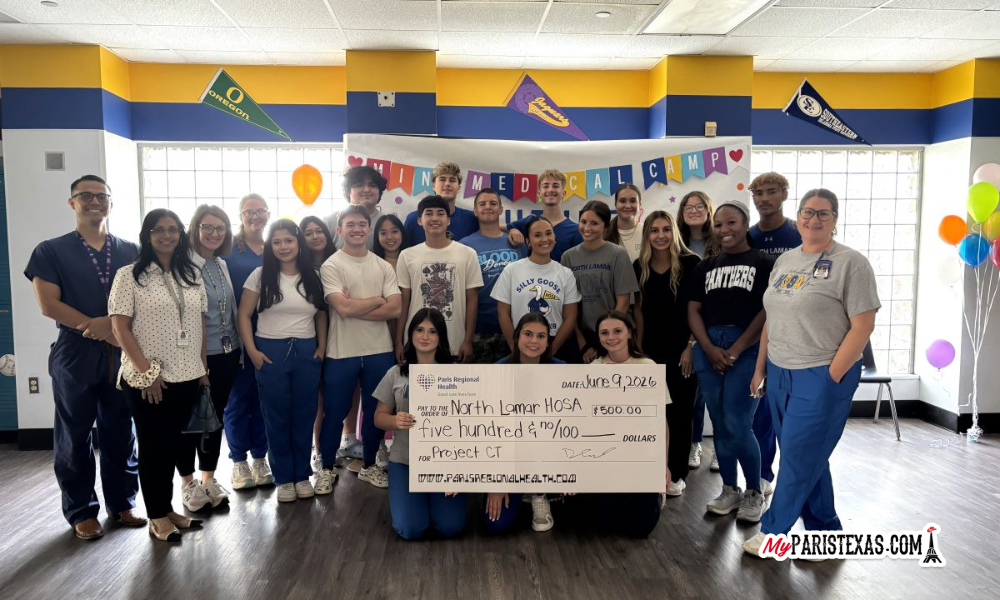
Paris Regional Health Internal Medicine Residency Program Recognizes North Lamar HOSA with $500 Award
North Lamar HOSA secured first place in a healthcare project competition hosted by the Paris Regional Health Internal Medicine Residency Program. The initiative, led by Program Director Dr. Saji Pillai, provides financial incentives and mentorship to students in Lamar County to build a sustainable local healthcare workforce.
Why are hospitals partnering with high school programs like HOSA?
Medical facilities are increasingly creating “pipelines” to combat chronic staffing shortages. By engaging students early, hospitals ensure a steady stream of local talent who are more likely to return to their home communities to practice.
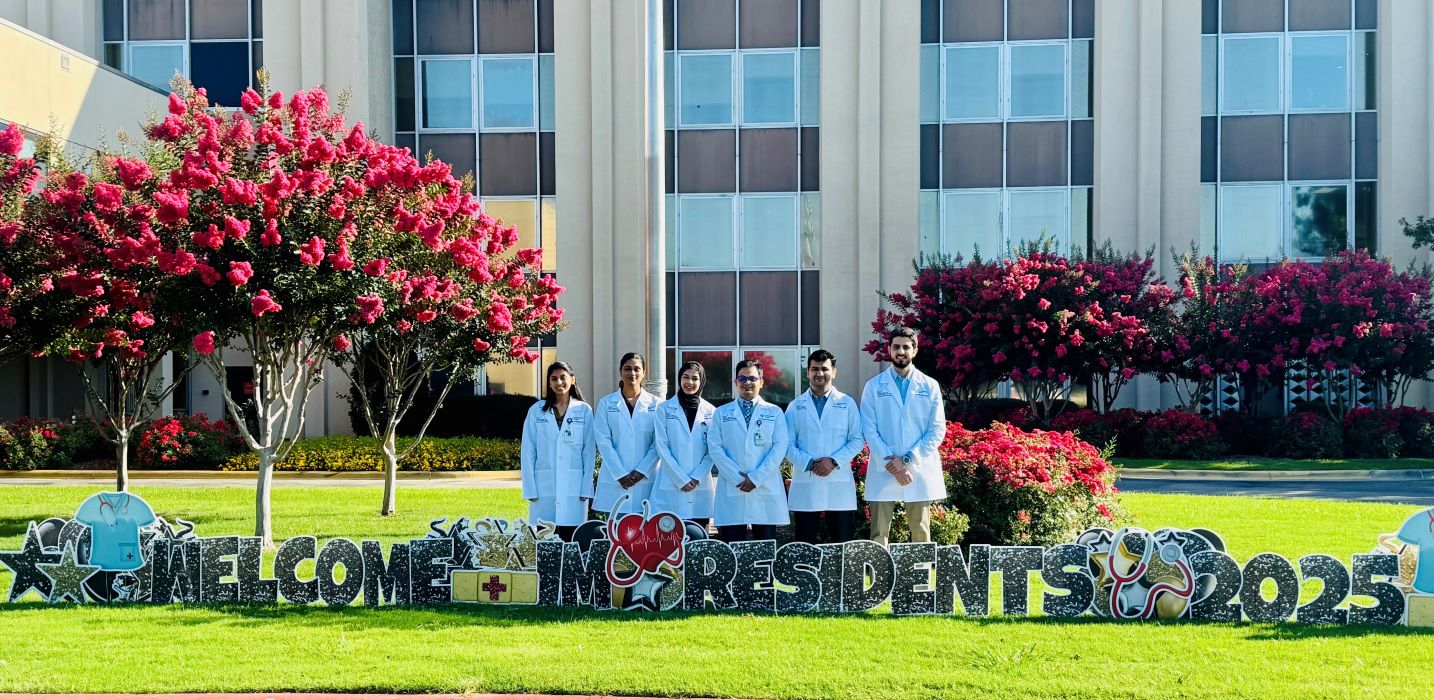
Dr. Saji Pillai stated that a primary goal of the residency program is to inspire the next generation of healthcare professionals. This strategy shifts medical recruitment from a reactive process to a proactive one. Instead of competing for graduates in a national market, programs like those at Paris Regional Health cultivate interest at the high school level.
This approach aligns with broader trends seen in Association of American Medical Colleges (AAMC) data, which emphasizes the need for regionalized recruitment to solve rural physician shortages.
How does project-based learning influence medical career paths?
The shift from rote memorization to competitive, project-based learning helps students apply theoretical knowledge to real-world clinical problems. Dr. Pillai noted that this year’s submissions from Lamar County students showed “creativity, thoughtfulness, and enthusiasm.”
When students receive tangible rewards, such as the $500 award given to North Lamar HOSA, it validates their academic efforts. This reinforcement makes the path to a medical degree feel attainable rather than abstract. It transforms a career goal into a series of achievable milestones.
Research into vocational psychology suggests that early “win” experiences in a specific field significantly increase the likelihood of a student persisting through the rigorous prerequisites of medical school.
What happens next for rural healthcare workforce development?
The collaboration between Paris Regional Health and local schools suggests a future where residency programs act as community educational hubs. We’re seeing a trend where internal medicine programs don’t just train residents, but also mentor the students who will eventually become those residents.
This creates a closed-loop system. Local students are inspired by local residents, who were inspired by local physicians. This cycle is critical for areas like Lamar County, where retaining talent is as important as attracting it.
Comparing Traditional vs. Integrated Recruitment Models
| Feature | Traditional Model | Integrated Model (Paris Regional) |
|---|---|---|
| Entry Point | Post-Medical School | High School / HOSA |
| Strategy | Competitive Hiring | Community Cultivation |
| Focus | Immediate Staffing | Long-term Workforce Stability |
Frequently Asked Questions
What is the role of a residency program in student education?
Residency programs provide the professional expertise and mentorship needed to bridge the gap between high school interest and professional medical training.
Why is North Lamar HOSA’s win significant?
Winning for two consecutive years demonstrates a sustained culture of excellence and a strong pipeline of interested healthcare students within the school.
How do these programs help the local community?
By encouraging local students to enter healthcare, the community increases its chances of having doctors and nurses who have personal ties to the area and are likely to stay long-term.
Want to see more local success stories?
Stay updated on how regional health initiatives are shaping the future of medicine in our community. Subscribe to our newsletter or leave a comment below to share your thoughts on healthcare education.