
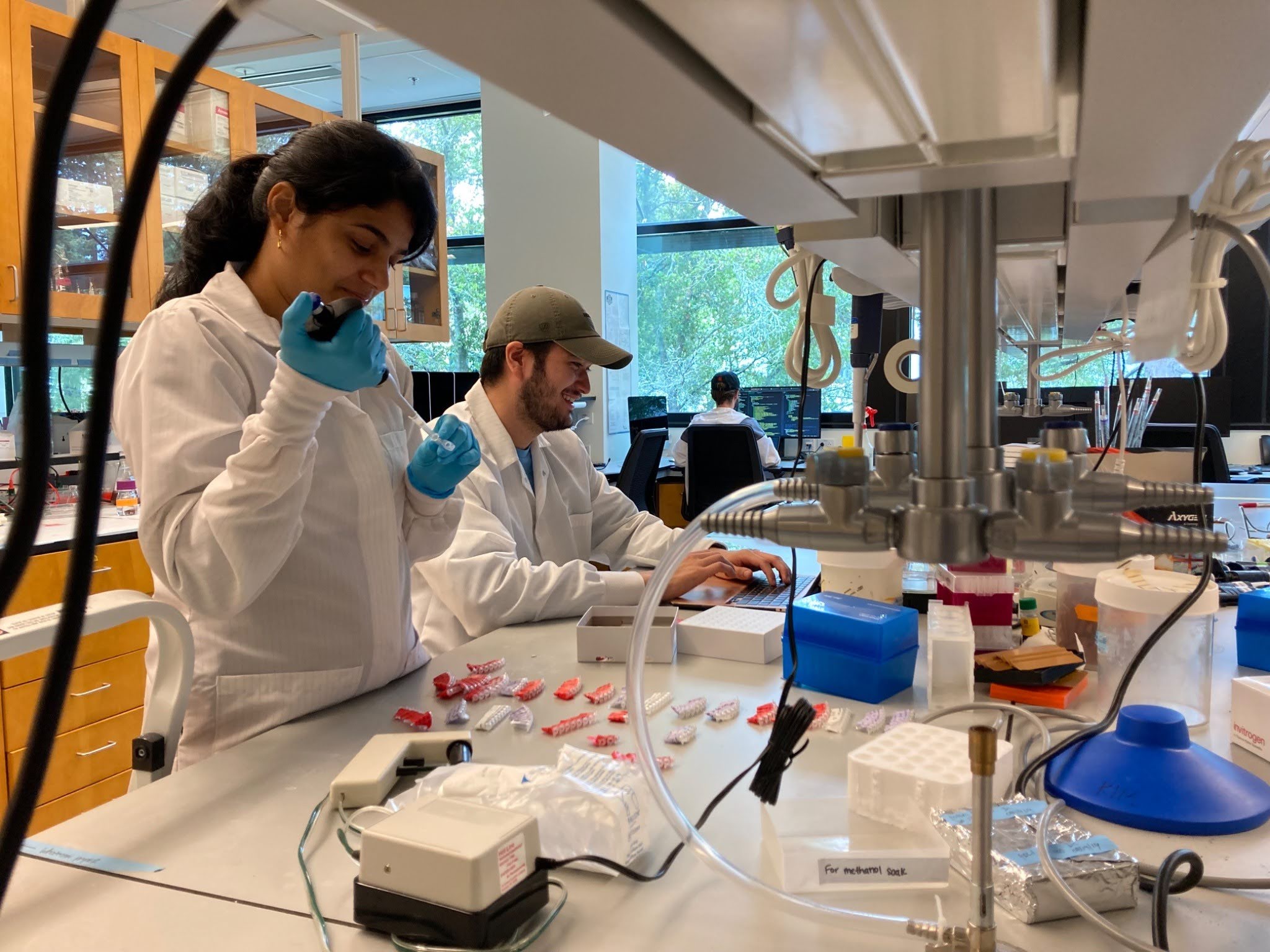
Partnership with Oxford Nanopore Technologies will support development of RNA liquid biopsy for cancer early detection
Daniel Kim, an assistant professor at the University of California, Santa Cruz, is developing an RNA liquid biopsy to detect esophageal cancer and precancerous cells via blood draws. In partnership with Oxford Nanopore Technologies, the technology uses nanopore sequencing and machine learning to identify biomarkers, aiming to improve a 22.2% five-year relative survival rate.
The research focuses on identifying cellular warning signs before patients exhibit symptoms. According to a preprint study involving Kim, Karen Miga of UC Santa Cruz, and Rebecca Fitzgerald of the University of Cambridge, the technology can detect early esophageal cancer and Barrett’s esophagus, a precancerous condition.
How does the RNA liquid biopsy detect cancer?
The technology analyzes non-coding RNA, which is genetic material that does not build proteins. This material floats in the bloodstream within extracellular vesicles and serves as a cellular messenger, according to Kim.

Kim’s team used nanopore sequencing to characterize these cell-free RNAs, discovering thousands of previously unknown cancer biomarkers. They then trained a machine learning model using these features to detect both early-stage cancer and precancerous cells.
Why is the Oxford Nanopore partnership significant?
The collaboration with Oxford Nanopore Technologies provides the sequencing tools necessary for the direct analysis of full-length cell-free RNA. This capability allows researchers to identify dysregulated pathways in both cancer and precancerous patients, Kim stated.
The Baskin School of Engineering’s Sequencing Technology Center supports this work on campus. This infrastructure builds on foundational work by Deamer and Akeson, which was later licensed and contributed to the current Oxford Nanopore technology.
What happens next for this cancer screening tool?
Kim and his research group intend to expand their work by assessing the RNA liquid biopsy on a larger patient group. This step may help advance the platform as a blood-based screening tool for individuals at a heightened risk of developing cancer.

The team is also seeking strategic partnerships with global pharmaceutical companies. Such collaborations could lead to the discovery of novel drug targets to prevent the progression from precancerous conditions to cancer, according to Kim.
In August, UC Santa Cruz will host the RNA Futures Meeting, an international conference for leaders in biotechnology and nanopore sequencing.
Frequently Asked Questions
What is the current five-year survival rate for esophageal cancer?
The five-year relative survival rate is 22.2%.
What is Barrett’s esophagus?
It is a precancerous condition that Kim’s nanopore-based RNA liquid biopsy technology can detect.
What makes this liquid biopsy approach unique?
It looks for evidence of cancer and precancer in non-coding RNA found in extracellular vesicles in the bloodstream, rather than protein-building genetic material.
How do you feel about the use of machine learning in early cancer detection?