
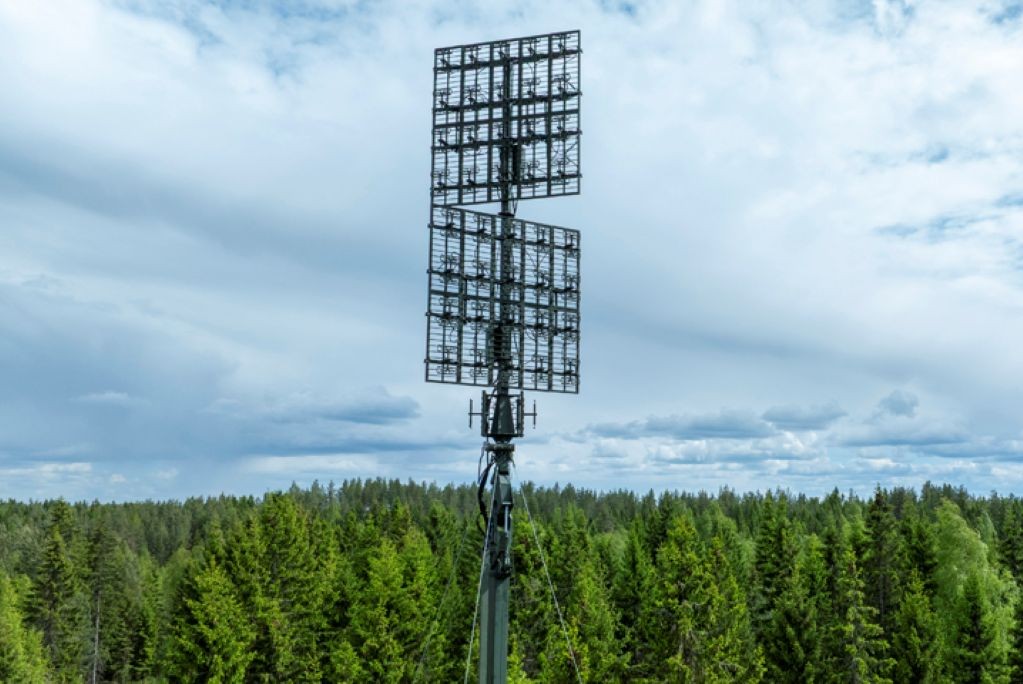
Patria launches a new passive counter-battery radar Patria WISPR at Eurosatory in Paris
Patria’s new WISPR (Weapon Indication and Sensing Passive Radar) system, unveiled at the Eurosatory exhibition, offers a counter-battery solution that detects artillery and rocket fire without emitting radio signals. According to Patria, the system utilizes Passive Coherent Location (PCL) technology to track projectiles, significantly reducing the risk of detection for military units operating in contested electromagnetic environments.
How Passive Radar Enhances Battlefield Survivability
Passive radar systems like Patria WISPR provide a tactical advantage by removing the “emitter’s signature” that traditional counter-battery radars rely upon. Mikko Leino, Executive Vice President of Patria’s Defence and Weapon Systems, states that active radars are increasingly vulnerable because the time between detection and enemy strike has shortened in modern conflicts. By using existing digital television transmitters as illumination sources, WISPR tracks incoming threats while remaining silent, according to company specifications.
Did you know? Passive radar technology does not generate its own radio pulses. Instead, it “piggybacks” on ambient signals—such as commercial broadcast or cellular traffic—to detect objects that reflect those waves.
The Shift Toward Radio Silence in Modern Warfare
Military doctrine is shifting rapidly toward low-emission operations as battlefield surveillance becomes more pervasive. According to current operational assessments, forces that emit high-power radio waves for tracking are often targeted by anti-radiation missiles or precision artillery within minutes. Patria WISPR functions as a standalone unit or a networked array, which allows commanders to maintain surveillance over 100 degrees of azimuth while keeping their primary assets hidden from electronic warfare (EW) sensors.
Comparing Passive and Active Detection Capabilities
The operational utility of WISPR is defined by its role as a “cueing sensor.” While active systems are effective for high-precision targeting, they carry the penalty of exposure. Passive systems like WISPR offer a persistent, undetectable watch, which changes the risk-reward calculation for artillery units.
| Feature | Active Radar | Patria WISPR (Passive) |
|---|---|---|
| Emission | High (Detectable) | None (Silent) |
| Primary Target | Projectile tracking | Projectiles & UAVs |
Expanding Utility: Beyond Counter-Battery Operations
Beyond its primary function in artillery detection, the WISPR system is engineered for air surveillance. This capability addresses the growing threat of highly maneuverable Unmanned Aerial Vehicles (UAVs). Because these drones often operate in radio silence, traditional radar may struggle to lock onto them. According to Patria, the passive nature of WISPR allows for the tracking of these low-observable aerial targets without alerting the operator of the drone, providing a silent layer of air defense.
Pro Tip: When evaluating sensor integration for modern defense, consider “layered sensing.” Using a passive system for initial detection allows for the activation of active systems only at the moment of engagement, maximizing the lifespan of the hardware.
Frequently Asked Questions
How does Patria WISPR detect targets without a transmitter?
The system uses Passive Coherent Location (PCL) technology. It monitors reflections from existing, non-military signals like digital television broadcasts to identify and track objects in the air.

Can WISPR be used to track drones?
Yes. According to Patria, the system is designed to track aerial targets, including highly maneuverable UAVs, even when those targets are operating in radio silence.
Is the system portable?
Patria states the system can be deployed as a single station or as a network of multiple stations, with all configurations allowing for remote control and management.
Are you interested in the latest developments in electronic warfare and sensor technology? Subscribe to our newsletter for deep-dive technical analysis delivered to your inbox, or explore our archive of defense technology reports.