

PET Microplastics Exacerbate Respiratory Inflammation and Alter Immune Responses to Allergens
Recent research has revealed that polyethylene terephthalate (PET) microplastics can persist in the lungs of mice for at least 14 days. These tiny particles do not simply remain dormant in the body but may actively influence immune responses associated with inflammation and allergic reactions.
Understanding the Impact of PET Microplastics
A study led by Michelle Epstein at the Medical University of Vienna investigated how different sizes and dosages of PET particles affect a mouse model. PET is a widely used plastic found in textiles, medical materials, packaging, and drinks bottles.
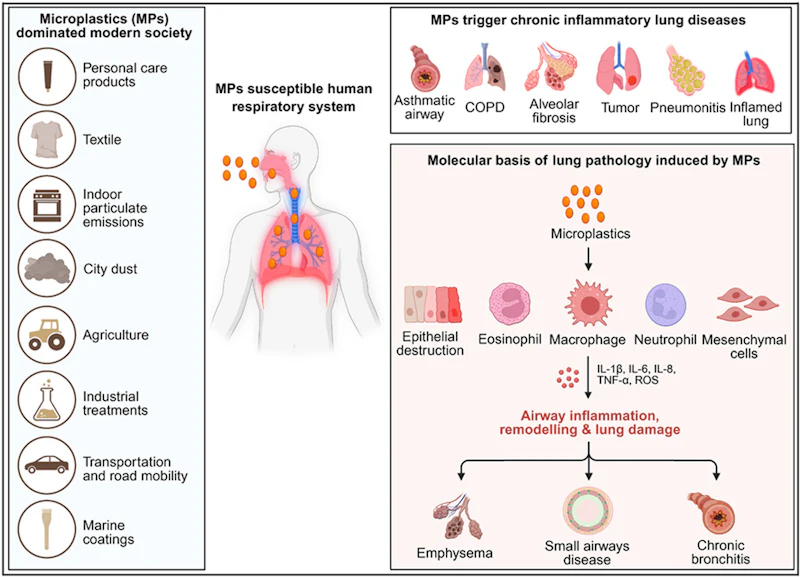
The research team found that after a single administration through the respiratory tract, the microplastics remained detectable for two weeks. During this time, the lungs showed an inflammatory response marked by the increased migration of eosinophils, and lymphocytes.
The Connection to Allergic Reactions
The study observed that when PET microplastics were combined with ragweed pollen, a common respiratory allergen, the resulting respiratory inflammation was exacerbated under certain conditions.
Further experiments involved introducing PET microplastics via the abdominal cavity alongside other allergens. This led to an altered systemic immune response, which influenced the antibody response against the allergen and worsened inflammation.
Potential Future Implications
While these findings provide critical insights into the immunological effects of microplastics, the researchers emphasize that the data comes from mouse models. Because of this, the results cannot be directly extrapolated to real-world exposure in humans.
A possible next step for the scientific community is to conduct further studies to determine the health relevance of this environmental burden. This may lead to a deeper understanding of how microplastics could interact with human immune systems over time.
Frequently Asked Questions
How long do PET microplastics remain in the lungs according to the study?
The researchers found that the particles remained detectable in the lungs of mice for at least 14 days.
What happens when PET microplastics are combined with ragweed pollen?
Under certain conditions, the combination of PET microplastics and ragweed pollen exacerbated respiratory inflammation.
Can these findings be directly applied to human health?
No, the researchers emphasize that the results were obtained in mouse models and cannot be directly extrapolated to real-world human exposure.
How do you think the increasing presence of microplastics in our environment might impact long-term public health?