
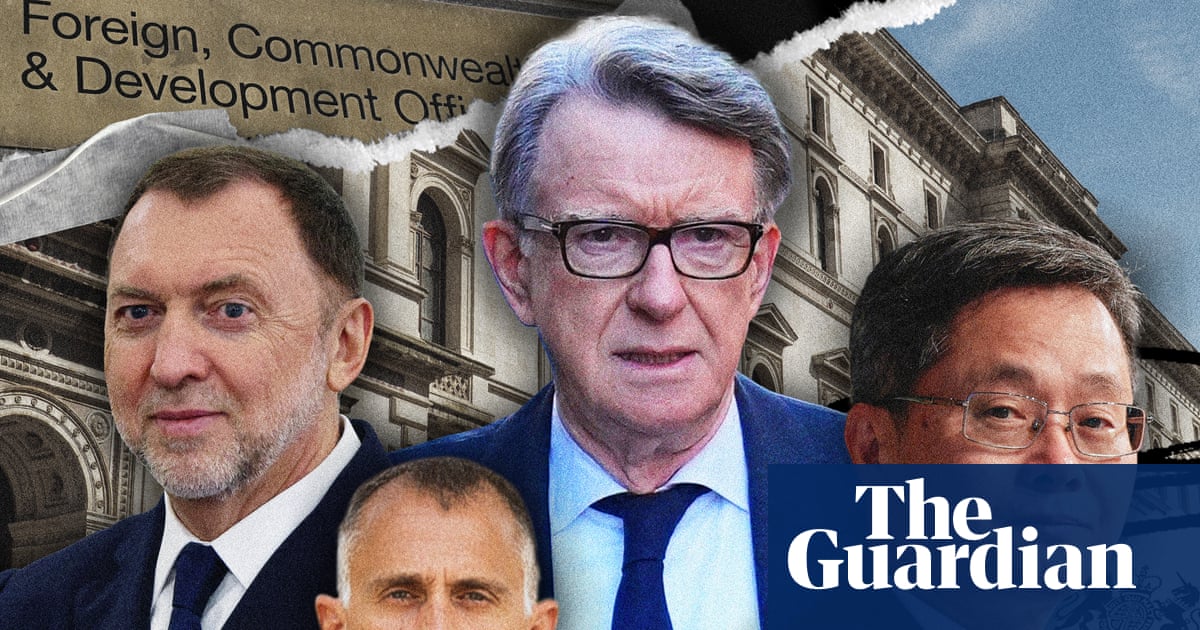
Peter Mandelson Security Vetting: Concerns Over China, Russia and Israel Ties
A significant diplomatic controversy has emerged following revelations that Peter Mandelson was granted security clearance to serve as the UK’s ambassador to the US despite a “high” risk assessment from the nation’s vetting agency.
United Kingdom Security Vetting (UKSV) concluded that Mandelson should be denied clearance, citing several areas of concern. These warnings were detailed in a nine-page summary file completed in January 2025.
Security Warnings and Overridden Decisions
The UKSV flagged Mandelson’s associations with senior figures in China, Russia, and Israel as primary concerns. The agency also noted a close relationship with a British individual that could be compromising.
Despite the recommendation to deny clearance, the then Foreign Office permanent secretary, Olly Robbins, granted the security clearance on January 29, 2025, just hours after receiving the file.
Prime Minister Keir Starmer later described it as “unforgivable” and “staggering” that he was not informed of the failed vetting. Robbins was sacked last month following the public disclosure of these events.
The Nature of the Foreign Associations
One major concern involved Mandelson’s ties to Lan Fo’an, China’s minister of finance. While the pair had not spoken for 12 months prior to the vetting process, they had previously communicated several times a year.
The agency also highlighted Mandelson’s long-term friendship with Oleg Deripaska, a sanctions-hit Russian oligarch. This relationship dates back nearly two decades and included a well-known gathering on a yacht off the coast of Corfu in 2008.
UKSV noted a relationship with Tamir Hayman, a former Israeli military intelligence general. While an INSS spokesperson described the interaction as limited, UKSV reports indicated Mandelson spoke with Hayman bimonthly.
Political Fallout and Parliamentary Conflict
The disclosures have sparked anger across the political spectrum. Emily Thornberry, chair of the foreign affairs select committee, stated the revelations made her “very angry,” while Priti Patel called the appointment “reckless.”
The government now faces accusations of a “cover-up” regarding the release of vetting documents. The intelligence and security committee (ISC) has accused the government of withholding files and applying redactions “far too broadly.”
MPs have warned that public trust is being undermined, with some suggesting that the government’s handling of the process challenges the sovereignty of parliament.
Future Implications and Next Steps
The government may face intense pressure to explain what “mitigations” were implemented to manage the risks associated with Mandelson’s foreign ties during his seven months in Washington.
A second tranche of Mandelson files is expected to be released in June. This release could potentially reveal more about the decision-making process and the specific nature of the security risks.
Ministers may also be required to clarify if any actual harm was done to national security, particularly regarding the influence of figures from hostile states.
Frequently Asked Questions
Why was Peter Mandelson’s security clearance denied by the UKSV?
The agency cited “high” overall concern due to his links to China’s finance minister Lan Fo’an, Russian oligarch Oleg Deripaska, and former Israeli intelligence general Tamir Hayman, as well as a £1m loan for an Israeli startup.
Who granted the clearance despite the warnings?
Olly Robbins, the then Foreign Office permanent secretary, granted the clearance on January 29, 2025, shortly after being briefed on the UKSV summary.
What led to Peter Mandelson’s eventual sacking in September 2025?
According to Olly Robbins, Mandelson was sacked due to issues relating to his relationship with convicted child sex offender Jeffrey Epstein.
Do you believe security vetting recommendations should be absolute, or should senior officials have the discretion to override them?