
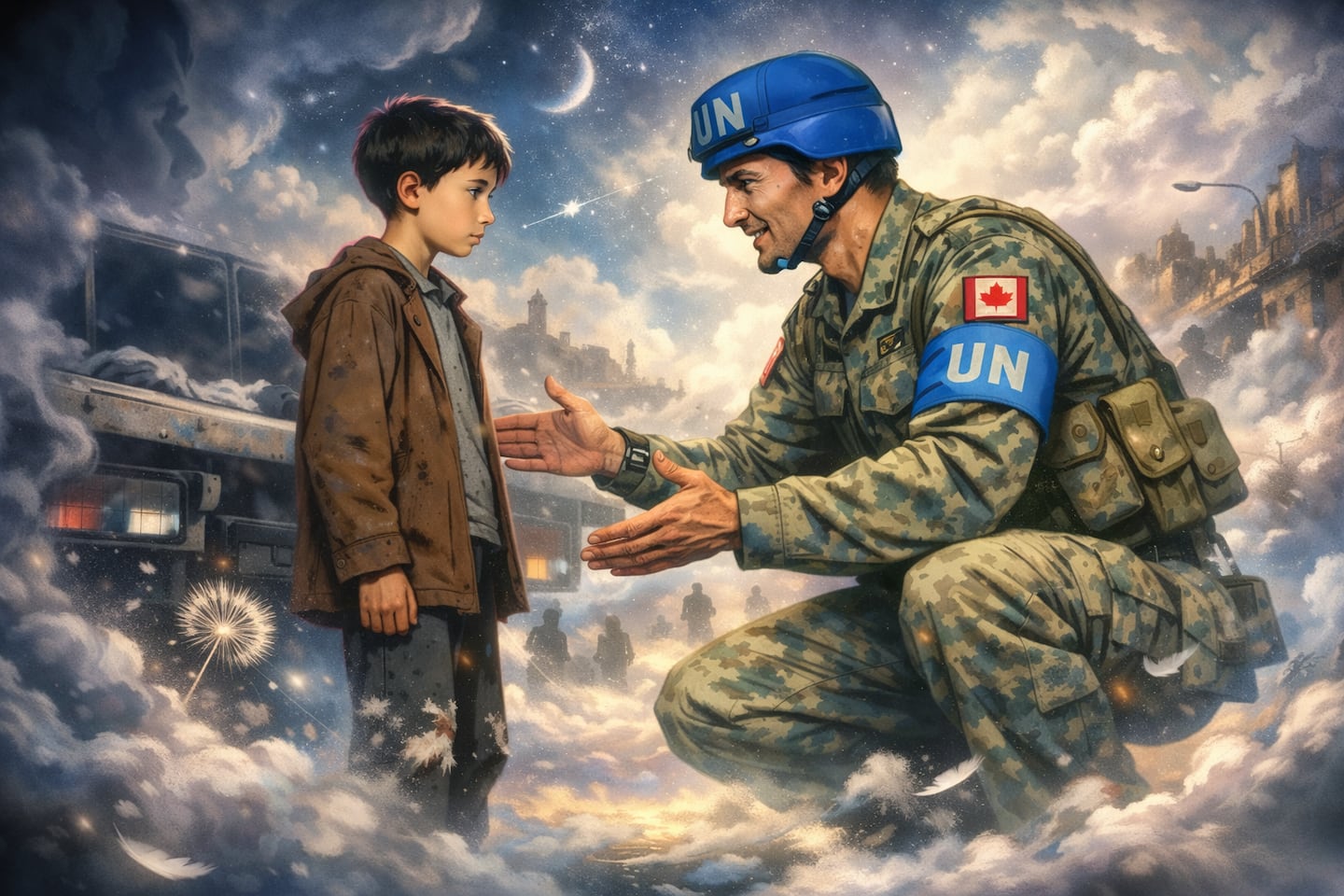
Phoenix: A Rock Opera Exploring War Trauma and PTSD
*Phoenix*, a 34-minute rock opera created by Canadians Bruce and Kenneth Callow, uses the story of a UN peacekeeper in 1993 Croatia to examine Post-Traumatic Stress Disorder (PTSD). According to psychologist Ty Ragan, the work transforms the “invisible” trauma of veterans into a collective conversation about the fragility of peace and the difficulty of reintegration.
How is multimedia art changing the approach to PTSD recovery?
The use of “rock opera” and hybrid visuals—mixing archives with generated images—marks a shift toward narrative-based healing. Ty Ragan, a psychologist and PTSD survivor, notes that *Phoenix* doesn’t just narrate trauma; it “breathes” it. This approach reflects a growing trend in therapy where music and abstract art help patients express emotions that traditional language cannot capture.
By blending memory and invention, the work creates a “dreamlike drift.” This mirrors how PTSD often functions, where the mind struggles to distinguish between past triggers and present reality. Ragan suggests that when art reflects this fragmentation, it allows viewers and survivors to confront their wounds in a shared, safe space.
What is the evolving reality for UN Peacekeepers?
The “Blue Helmet” is often viewed as a symbol of stability, but the reality is more complex. Ragan describes the peacekeeper’s role as someone who enters chaos not to defeat it, but to contain it. However, containing chaos doesn’t mean the soldier is saved from it.
The work references the failure of hope in Bosnia and Rwanda, citing Roméo Dallaire’s account in Shake Hands with the Devil. This historical precedent suggests a future trend where the “ideal” of peacekeeping is being replaced by a more honest acknowledgement of moral ambiguity. Modern conflicts in Ukraine and the Middle East continue to test this “fragile architecture of hope,” often leaving soldiers with psychological wounds that persist long after their mission ends.
The gap between official narratives and lived experience
- Official Narrative: Peacekeeping as a successful containment of violence.
- Lived Experience: A struggle with “invisible” injuries and social alienation.
- The Result: A high risk of homelessness and addiction among veterans, a reality Ragan witnessed while working in Calgary, Canada.
Why is the “return home” the most critical phase of military service?
The transition from a combat zone to civilian life is rarely a linear process. *Phoenix* frames the story of Adam, a Canadian soldier, as a “parable of the return.” Ragan argues that the return is never simple because the soldier returns as a “body traversed by the invisible.”
Future trends in veteran support are shifting toward recognizing that the war doesn’t end at the border. The impact of PTSD extends to the soldier’s family and their ability to function in a society that often prefers a “comfortable distance” from the horrors of war. Ragan’s work with homeless veterans in Calgary underscores the need for systemic support that addresses the “weathering” of the human spirit.
How do non-military nations process global trauma?
For countries like Costa Rica, which lacks a military, global conflicts can feel abstract. However, *Phoenix* aims to “tear” that distance. By bringing the story of a foreign soldier into Costa Rican classrooms and cultural spaces, such as the University of Costa Rica’s Canal 15, the work forces a confrontation with the human cost of war.
This suggests a trend toward “global empathy,” where nations without armies recognize that the consequences of war—refugees, trauma, and instability—eventually “return walking toward us.” The peace practiced by these nations is not a finished achievement but a continuous, unfinished effort.
Frequently Asked Questions
What is the rock opera “Phoenix”?
It is a 34-minute audiovisual work created by Bruce and Kenneth Callow that follows a Canadian soldier’s struggle with PTSD after a 1993 UN mission in Croatia.
What are the primary themes of the film?
The film explores the “invisible” nature of trauma, the limitations of UN peacekeeping, and the difficult psychological journey of returning to civilian life.
How does the film represent PTSD?
According to Ty Ragan, the film uses music, animation, and archival footage to create a “dreamlike” experience that mirrors the confusion and fragmentation of a mind suffering from PTSD.
Want to see the intersection of art and healing? You can view Phoenix at The Veterans Channel. We want to hear from you: Do you believe art is more effective than traditional talk therapy for trauma? Let us know in the comments below.