
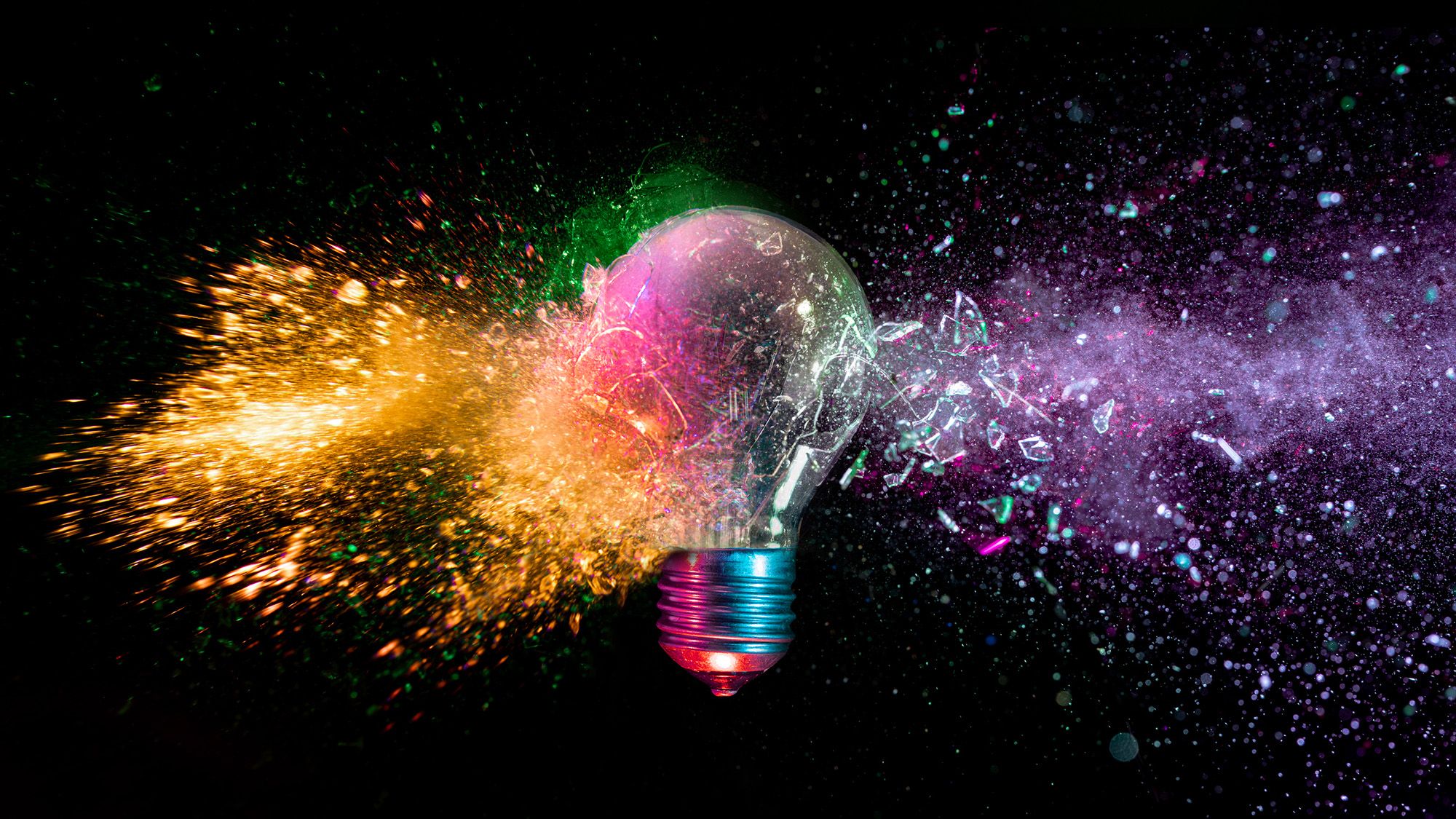
Physicists Discover the Unexpected Consequences of Splitting a Photon
Physicists have observed unexpected behavior when simulating the division of a photon, a fundamental particle of light, according to a study published in Physical Review Letters. The research, led by Johannes Skaar, a professor of theoretical physics at the University of Oslo, explored how a photon’s wave-particle duality influences its response to being “sliced” by a shutter. The findings challenge conventional understandings of particle interactions and could reshape theoretical frameworks in quantum mechanics.
The experiment involved modeling a photon passing through a shutter that closed while the photon was in transit, effectively truncating its wave. Researchers found that this process could result in a mixture of states, ranging from zero photons to an infinite number, depending on the shutter’s speed. Skaar noted that while most physicists anticipated a probabilistic split between zero and one photon, the study revealed more complex outcomes.
Quantum mechanics dictates that particles exist in probabilistic states until observed. The study’s calculations showed that cutting a photon alters these probabilities, with the number of photons potentially becoming infinite only if the shutter closes instantaneously. For practical scenarios, even a thousand photons would be highly improbable. However, measurements from different perspectives revealed paradoxical results: one side of the shutter might detect a single photon, while the other showed no photons at all.
Why This Matters
The implications of this research extend to foundational questions about the nature of particles and their interactions. Skaar and his team suggest that the ability to model photons with truncated waveforms could address unresolved issues in causality—how cause and effect are ordered in quantum systems. Current theories struggle with the infinite interactions implied by particles’ wave-like properties, but the new framework may offer a clearer way to describe these relationships.
The study also raises questions about how quantum systems are perceived from different reference points. The observed discrepancy between local and global states highlights the challenges of reconciling quantum mechanics with classical intuition. These findings could influence future research into other quantum particles, such as electrons, and may inspire new approaches to theoretical physics.
What May Happen Next
Researchers plan to explore whether similar principles apply to other quantum particles, aiming to refine models of particle interactions. While the current work focuses on theoretical calculations, further experimental validation could emerge if technology advances to test these predictions. Skaar emphasized that the team’s “ultimate goal” is to develop a framework for describing interactions with a clear causal structure, which could have broad implications for quantum theory.
However, the study’s authors caution that significant work remains to fully understand the consequences of their findings. Theoretical models will need to be tested against empirical data, and practical applications—such as those in technology or medicine—remain speculative at this stage.
Frequently Asked Questions
What is a photon? A photon is an elementary particle of light, classified as a boson. It exhibits both wave-like and particle-like properties, a phenomenon known as wave-particle duality.

What did the study find? The study found that truncating a photon’s wave through a simulated shutter could result in a complex mixture of states, including zero to infinitely many photons, depending on the shutter’s speed.
Why is this significant? The findings challenge assumptions about particle interactions and suggest new ways to model causality in quantum systems. They may lead to improved theoretical frameworks for understanding quantum mechanics.
How might these discoveries influence future research? Could they lead to practical applications in health or technology?