

Planetary Genomics: Basecamp Research Launches The Trillion Gene Atlas
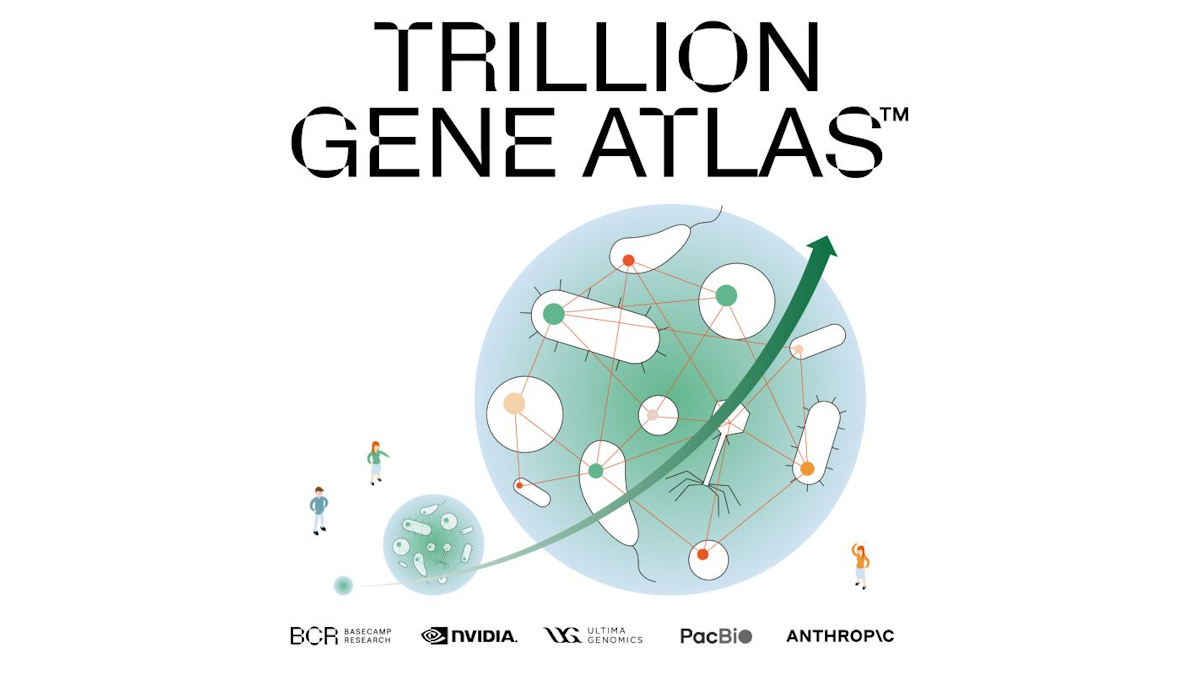
Basecamp Research launched the Trillion Gene Atlas on March 18, 2026, to expand known genetic diversity 100-fold. Collaborating with NVIDIA, Anthropic, Ultima Genomics, and PacBio, the initiative will sequence over 100 million species to enable AI-driven therapeutic design, compressing 20 years of biological data collection into less than two years.
How does the Trillion Gene Atlas solve the biological data bottleneck?
Most current biological AI models rely on public repositories containing fewer than 250 million sequences, creating what industry insiders call an evolutionary “data wall.” According to Basecamp Research, 80% of existing sequence-based foundation models are limited by this narrow slice of Earth’s biodiversity.
The Trillion Gene Atlas aims to break this bottleneck by collecting genomic data from 100 million species across thousands of global sites. This represents a 100-fold increase in known evolutionary genetic diversity. Basecamp Research’s existing EDEN models already utilize BaseData™, a proprietary database ten times larger than all public resources combined, containing 10 billion new-to-science genes.
What are the real-world medical applications of the EDEN models?
The scale of the Trillion Gene Atlas allows AI to move from simple prediction to active therapeutic design. Basecamp Research reports that its EDEN models can design therapeutics directly from a disease prompt. In wet-lab validations, EDEN showed “zero-shot activity” in primary human T-cells without requiring prior human or clinical data.
The company has already demonstrated two specific breakthroughs:
- AI-Programmable Gene Insertion (aiPGI): A method used to insert healthy genes into a patient’s genome.
- Antimicrobial Peptides: The AI achieved a 97% hit rate when designing peptides to fight priority pathogens.
Phil Lorenz, CTO of Basecamp Research, stated that biological AI performance follows steeper scaling trajectories when provided with high-quality, contextualized data rather than just larger model sizes.
Which technologies enable trillion-gene sequencing at scale?
Processing quadrillions of DNA base pairs would typically take two decades. Basecamp Research is compressing this timeline to under two years using a combination of high-throughput sequencing and accelerated computing.
Ultima Genomics provides the UG200 Series, a wafer-based sequencing architecture designed for industrial-scale, low-cost whole-genome sequencing. Gilad Almogy, CEO of Ultima Genomics, noted that the system was built specifically to provide the massive datasets BioAI requires.
PacBio contributes HiFi sequencing, which provides high-accuracy long reads. According to PacBio CEO Christian Henry, these reads preserve the full genomic context necessary for strain-level resolution in complex samples.
NVIDIA provides the compute backbone. Basecamp Research uses NVIDIA Parabricks to accelerate metagenomic assembly and CUDA-X Libraries to process unstructured data at the petabase scale.
How will AI agents like Claude integrate with biological data?
Anthropic is integrating its Claude AI with the Trillion Gene Atlas and EDEN models through the “Claude for Life Sciences” team. The goal is to create an agentic end-to-end workflow where a scientist can input complex clinical data and receive a translated therapeutic design.
This workflow combines Claude’s reasoning capabilities with EDEN’s design tools and NVIDIA’s processing power. According to the project specifications, this allows clinicians to interpret biological data and move toward a programmable therapeutic solution more systematically.
Could these tools be used for astrobiology and alien genomics?
The capability to map unknown metabolic and genomic systems on Earth serves as a prerequisite for characterizing extraterrestrial life. The ability to store and analyze data beyond current human understanding is critical for future expeditions to other worlds.
Developing “tricorder-like” technology—machine learning systems capable of scanning for signs of extraterrestrial life—depends on the same scaling laws discovered during the Trillion Gene Atlas project. By understanding the totality of Earth’s genomics, scientists prepare for the task of quantifying alien biota and understanding how they evolved compared to life on Earth.
Comparison: Public Data vs. Basecamp Research Scale
| Feature | Standard Public Repositories | Trillion Gene Atlas / BaseData™ |
|---|---|---|
| Sequence Volume | < 250 Million | Trillions of genes |
| Species Diversity | Narrow slice of life | 100 Million+ species |
| Processing Time | Decades (Traditional) | < 2 Years (AI-Accelerated) |
Frequently Asked Questions
What is the Trillion Gene Atlas?
It is a scientific initiative by Basecamp Research to collect and model genomic data from 100 million species to expand known genetic diversity 100-fold.
How does it help in medicine?
By training AI on a vast array of evolutionary data, it enables the design of new medicines “on demand,” such as antimicrobial peptides with a 97% hit rate.
Who are the primary partners in this project?
The project is a collaboration between Basecamp Research, Anthropic, Ultima Genomics, PacBio, and NVIDIA.
What is aiPGI?
AI-Programmable Gene Insertion is a capability of the EDEN models used to insert healthy genes into biological systems.
Stay Ahead of the BioAI Revolution
Do you think AI-designed medicine will replace traditional drug discovery within the decade? Share your thoughts in the comments below or subscribe to our newsletter for more deep dives into bioinformatics and astrobiology.