
Poland to Address Inequalities in Uniformed Services Pensions
The Polish pension system for uniformed services is currently under scrutiny due to significant discrepancies in how benefits are calculated for different generations of officers. These complexities stem from a fundamental split in regulations introduced during the 1999 pension reform.
A Divided System: Old vs. New Regulations
According to Dr. Tomasz Lasocki from the Warsaw University of Technology, the 1999 reform created two distinct sets of rules: one for those already in service and another for those who joined later.
Officers who entered service before the reform were granted the ability to count their civilian work experience toward their uniformed service tenure. For example, a person with 10 years of civilian office work and 10 years of uniformed service would be credited with 20 years of total experience for pension purposes.

However, this benefit came with a strict trade-off. These “older” officers are prohibited from collecting two separate pensions—one from their ministry and one from the Social Insurance Institution (ZUS)—even if they paid contributions into the general system for years.
In contrast, officers who joined after the reform are subject to entirely separate systems. Under these rules, uniformed service and civilian work are treated as distinct categories. If a newer officer meets the statutory minimums in both systems, they may be eligible to receive double benefits.
Protests and Claims of Injustice
The resulting inequality has led to widespread frustration, with both groups often feeling disadvantaged. The “older” generation of officers has been particularly vocal about the perceived loss of their civilian contributions.
“There comes a moment when a person turns 65 and finds out that years of civilian work, hundreds of thousands of zlotys in paid contributions, have simply disappeared. The state put them in its pocket and said: thank you, but we will give you nothing,” stated Waldemar Szarata, a former officer of the Government Protection Bureau (BOR).
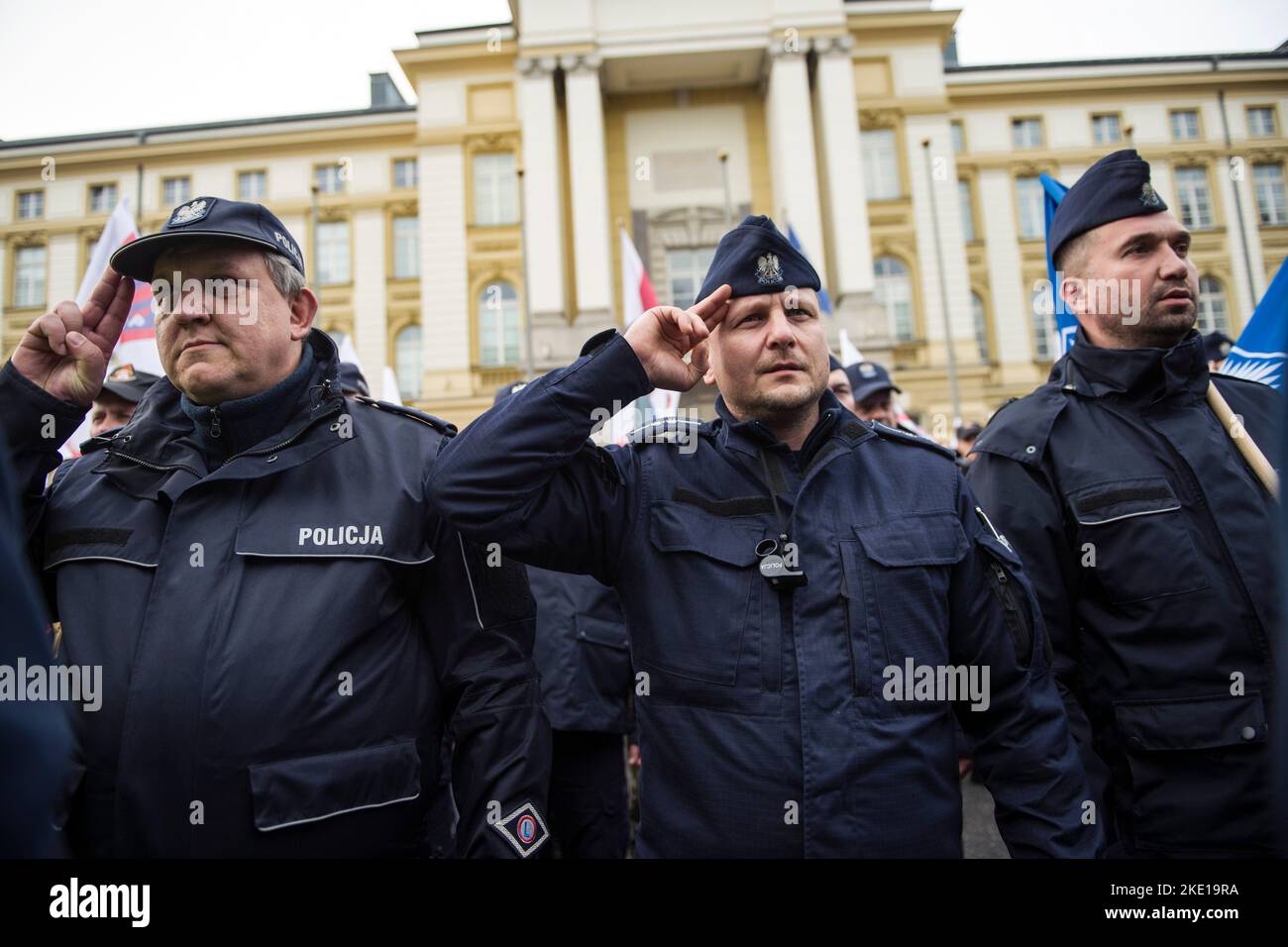
This tension culminated in mid-May with protests held outside the Chancellery of the Prime Minister. Many officers have submitted petitions to ministries and members of parliament, leading to several parliamentary interpellations.
Government Response and Potential Reforms
In response to an interpellation by Civic Coalition MP Tomasz Kostuś, the government has addressed the legality of these rules. Sebastian Gajewski, Deputy Minister of Family, Labor, and Social Policy, emphasized that the state has the authority to shape the pension system.
Gajewski noted that the Supreme Court and Constitutional Tribunal have confirmed that pension insurance contributions are public-law in nature rather than private-law, meaning they are not personal savings accounts.
Despite this legal stance, the government is exploring an “optimal solution.” An inter-ministerial collaboration involving the Ministry of Family, Labor, and Social Policy (MRPiPS), the Ministry of National Defence (MON), and the Ministry of Interior and Administration (MSWiA) has been established.
Next Steps for Reform
The government is currently analysing a variant to modify the basic regulations regarding the convergence of benefits, specifically targeting Article 95 of the pension law. This proposed change would apply to all individuals who entered service before January 2, 1999.
Further concrete solutions may be developed in coordination with ZUS and the Chancellery of the Prime Minister. However, any change to the rules for collecting both a general and a uniformed pension could require increased subsidies from the state budget to the Social Insurance Fund (FUS).
any final proposal would likely require a positive stance from the Minister of Finance and Economy. Current efforts are focused on determining the number of affected individuals and estimating the total costs involved.
Frequently Asked Questions
What is the primary difference between “old” and “new” uniformed pensions?
Officers who joined before 1999 can count civilian work toward their uniformed service tenure but cannot receive two pensions. Those who joined after 1999 have separate systems for civilian and uniformed work, allowing them to potentially receive both pensions if they meet the requirements.
Why do some officers feel they have lost their money?
Older officers argue that contributions paid into the general ZUS system during civilian employment are essentially forfeited because they are barred from collecting a second pension upon reaching age 65.
What specific law is the government considering modifying?
The government is analysing modifications to Article 95 of the pension law, as well as related regulations within the provision system for those who entered service before January 2, 1999.
Do you believe pension systems should prioritize uniform rules for all employees or maintain specific privileges for uniformed services?