

Polaroid Flip: Embracing Analog Life in a Digital World
Polaroid launched “The Camera for an Analog Life” campaign to promote the Polaroid Flip, placing provocative advertisements outside Apple and Google offices in New York and London. According to Brand and Creative Director Patricia Varella, the initiative targets Gen Z consumers by contrasting physical, sensory experiences with the digital saturation of AI and screens.
Why did Polaroid place ads outside Apple and Google offices?
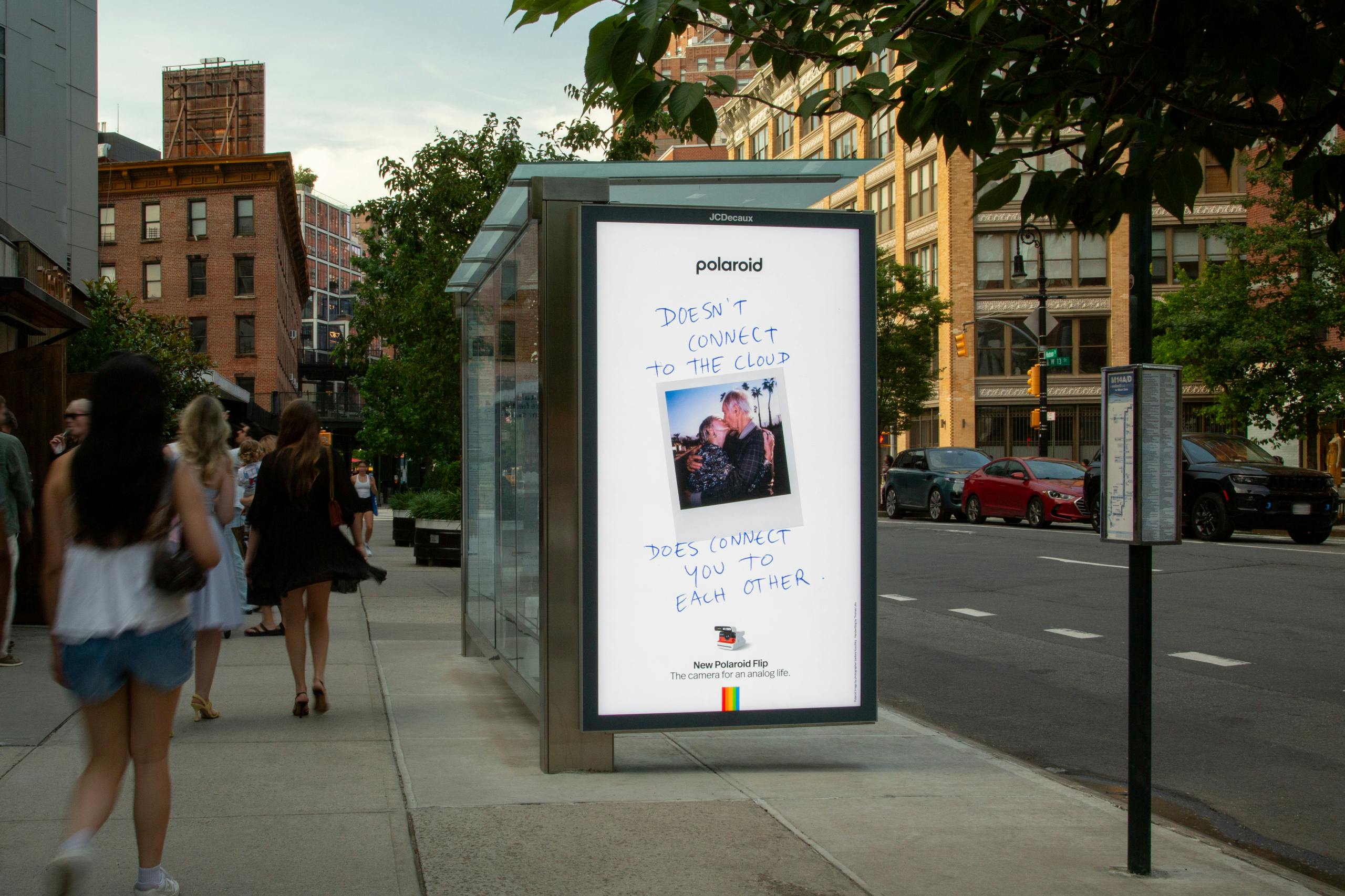
Polaroid positioned its campaign directly in front of the world’s largest tech hubs to highlight the polarization between analog photography and digital interfaces. The campaign uses handwritten-style copy to challenge the dominance of pixels and AI. One specific advertisement in New York reads: “No one on their deathbed ever said: I wish I’d spent more time on my phone.”
This placement serves as a direct critique of the “perfection” pursued by digital brands over the last decade. While tech giants emphasize high production values and digital retouching, Polaroid is pivoting toward the “imperfect” and the tangible. By targeting the physical locations of Google and Apple, the brand creates a visual confrontation between the ephemeral nature of a “Story” or “Reel” and the permanence of a printed photograph.
How is the “Analog Life” trend manifesting in real-world events?
The campaign extends beyond billboards into experiential marketing through phone-free photography tours. Polaroid organized these events in Paris and Tokyo, with a third tour scheduled for London on August 19. Participants spend one hour exploring the city with a Polaroid Flip camera while leaving their smartphones behind.

The experience concludes with a physical action: participants send a printed photo through the mail as a postcard. This process reinforces the campaign’s core message that the “best of life happens in the real, physical world,” a sentiment explicitly stated by Patricia Varella.
What is driving the shift from digital perfection to raw imagery?
For more than ten years, global branding trends leaned toward calculated frames and flawless digital editing. However, consumer preferences are shifting toward authenticity. According to the campaign’s framework, there is a growing demand for “wrong” lighting, real people, and moments that feel stolen rather than staged.
This shift represents a move away from the “calculated” aesthetic of the 2010s. Polaroid is leveraging this by positioning the Polaroid Flip not just as a tool, but as a rebellion against the digital norm. This mirrors a wider trend in analog revivalism where the value of a product is tied to its physical limitations rather than its digital capabilities.
Analog vs. Digital: The Core Contrast
The campaign frames the conflict through a series of direct oppositions:
- Printed Paper vs. Pixels
- Physical Moments vs. Stories and Reels
- Sensory Connection vs. AI Interfaces
- Tangible Prints vs. Cloud Storage
Frequently Asked Questions
What is the Polaroid Flip?
The Polaroid Flip is the new instant camera launched as part of “The Camera for an Analog Life” campaign.
Who is the primary target audience for this campaign?
The campaign specifically targets Gen Z, a generation rediscovering film and analog media as a response to digital fatigue.
Where can the “Analog Life” advertisements be seen?
The ads are currently displayed outside Apple Stores and Google offices in New York and London.
Do you think the world is moving back to analog, or is this just a nostalgic trend? Share your thoughts in the comments below or subscribe to our newsletter for more insights on consumer behavior.