
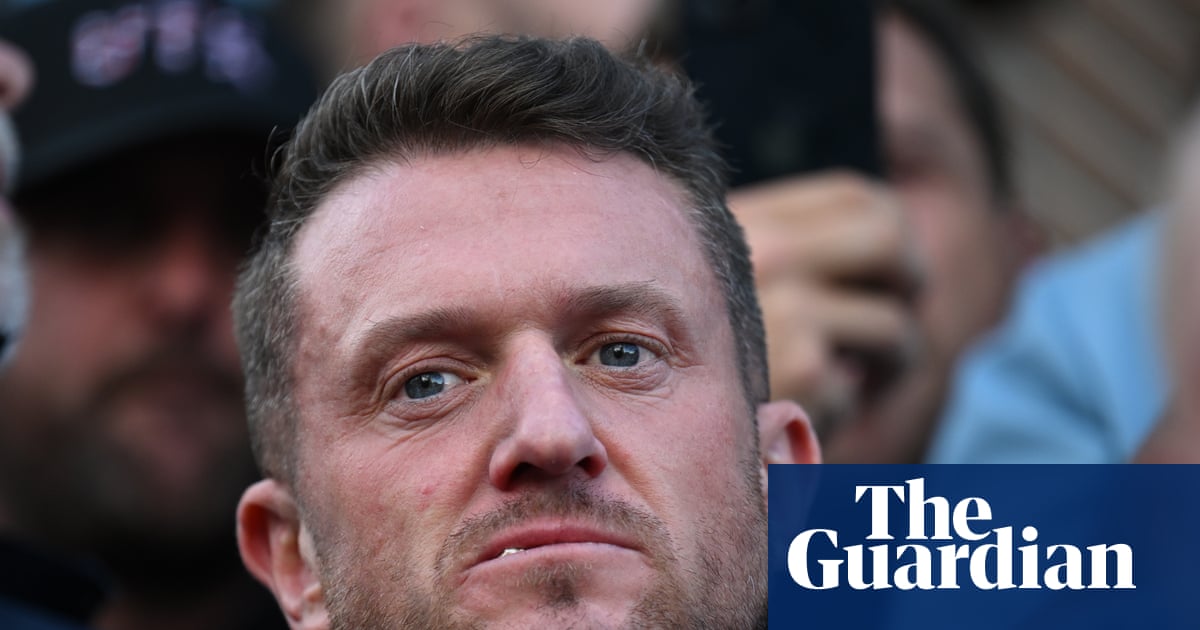
Police Seize Tommy Robinson’s Phones After Trip to Russia
Metropolitan Police seized communication devices from far-right activist Tommy Robinson at Heathrow Airport on June 13 following his return from Russia. Officers acted under Schedule 3 of the Counter-Terrorism and Border Security Act 2019, a law targeting individuals suspected of engaging in hostile activity on behalf of foreign states, according to a police spokesperson.
Why did police stop Tommy Robinson at Heathrow?
Officers stopped Robinson, whose legal name is Stephen Yaxley-Lennon, at approximately 17:00 on Saturday, June 13. He had just arrived at Heathrow Airport on a flight from Russia via Turkey. A Metropolitan Police spokesperson confirmed that Robinson was interviewed and his phones were seized before he was released.
The seizure occurred after Robinson spent time in Moscow, where he met with the father of Elon Musk. During this trip, Robinson told the Guardian that he visited Russia to see the “beauty of a civilised society” and argued that the narrative of Russia being Britain’s enemy has “died a natural death.”
What is Schedule 3 of the Counter-Terrorism and Border Security Act 2019?
According to a Home Office code of practice, Schedule 3 allows authorities to intervene when a person is suspected of being “engaged in hostile activity.” This applies if the individual is involved in the preparation or instigation of an act carried out for, or in the interests of, a state other than the United Kingdom.

The law is broad. It does not require the individual to have known they were acting on behalf of a foreign power. The Metropolitan Police indicated that Robinson’s devices will be sent for examination to determine if any such activity took place.
How does this relate to Russian hybrid warfare?
The Royal United Services Institute (RUSI), a London-based thinktank, describes Russia as one of the most prolific actors in “hybrid campaigns” designed to influence foreign politics. These operations typically blend cyber-attacks with online influence to create real-world “offline effects.”
RUSI specifically noted that events like the recent knife attack in Belfast have “incendiary potential” that Moscow may seek to harness. While in Russia, social media accounts linked to Robinson called for protests following that Belfast attack. This creates a direct contrast between Robinson’s portrayal of Russia as a “civilised society” and the UK’s classification of Russia as a hostile state.
What are the potential consequences of these seizures?
Robinson has used social media to frame the incident as state persecution of his political beliefs. He stated he was held for three hours and is now seeking donations from supporters to cover legal costs.
However, the Guardian reports that the examination of the seized phones could reveal the nature of the coordination between Robinson and Russian entities. If evidence emerges that Robinson’s calls for protests were coordinated with foreign state actors, it could lead to further legal action under national security legislation.
Comparison: Differing Perspectives on Russia
| Source | View of Russia | Primary Concern |
|---|---|---|
| Tommy Robinson | “Civilised society” | State persecution of beliefs |
| RUSI / UK Gov | Hostile state | Hybrid influence campaigns |
Frequently Asked Questions
Who is Tommy Robinson?
Tommy Robinson, born Stephen Yaxley-Lennon, is described by the monitoring group Hope Not Hate as the “best-known far-right extremist in Britain.”
Why were his phones seized?
The Metropolitan Police seized the devices under the Counter-Terrorism and Border Security Act 2019 to investigate potential hostile activity on behalf of a foreign state following his trip to Russia.
Is Russia considered a threat to the UK?
Yes. UK defense officials have expressed fears that the regime in Russia may stage an attack as early as 2030, and the state is officially regarded as hostile.