
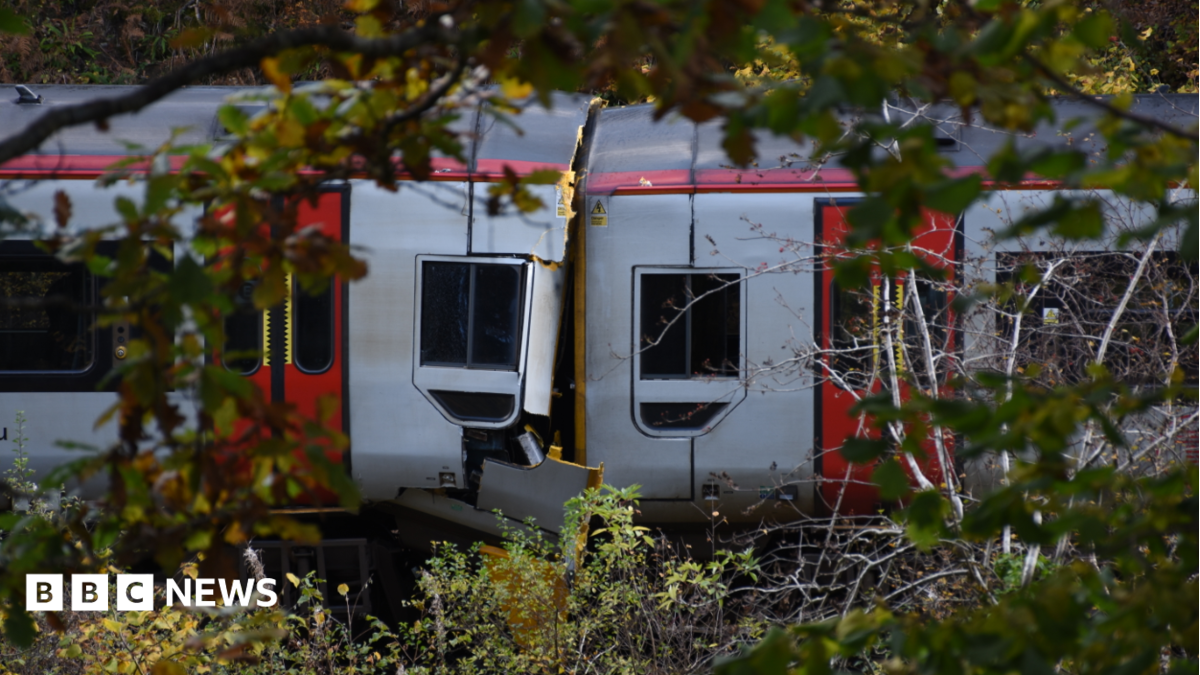
Powys train crash that killed one and injured four could have been avoided
The Rail Accident Investigation Branch (RAIB) has issued nine recommendations following a head-on train collision near Talerddig, attributing the incident in part to “damp railhead conditions.” Investigators found that rain and leaves reduced adhesion between wheels and tracks, leading to recommendations for improved driver training and sanding system designs.
How did rail conditions contribute to the collision?
RAIB investigators determined that rain earlier in the evening likely caused damp railhead conditions. According to the RAIB, this moisture, combined with factors such as leaves from nearby trees, can reduce the adhesion between train wheels and the tracks.
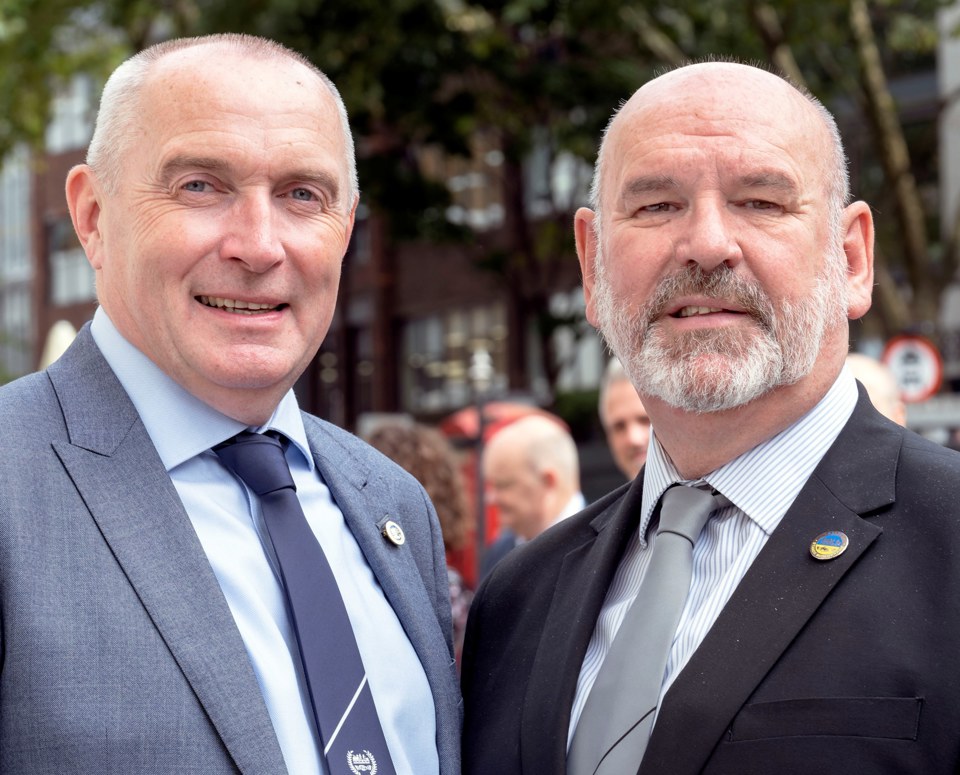
Dave Calfe, general secretary of the train drivers’ union ASLEF, stated that drivers were instructed not to deploy sanders over points. Calfe claimed that even if those sanders had been deployed, the train probably would not have stopped in time.
What safety changes does the RAIB recommend?
The RAIB proposed nine specific recommendations to prevent future occurrences. These include improving the design and safety of sanding systems, enhancing wheel-rail adhesion conditions, and updating driver training.
The report also suggests improving safety inside passenger carriages. Additionally, the RAIB recommended that all on-train staff, regardless of their specific role, possess the skills and knowledge necessary to assist during an emergency.
What are the reactions from rail operators and unions?
Transport for Wales and Network Rail released a joint statement welcoming the report and stating they cooperated fully with the investigation. The firms said safety remains their “highest priority” for colleagues and customers.
Plaid Cymru Senedd member Elwyn Vaughan, who lives near Talerddig, described the collision as a “big event” and “highly unusual” for passenger trains in these islands. Vaughan stated it is “paramount” that the lessons from the event are learned and acted upon.
Both the rail firms and Dave Calfe of ASLEF expressed their thoughts for the family of David Tudor Evans, who lost his life in the collision, as well as for those injured.
What may happen next?
Transport for Wales and Network Rail have committed to working as an industry to consider the report’s recommendations. This process could lead to modifications in how sanding systems are designed or how drivers are trained to handle low-adhesion tracks.
The implementation of the RAIB’s nine recommendations may also result in new training protocols for non-operational on-train staff to ensure they can assist in emergencies.
Frequently Asked Questions
What caused the reduced adhesion on the tracks?
According to the RAIB, rain earlier in the evening caused “damp railhead conditions,” and leaves from nearby trees also contributed to the reduction in adhesion.
Who was the fatality in the collision?
The source identifies the deceased as David Tudor Evans.
What was the union’s position on the use of sanders?
ASLEF general secretary Dave Calfe stated that drivers were told not to use sanders over points and suggested that deploying them likely would not have stopped the train in time.
Do you believe emergency training should be mandatory for all rail staff regardless of their role?