

Premio Campiello 2026: La Cinquina dei Finalisti
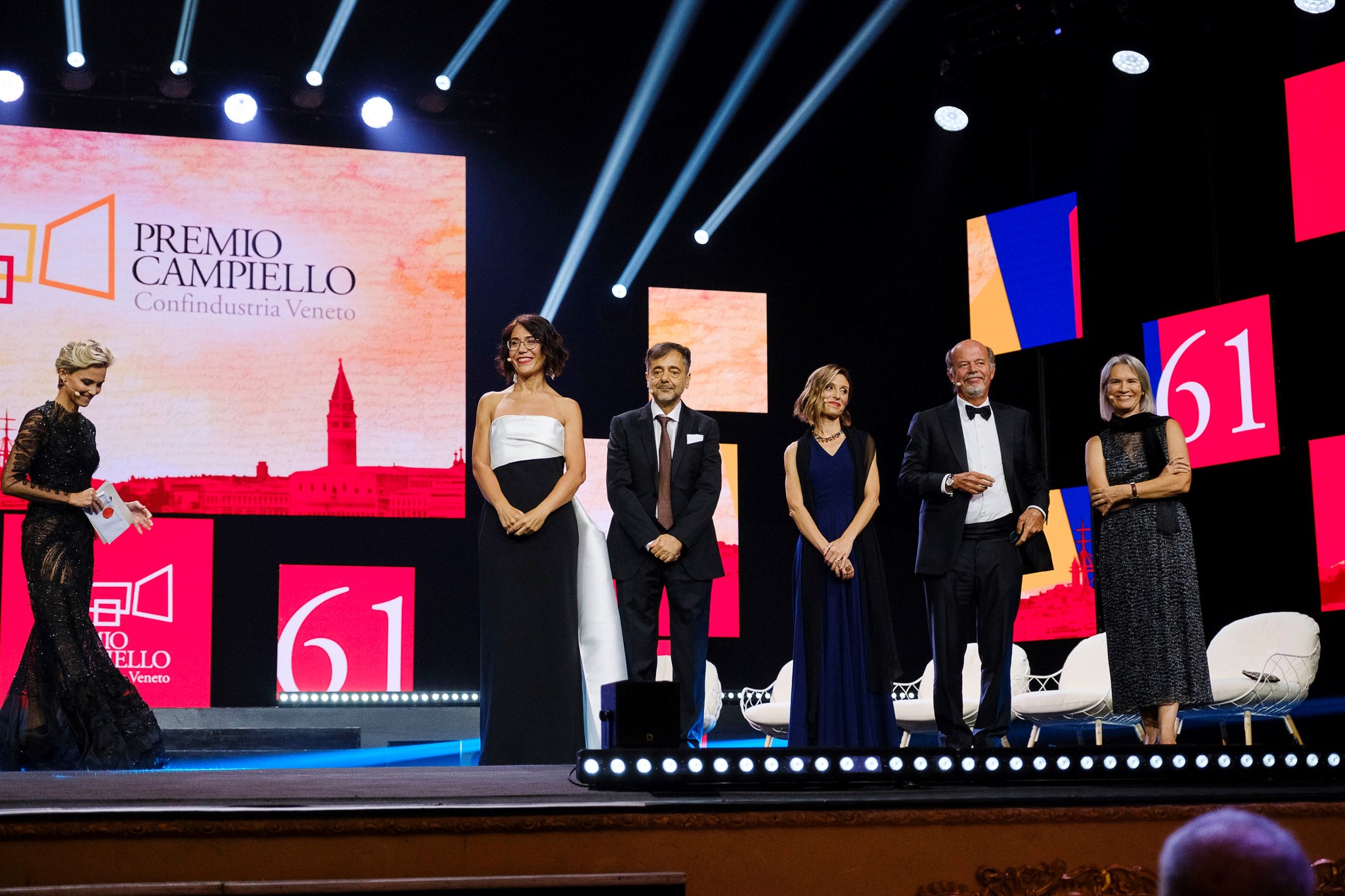
The jury for the Premio Campiello 2026 has officially announced its “Cinquina,” the final five works competing for one of Italy’s most prestigious literary honours. During a public selection meeting at the University of Padua, the jury issued a stern warning against the increasing influence of cinema and television scripts in modern literature.
The selection process focused on rejecting “navel-gazing” writing and autofiction. Jurors emphasized a desire for a return to literary expressiveness and the development of critical thinking, rather than the repetitive linguistic patterns found in streaming series.
The Final Five and the ‘Year of Einaudi’
Out of 560 submissions, 62 books were admitted to the selection. The jury ultimately chose four works in the first round: Marcello Fois’s L’immensa distrazione (Einaudi), Ermanno Cavazzoni’s Storia di un’amicizia (Quodlibet), Elena Varvello’s La vita sempre (Guanda), and Valeria Parrella’s La ragazzina (Feltrinelli).
Alcide Pierantozzi entered the final five via a runoff with his work Lo sbilico (Einaudi). Notably, both Pierantozzi and Cavazzoni have also reached the finals of the Premio Strega.
The publisher Einaudi has seen significant success this year. In addition to having two novels in the final five, the house also claimed the Premio Campiello Opera Prima, awarded to Sri Lankan-born writer Nadeesha Uyangoda for Acqua Sporca.
A Shift in Narrative Trends
Jurors noted a positive trend in the move away from self-referential narratives. Literary critic Alessandro Beretta observed that authors are finally distancing themselves from their own “navels,” allowing for more creative and outward-looking storytelling.
Juror Rita Librandi highlighted a growth in narratives focusing on migrants and plural identities, which are no longer viewed as marginal phenomena. This shift coincides with a rebirth of the historical novel, now reimagined through a more literary lens.
However, the jury expressed concern over the “slaughter of subordinate clauses” in modern prose. Librandi argued that writers who simply adapt to cinematic dialogue fail to break the “automatisms of the gaze,” which is essential for true literature.
Market Sustainability and the Path Forward
Jury President Roberto Cicutto raised alarms regarding the sustainability of the cultural market. He pointed to a stark discrepancy between the massive quantity of books being produced and the dwindling number of people reading them.
Cicutto suggested that the prize must evolve into a year-round activity involving schools and institutions to attract new readers. This approach could potentially bridge the gap between production and consumption in the publishing industry.
The selection remained valid despite the absence of newly appointed juror Stefano Mancuso, who did not vote in person or remotely. The remaining 11 of 12 jurors, including 82-year-old Roberto Vecchioni, completed the process.
The Road to the Finale
The awards ceremony will feature a change in venue this year, moving from the traditional La Fenice to the Palazzo del Cinema on the Lido of Venice. The winner will be announced on October 3.

The final decision rests with the “Giuria di Trecento,” a panel of 300 anonymous readers who will select the ultimate winner from the Cinquina. Depending on the readers’ preferences, the victory may further cement Einaudi’s dominance this season or favour the other shortlisted publishers.
Frequently Asked Questions
Who won the Premio Campiello Opera Prima? Nadeesha Uyangoda, a writer born in Sri Lanka, won the award for her book Acqua Sporca. Where and when will the final award ceremony take place? The ceremony will be held on October 3 at the Palazzo del Cinema on the Lido of Venice. Who chooses the final winner of the Premio Campiello? The final winner is chosen by a jury consisting of 300 anonymous readers. How do you feel about the influence of television and cinema on the way modern novels are written?