

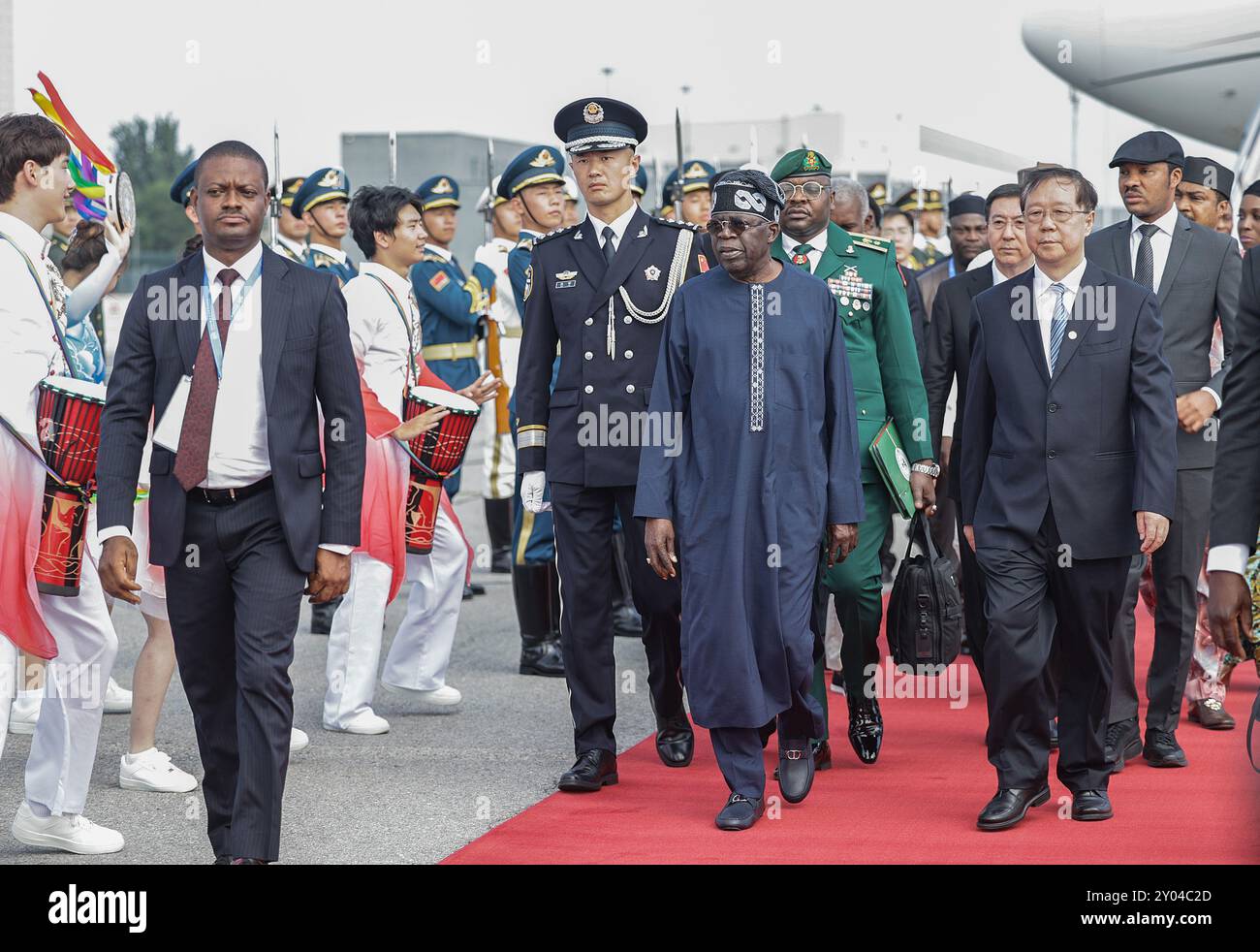
President Tinubu Arrives in Rwanda for Africa CEO Forum
Beyond the Summit: The Rise of African Economic Nationalism
For decades, the prevailing economic narrative in Africa has been one of extraction. Raw materials flow out, and finished goods flow in. However, a seismic shift is occurring. The move toward “Economic Nationalism”—the idea that African nations must prioritize their own industrialization and value-addition—is no longer just a political slogan; it is becoming a survival strategy.
The trend is clear: African leaders are increasingly pushing for the continent to stop being a mere supplier of raw materials. Imagine a future where cocoa is processed into chocolate in Accra, or lithium is converted into batteries in Kinshasa before ever leaving the continent. This shift doesn’t just create jobs; it shields local economies from the volatile price swings of global commodity markets.
The Scale Imperative: Why ‘Shared Ownership’ is the New Playbook
One of the biggest hurdles for African businesses has always been scale. Many companies are “national champions”—dominant in one country but too small to compete globally or even regionally. This is where the concept of “Shared Ownership” comes into play.
Future trends suggest a wave of cross-border mergers and acquisitions among African firms. By pooling resources, capital, and expertise, African companies can achieve the economies of scale necessary to compete with multinational giants from Asia and the West. We are seeing the early stages of this with the rise of pan-African conglomerates in telecommunications and finance.
For example, the success of large-scale industrial projects, such as the Dangote Refinery in Nigeria, demonstrates how massive capital investment in a single hub can disrupt regional dependencies on imports. The next step is seeing this “scale” replicated across diverse sectors like pharmaceuticals and renewable energy.
The Role of Private Sector-Led Growth
The era of relying solely on foreign aid is fading. The trend is shifting toward strategic partnerships and Private-Public Partnerships (PPPs). Investors are no longer looking for “charity” projects but for sustainable, profit-driven ventures that align with national development goals.
To attract this capital, nations are focusing on “Holding the Line” with economic reforms—stabilizing currencies, simplifying tax codes, and ensuring the rule of law. These reforms are essential to transform Africa from a high-risk frontier into a predictable investment destination.
Navigating a Fractured World: Resilience and Diversification
We live in a “fractured world” characterized by geopolitical tensions and supply chain disruptions. For Africa, this volatility is a double-edged sword. While it creates economic instability, it also presents an opportunity to diversify trade partners.
The future will likely see Africa balancing its relationships between the West, China, and emerging powers like India and Brazil. By avoiding over-dependence on any single foreign market, African nations can maintain greater strategic autonomy.
the integration of digital trade and Fintech is accelerating this resilience. From mobile money in Kenya to digital payment gateways in Nigeria, technology is removing the friction of cross-border trade, allowing small and medium enterprises (SMEs) to access regional markets without needing massive physical infrastructure.
For more insights on regional trade, you can explore the African Union’s latest directives on economic integration or read our guide on emerging investment trends in Sub-Saharan Africa.
Frequently Asked Questions
The Scale Imperative refers to the necessity for African companies to grow larger—either through expansion or partnership—to compete effectively on a global stage and reduce reliance on imported finished goods.

By reducing tariffs and trade barriers, the AfCFTA lowers the cost of goods, creates more diverse job opportunities in manufacturing, and encourages the growth of local industries.
Reforms such as currency stabilization and the removal of bureaucratic red tape make it easier and safer for businesses to move capital and goods across borders, which is the foundation of regional integration.
Join the Conversation
Do you believe “Economic Nationalism” is the right path for Africa’s growth, or should the focus remain on global integration? We want to hear your thoughts!
Leave a comment below or subscribe to our newsletter for weekly deep-dives into the African economy.