

Qualcomm’s latest chip hints that more powerful smart glasses could be on the way
Qualcomm launched the Snapdragon Reality Elite chip at Augmented World Expo to power the next generation of XR devices. The silicon delivers up to a 160% NPU performance boost and improved thermal efficiency, according to the company, specifically addressing the battery life and overheating issues that currently limit smart glasses.
How does the Snapdragon Reality Elite improve XR performance?
The Snapdragon Reality Elite focuses on across-the-board hardware upgrades to handle more demanding immersive experiences. Qualcomm reports a 60% increase in GPU performance and a 30% bump in CPU speed. The most significant leap is in the Neural Processing Unit (NPU), which sees performance gains of up to 160%.
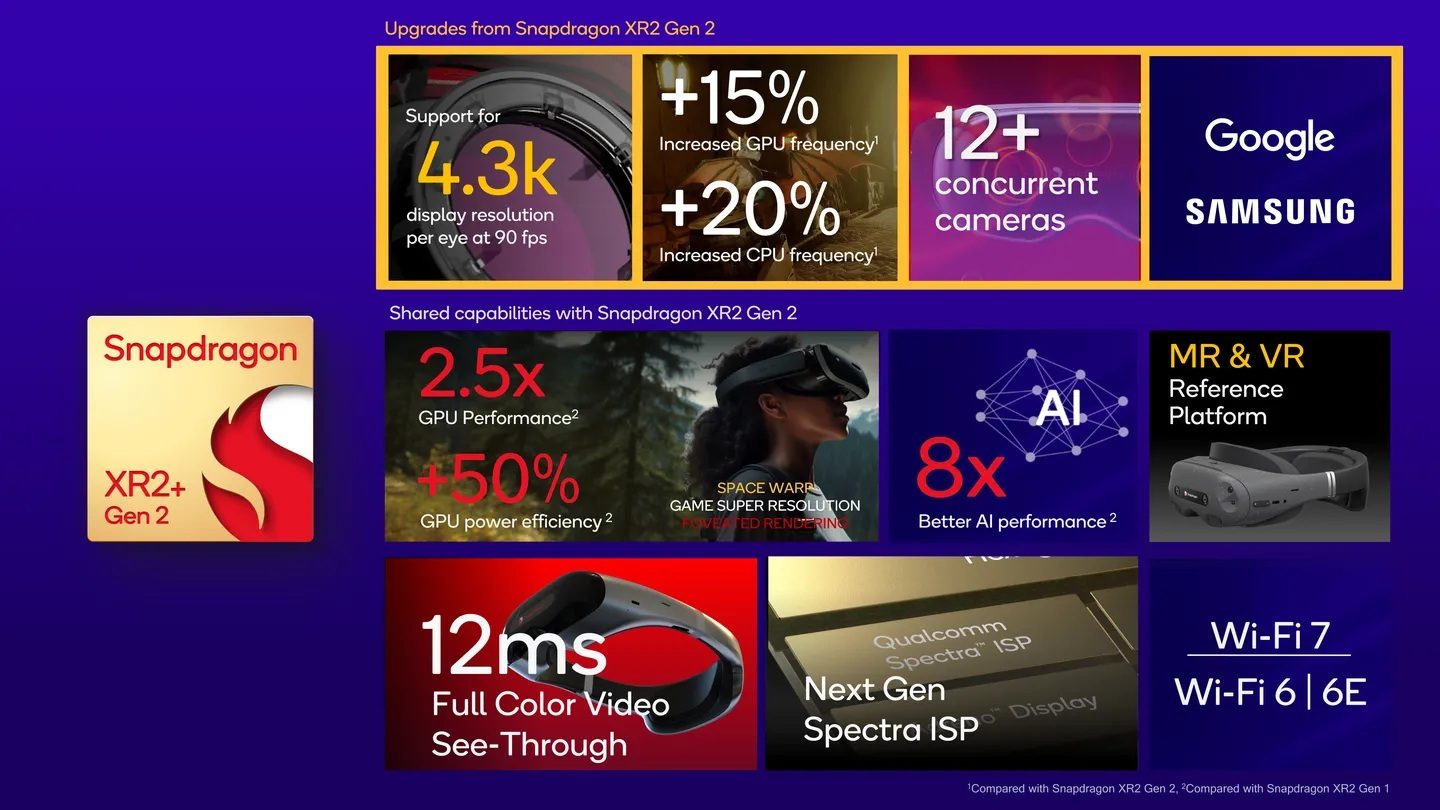
These specs allow the chip to support a 4.4K resolution at 90 frames per second per eye. According to The Verge, this increase in power is designed to reduce latency and support larger Large Language Models (LLMs) directly on the device, enabling more sophisticated AI features without relying entirely on the cloud.
Why is thermal management critical for AI glasses?
Overheating has historically forced smart glasses manufacturers to choose between bulky designs or limited functionality. Qualcomm claims the Reality Elite remains up to 12 degrees Celsius cooler than previous XR chips during heavy workloads.
This thermal efficiency is paired with a battery life improvement of up to 20%. By boosting power efficiency, Qualcomm aims to eliminate the risk of devices becoming uncomfortably hot against a user’s face while extending the time between charges.
This shift addresses a primary pain point in the wearable market. As noted by The Verge, the goal is to move away from “unwieldy designs” toward lighter frames that can sustain all-day use.
What is the difference between Reality Elite and Wear Elite?
Qualcomm is diversifying its silicon to match different wearable form factors. The company introduced the Snapdragon Wear Elite in February at Mobile World Congress, creating a clear distinction between “light” and “heavy” wearables.

| Feature | Snapdragon Wear Elite | Snapdragon Reality Elite |
|---|---|---|
| Primary Use | Audio-only glasses, watches, pins | Display-heavy XR glasses |
| Power Demand | Low to Moderate | High (GPU/NPU intensive) |
| Key Focus | Efficiency and longevity | Visuals and AI processing |
Which devices will use the new Qualcomm silicon?
The Reality Elite is already appearing in early hardware. The upcoming Aura glasses for Android XR, a collaboration involving Google and Xreal, utilize the chip. While Google and Xreal were initially quiet about the processor during Google I/O, The Verge confirmed the Reality Elite is the engine under the hood.
Because Qualcomm acts as a component supplier, these chips are designed to meet the specific requirements of partners like Meta and Google. This suggests a broader rollout of AI-centric wearables—including fitness trackers, pendants, and smart glasses—through 2027.
Frequently Asked Questions
Will these chips make smart glasses smaller?
Yes. By improving power efficiency and reducing heat by up to 12°C, manufacturers can reduce the size of cooling systems and batteries, leading to slimmer frames.
What is the resolution supported by the Reality Elite?
The chip supports 4.4K resolution at 90 frames per second per eye, according to Qualcomm.
How much better is the battery life?
Qualcomm claims battery life has been improved by up to 20% compared to previous generations.
What do you think about the shift toward AI-powered glasses? Will you trade your smartwatch for a pair of smart spectacles? Let us know in the comments below or subscribe to our newsletter for the latest in wearable tech.