
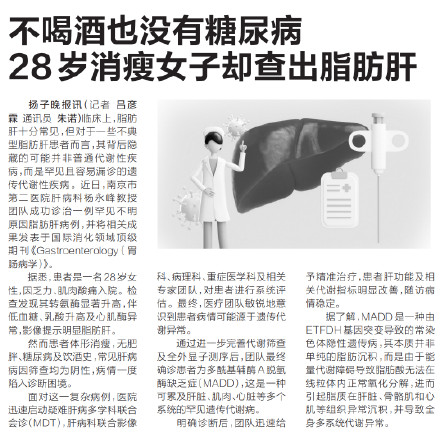
Rare Genetic Disorder MADD Causes Fatty Liver in Non-Obese 28-Year-Old Woman
A medical team led by Professor Yang Yongfeng at Nanjing Second Hospital has diagnosed a 28-year-old woman with Multiple Acyl-CoA Dehydrogenase Deficiency (MADD), a rare genetic disorder causing atypical fatty liver and muscle pain. The findings, published in the journal Gastroenterology, reveal that the condition stems from an ETFDH gene mutation that impairs energy metabolism in the liver, skeletal muscles, and heart.
Why did the patient experience muscle pain and fatigue?
The patient entered the hospital with fatigue and muscle pain, which were later linked to a failure in energy metabolism. According to the report, the ETFDH gene mutation prevents fatty acids from oxidizing normally within the mitochondria.
This metabolic blockage causes lipids to deposit abnormally in the myocardium, skeletal muscle, and liver. These deposits lead to multisystem metabolic abnormalities, which manifested in this patient as abnormal cardiac enzymes, hypoglycemia, and elevated lactic acid.
How was the rare genetic condition identified?
Diagnosis was initially difficult because the patient was thin and had no history of diabetes or alcohol use. Standard screenings for common liver diseases returned negative results, leaving the medical team in a diagnostic deadlock.
The hospital initiated a multidisciplinary team (MDT) consultation involving experts from the liver disease, imaging, pathology, and critical care departments. The team used metabolic screening and whole exome sequencing to confirm the MADD diagnosis.
What happens after the diagnosis?
Following the confirmation of MADD, the medical team implemented precise treatment. According to the published results, the patient’s liver function and related metabolic indicators showed significant improvement.

The patient’s condition remained stable during follow-up assessments. Future cases with similar atypical presentations may see a higher reliance on whole exome sequencing to rule out genetic metabolic failures.
Frequently Asked Questions
What is Multiple Acyl-CoA Dehydrogenase Deficiency (MADD)?
It is a rare autosomal recessive genetic disease caused by an ETFDH gene mutation that prevents the normal oxidation of fatty acids in the mitochondria, leading to lipid accumulation in the liver, heart, and skeletal muscles.
What symptoms did the patient exhibit?
The 28-year-old patient presented with fatigue, muscle pain, significantly elevated transaminases, hypoglycemia, elevated lactic acid, and abnormal cardiac enzymes.
Was the fatty liver caused by diet or obesity?
No. The patient was thin and had no history of obesity, diabetes, or alcohol use; the lipid deposition was caused by a genetic energy metabolism disorder.
Could genetic screening for metabolic disorders become a standard part of evaluating unexplained muscle and cardiac fatigue?