
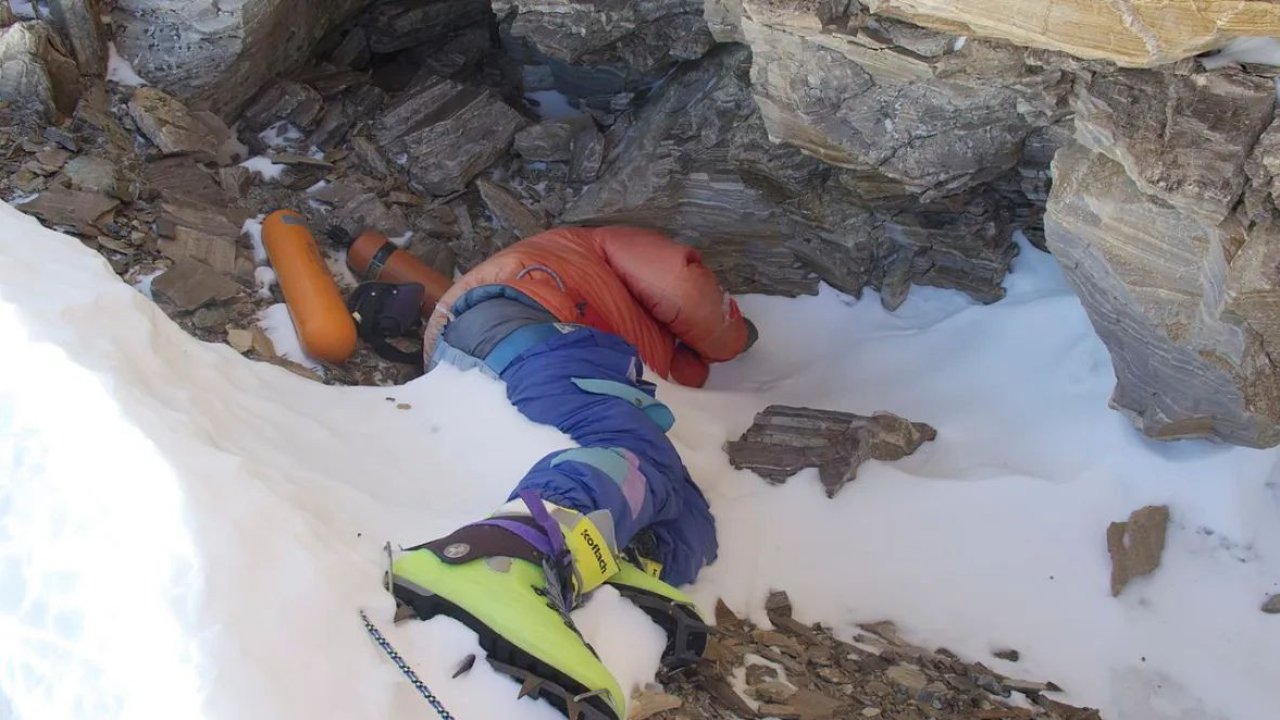
Recovering Green Boots: The Dangerous Mission on Mount Everest
The Indo-Tibetan Border Police (ITBP) is tendering for a specialized high-altitude rescue agency to recover the body of a climber known as “Green Boots” from Mount Everest’s “death zone.” According to reports from The Times, the ITBP identifies the remains as those of Dorje Morup, who died during a 1996 expedition on the mountain’s north ridge.
Why is the ITBP recovering the “Green Boots” body now?
The ITBP aims to provide a respectful burial for a climber whose body has served as a grim landmark for three decades. For years, mountaineers used the neon-green boots of the deceased as a marker indicating they had entered the “death zone”—the region above 8,000 meters where oxygen levels are too low to sustain human life indefinitely.
The body belongs to one of three members of a 1996 ITBP expedition who perished. While three members of the team turned back due to weather, Dorje Morup (47), Tsewang Samanla (38), and Tsewang Paljor (28) continued their attempt. The ITBP’s tender documents specifically name Morup as the individual to be recovered.
How will the recovery operation work?
The ITBP has set strict criteria for the rescue agency. To qualify, a firm must have completed at least one successful rescue operation above 8,000 meters within the last five years, preferably on Everest. The operation is slated for the window between June and September.
Logistics for the recovery are complex. The winning bidder must secure permits from Chinese authorities in Tibet, coordinate transport across the Tibet-Nepal border, and fly the remains to Kathmandu for repatriation to India. The ITBP requires the use of specific preservation techniques to handle a body that has remained in sub-zero temperatures for nearly 30 years.
The physical recovery is a high-risk gamble. No helicopter can land in this zone. Only elite Sherpas can attempt the move. Moving a frozen body over near-vertical slopes exposes rescuers to avalanches, sudden storms, and severe oxygen deprivation.
What happens as climate change exposes more bodies on Everest?
The “Green Boots” recovery is part of a larger, emerging trend. Approximately 200 bodies remain frozen on Everest, mostly within the death zone. As climate change thins the mountain’s snowcap, more remains are becoming visible to the public and climbers.
This creates a growing tension between the practical impossibility of recovery and the ethical demand for repatriation. In 2014, for example, a group of Chinese climbers moved the “Green Boots” body further under rocks to make it less visible, highlighting the discomfort climbers feel when encountering the dead on their path to the summit.
How does this compare to previous Everest recoveries?
Most bodies on Everest are left where they fall because the risk to living climbers is too great. The ITBP operation is distinct because it is a state-led effort to recover a government employee (a border police officer) rather than a private family request.

While many recoveries involve sliding bodies down slopes to lower altitudes, the ITBP’s requirement for “respectful and safe repatriation” and transport via Kathmandu suggests a more formal, forensic approach than the haphazard removals seen in previous decades.
Frequently Asked Questions
Who exactly was “Green Boots”?
While long an anonymous landmark, ITBP tender documents identify the body as Dorje Morup, a member of the 1996 Indo-Tibetan Border Police expedition.
Why can’t helicopters just pick up the bodies?
The air is too thin at 8,000+ meters for most helicopters to maintain the lift required for a landing or a precision hover-and-hoist operation.
Is it legal to move bodies on Everest?
Recovery requires permits from the governing bodies of Nepal or China (Tibet), depending on which side of the mountain the body is located.
Do you think the risks to rescuers outweigh the need for repatriation? Share your thoughts in the comments below or subscribe to our newsletter for more updates on high-altitude exploration.