
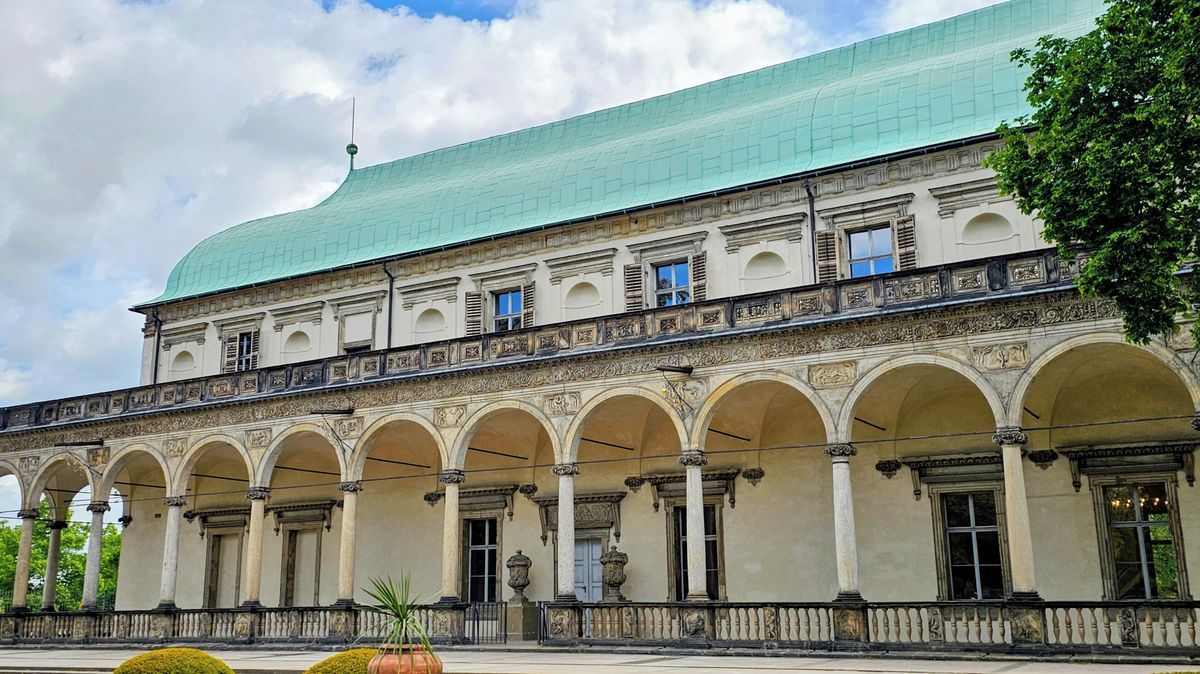
Rekonstrukce Belvederu na Hradě: Návrat k Původní Podobě
The Queen Anne Summer Palace, widely known as the Belvedere in Prague, is currently undergoing a significant two-year restoration project that began in May. This structure, celebrated as one of the most valuable examples of Renaissance architecture north of the Alps, is being meticulously repaired to restore its historical aesthetic, with work covering the facade, columned arcades, and interior halls.
Why the Restoration Matters
The Belvedere holds a unique place in European architectural history. Commissioned in 1538 by Emperor Ferdinand I for his wife, Anna of Bohemia and Hungary, the building was designed by Italian architect Paolo Della Stella. It later gained its iconic copper roof, shaped like an inverted ship’s hull, thanks to Bonifác Wolmut. Over the centuries, it has served diverse purposes, from a “Mathematical House” for astronomer Tycho de Brahe under Emperor Rudolf II to a gunpowder factory during the 17th-century occupation by Swedish troops.
According to Barbora Feret, head of the Department of Preparation and Implementation of Construction at the Prague Castle Administration, the current project aims to correct 20th-century modifications that compromised the building’s integrity. Notably, the removal of 20th-century heating elements and the restoration of the “Dance Hall” ceiling are priorities. The goal is to strip away modern paint and insulation layers to reveal the original Renaissance ocher-toned plaster and natural brown wood, returning the structure to its intended summer-use climate.
What May Happen Next
Once the scaffolding comes down in two years, visitors can expect a more authentic experience of the Renaissance site. The Prague Castle Administration plans to revitalize the adjacent Chotkovy sady (Chotek Gardens) as a secondary phase of the project. Because the building is returning to its original purpose as a non-heated summer space, it will likely host only smaller-scale cultural events and exhibitions that do not require strict climate control. The restoration of the interior, including the return of Jože Plečnik’s furniture and the cleaning of marble floors, suggests that the site will eventually resume its role as a premier cultural venue for the public.

Frequently Asked Questions
What is the total cost of the project?
The reconstruction is estimated to cost 100 million CZK, with the majority of funding sourced from the revenues of the Prague Castle Administration.
Will the Belvedere remain open for events during the construction?
The building is currently obscured by scaffolding and is undergoing extensive internal and external repairs; it is expected to remain in this state for the duration of the two-year reconstruction period.
Why are the walls being repainted?
Restorers found that the building contains significant amounts of original Renaissance plaster. The current white paint is a modern modification; the team intends to return the walls to their historical light ocher color.
How do you think the return to a “summer-only” usage model will change the way the public experiences this historic site?