
Remembering Gordon Wood: The Historian Who Redefined the American Revolution
Gordon Wood, a Pulitzer Prize-winning historian and longtime Brown University professor, died Sunday at age 92. Wood is recognized for his argument that the American Revolution fundamentally transformed society into the most democratic and modern in the world, a thesis detailed in his 1991 book, The Radicalism of the American Revolution.
Wood wrote 10 books and numerous articles during his career. He argued that the Revolution did more than legally establish the United States; it created a society that was, almost overnight, the most liberal and commercially minded in the world. In his 2011 work, The Idea of America, he expanded this claim, stating the event opened a new era for politics and society globally.
What was Gordon Wood’s impact on American history?
Wood shifted the academic focus of early American studies by emphasizing ideas over economic explanations. He illuminated the transition of America from a hierarchical, monarchical society to a democratic republic. According to the source, Wood stressed how personal experiences turned English subjects into Americans.

His work provided a positive interpretation of the Founders and their rhetoric at a time when other historians downplayed these achievements. He described the Revolution as the most radical and far-reaching event in the nation’s history.
How did Wood’s work cross political and cultural lines?
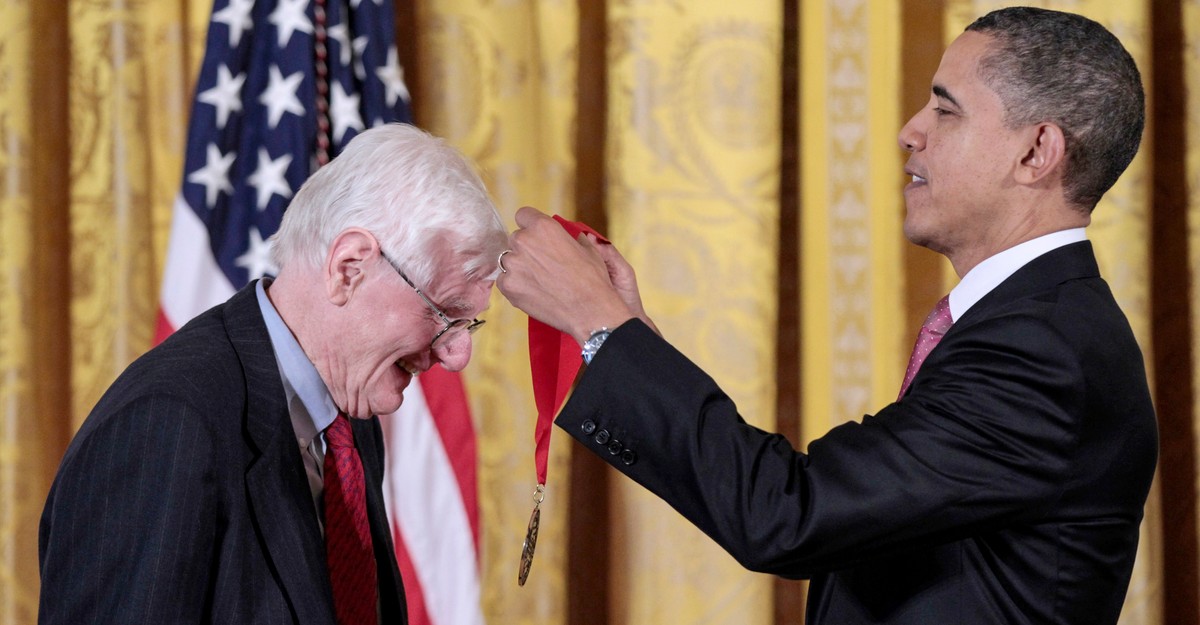
Wood achieved a level of fame rare for academic historians. He was awarded the National Humanities Medal by President Obama for his “insight into the founding of our nation” and received the American Enterprise Institute’s top honor as the “greatest historian of the American Revolution.”
His work was cited by a wide political spectrum, including President Biden, Representative Newt Gingrich, former presidential candidate Vivek Ramaswamy, and the World Socialist Web Site. This crossover appeal positioned Wood as both an elder statesman and a lightning rod in historical debate.
What controversies defined Wood’s later career?
Wood openly criticized the “1619 Project” published by The New York Times. He attacked the project for containing “factual errors” and described it as “perverse and distorted.”

He also railed against “academic presentism” and the tendency of younger historians to focus exclusively on “tales of oppression and woe.” These positions led to bitter opposition from some journalists and historians, which extended to his academic work.
What may happen next for the study of Revolutionary ideals?
The 2026 anniversary of the Revolution could see a resurgence of Wood’s vision as a point of national celebration. Future historians may continue to debate his rejection of purely economic explanations in favor of ideological ones.
Because Wood viewed the Revolution as the origin of current egalitarian thinking, his framework is likely to remain a primary counter-argument to those who dismiss the Founders’ rhetoric. His scholarship may continue to serve as a guide for those seeking a unifying vision of America.
Frequently Asked Questions
Which book earned Gordon Wood the Pulitzer Prize for History?
He won the prize for his 1991 book, The Radicalism of the American Revolution.
How did Gordon Wood describe the impact of the American Revolution on the world?
In The Idea of America (2011), he stated the Revolution was an event that opened a new era in politics and society for Americans and eventually for everyone in the world.
What was Wood’s stance on the 1619 Project?
Wood criticized the project for being “perverse and distorted” and cited “factual errors” within the work.
How should the legacy of the American Revolution be balanced between its ideals and its failures?