
Researchers discover large extinct bird endemic to Taiwan
The discovery of Pavo miejue, an extinct species of giant peafowl identified by researchers at National Taiwan University (NTU), marks the first time an extinct endemic bird has been formally named in Taiwan. Published in Royal Society Open Science, the study confirms that Pleistocene-era Taiwan hosted avian species significantly larger than the modern-day Mikado pheasant, previously considered the island’s largest endemic bird.
How did researchers identify the new species?
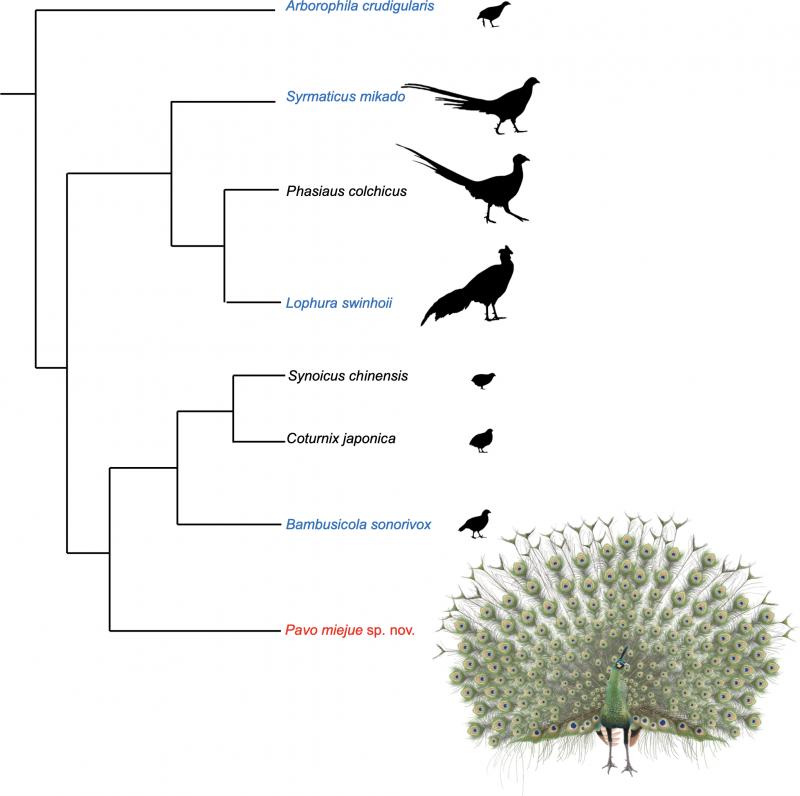
The identification of Pavo miejue relied on a humerus fossil donated by retired Tainan professor Hou Li-ren. According to the research team—led by NTU Institute of Ecology and Evolutionary Biology professor Tsai Cheng-hsiu, student Lan Yong-jie, and Senckenberg Natural History Museum academic Gerald Mayr—the bone underwent rigorous morphological comparison against living peafowl and other pheasant family members. Because the fossil’s physical characteristics did not match any known extant or extinct species, the team classified it as a new species. The name combines the genus Pavo with the Chinese term for “extinct” to emphasize the loss of prehistoric biodiversity.
Before this discovery, the Mikado pheasant—featured on the back of Taiwan’s NT$1,000 banknote—held the title of Taiwan’s largest endemic bird. The existence of Pavo miejue proves that Taiwan’s ancient avian landscape was far more diverse than current records suggest.
Why does this discovery matter for Taiwan’s biodiversity records?
Taiwan currently hosts nearly 700 recorded bird species, including 32 endemic ones. However, as noted in the Royal Society Open Science study, the island’s bird fossil record remains sparse compared to its mammal and reptile counterparts. Professor Tsai Cheng-hsiu stated that relying solely on living species prevents a complete understanding of the nation’s evolutionary history. By analyzing fossils like the Pavo miejue, scientists can map how species migrated, evolved, and eventually went extinct under shifting environmental pressures.

What are the future trends in Taiwanese paleontology?
The Pavo miejue project is part of an ongoing effort to bridge gaps in Taiwan’s paleontological timeline. Following the first study on Taiwanese bird fossils published by Tsai and Mayr in 2021, this recent naming indicates a shift toward more systematic cataloging of the island’s prehistoric life. Future research is expected to focus on identifying additional fossil fragments that could reveal more about how Taiwan’s ancient ecosystems responded to climate change. Researchers suggest that these findings will provide a long-term perspective on current extinction risks, helping conservationists understand environmental resilience over geological time scales.

To track future developments in this field, follow the latest publications from the Royal Society Open Science journal or monitor project updates from the NTU Institute of Ecology and Evolutionary Biology.
Frequently Asked Questions
- What is Pavo miejue? It is the first extinct, endemic bird species formally identified in Taiwan, dating back to the Pleistocene epoch.
- How large was this bird? While specific dimensions were not provided, researchers confirmed it is larger than the Mikado pheasant, the current record-holder for Taiwan’s largest endemic bird.
- Where was the fossil found? The crucial humerus fossil was donated to the research team by retired professor Hou Li-ren, based in Tainan.
- Why is the name significant? The team chose the name to raise public awareness regarding extinction and the ecological shifts that have shaped Taiwan’s landscape over thousands of years.
Interested in the hidden history of Taiwan’s natural world? Subscribe to our newsletter for the latest updates on paleontological discoveries and ecological research.