

Romania’s President Dan on drone attacks on the Romanian coast
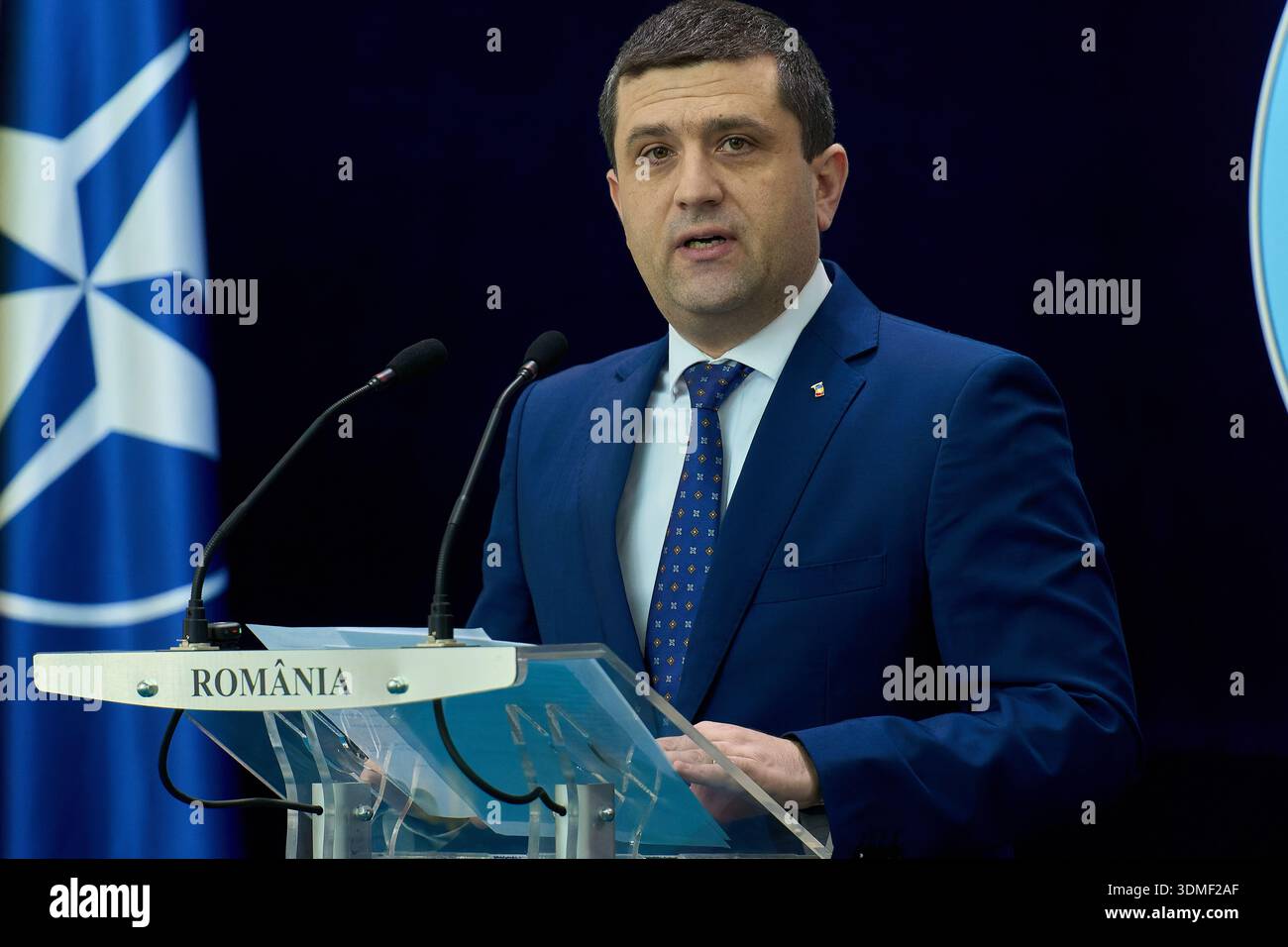
The self-destruction of four Ukrainian naval drones near Constanța, triggered by Russian electronic warfare, signals a dangerous new phase of “conflict spillover” for NATO’s eastern flank. According to Romanian President Nicușor Dan, these incidents are direct consequences of Russia’s aggression, forcing Romania to urgently modernize its maritime reconnaissance and electronic defense capabilities to protect its sovereign waters.
Why is electronic warfare making naval drones a risk for neutral ports?
Electronic warfare (EW) isn’t just about jamming radios; it’s about hijacking the “brain” of a drone. In the Black Sea, Russia uses high-powered jamming to disrupt GPS signals and command links. When a drone loses its connection to the operator or its navigational coordinates, it can drift off course or trigger a fail-safe mechanism.
In the June 5 incident, four Ukrainian drones lost control due to these Russian measures. One exploded inside the Port of Constanța, while others detonated off the coast. Because these drones carry high explosives, a “lost” drone becomes a floating mine. The danger isn’t necessarily a deliberate attack on Romania, but the unpredictable nature of EW that turns precision weapons into erratic hazards.
How will NATO and Romania secure the Black Sea coastline?
Romania is shifting from reactive monitoring to active reconnaissance. President Nicușor Dan has already convened working groups to overhaul coastline security. The strategy focuses on three main pillars: better tech, tighter protocols, and international cooperation.
First, the government is procuring new equipment to bridge the “radar gap.” Since current systems struggle with low-altitude targets, the new gear aims to identify non-metallic signatures and surface-level threats. Second, the Romanian government is intensifying the role of Border Police and reconnaissance teams during the summer months to protect tourists and infrastructure.
Third, this is no longer a local issue. A dedicated NATO session on Black Sea security was scheduled for June 10 to coordinate a collective response. This suggests that the “spillover” is being treated as a systemic threat to the alliance, not just a series of isolated accidents.
For more on regional defense strategies, see our analysis on NATO’s Eastern Flank Reinforcements.
What does the “spillover” effect mean for European maritime trade?
The risk to commercial shipping is real. While President Dan dismissed theories that the drones were targeting a “ghost fleet” vessel—noting the ship in question wasn’t under EU or US sanctions—the mere presence of explosive drones in shipping lanes creates instability.
We’re seeing a pattern of escalating proximity. On May 29, a Russian drone crashed into an apartment building in Galați, causing a fire and injuring two people. When you combine that with the 47 instances of drone fragments falling on Romanian territory over the last four years, it’s clear that the border is becoming porous.
This creates a “risk premium” for insurance and shipping in the Black Sea. If naval drones can be diverted into major ports like Constanța, the cost of securing commercial hubs will skyrocket. Companies may have to invest in their own electronic countermeasures or change routes entirely to avoid “dead zones” where EW is active.
Comparing the Constanța and Galați Incidents
| Feature | Constanța Incident (June 5) | Galați Incident (May 29) |
|---|---|---|
| Asset Type | Ukrainian Naval Drones | Russian Aerial Drone |
| Cause | Russian Electronic Warfare | Errant Flight/Crash |
| Warning | Advance notice from Kyiv | No prior warning |
| Impact | Controlled self-destruction; 1,300 evacuated | Fire in apartment building; 2 injured |
Frequently Asked Questions
Were Romanian citizens in danger during the drone explosions?
According to Deputy Interior Minister Raed Arafat, there is no longer any danger. Over 1,300 people were evacuated from the port, beaches, and the Danube Delta before the drones self-destructed, ensuring no casualties occurred.
Why didn’t Romanian radars stop the drones?
Defence Minister Radu Miruta explained that existing radars are designed to detect metal objects at high altitudes. Naval drones are low-profile and often made of composite materials, making them nearly invisible to traditional radar systems.
Is Romania at war with Russia?
No. President Nicușor Dan has emphasized that Romania is a sovereign nation and that these incidents are a “direct consequence” of Russia’s war against Ukraine. Romania continues to coordinate its security through NATO and the EU.
Want to stay updated on Black Sea security?
The intersection of AI, drones, and electronic warfare is changing the map of global security. Join our newsletter for deep-dive reports on the tech shaping modern conflicts.