
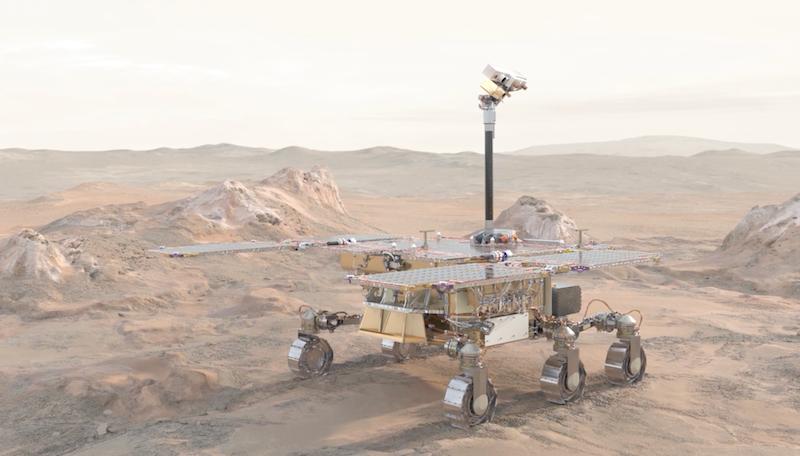
Rosalind Franklin rover to search Mars clays for life
The European Space Agency’s (ESA) Rosalind Franklin rover is scheduled to launch toward Mars in 2028, targeting the Oxia Planum region to search for signs of past or present microbial life. Recent research published in the journal Icarus indicates that the landing site contains more extensive clay deposits than previously mapped, suggesting a history of significant water activity that may have preserved organic evidence for billions of years.
Why is Oxia Planum the primary target for the mission?
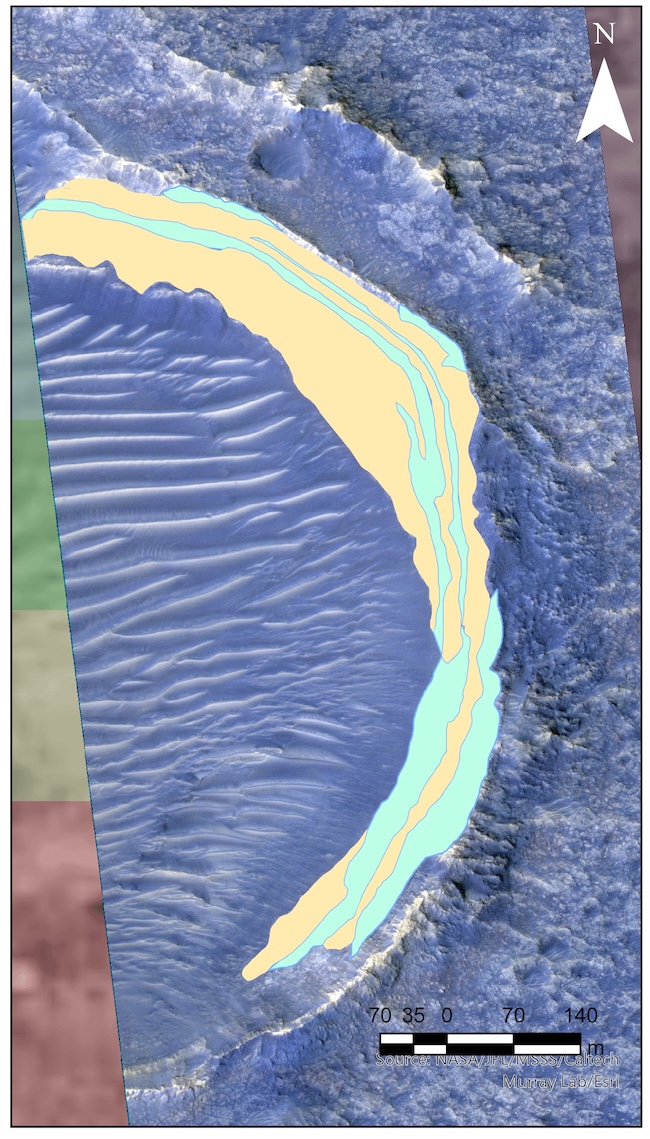
Scientists selected Oxia Planum because its geological composition is rich in clay minerals, which are essential for identifying ancient habitable environments. According to a June 2026 report from the ESA, these clay deposits stretch across 373 miles (600 km) and reach altitudes exceeding 0.6 miles (1 km). These minerals form in the presence of water and are known for their ability to protect organic compounds from the harsh radiation present on the Martian surface. Lead researcher Inés Torres Auré of the University of Lyon noted that these deposits date back approximately 4 billion years, placing them among the oldest geological features on the planet.
The Rosalind Franklin rover is named after the British scientist who was instrumental in discovering the double-helix structure of DNA. Like her work in molecular biology, the rover’s mission focuses on uncovering the “building blocks” of life.
How do the new findings change our understanding of Mars?
The updated mapping reveals that the clay-rich environment of Oxia Planum is connected to the nearby Mawrth Vallis region, suggesting a massive, regional process rather than isolated incidents. ESA project scientist Jorge Vago stated that the scale of these deposits implies the presence of immense amounts of water in the planet’s early history, potentially supporting the theory of an ancient northern ocean. While previous missions like NASA’s Curiosity and Perseverance have explored different terrains, the Rosalind Franklin mission will specifically ground-truth these orbital observations by drilling directly into the subsurface, according to deputy project scientist Elliot Sefton-Nash.

What are the challenges in identifying ancient life?
A significant hurdle involves interpreting the complex climate history recorded in the Martian soil. Researchers identified a “paleosurface”—a gap in the geological record—that separates two distinct layers of clay. This suggests a period of minimal surface activity followed by a shift in water chemistry. Inés Torres Auré explained that this “pause” in sedimentation is a central focus for the upcoming mission, as it marks a transition in the environmental conditions that would have dictated whether life could survive or be preserved.
Comparison: Current vs. Future Exploration
| Feature | Active Rovers (Curiosity/Perseverance) | Rosalind Franklin (2028) |
|---|---|---|
| Primary Focus | Geology & Habitability | Direct search for microbial life |
| Key Site | Gale Crater / Jezero Crater | Oxia Planum |
| Key Capability | Drilling & Sample Caching | Deep drilling (up to 2 meters) |
Frequently Asked Questions
When will the Rosalind Franklin rover reach Mars?
The mission is scheduled to launch in 2028, with the landing occurring shortly thereafter depending on the specific trajectory.

Why is drilling deep into the ground important?
The Martian surface is bombarded by high levels of cosmic radiation that destroy organic molecules. By drilling up to 2 meters deep, the rover can access material that has been shielded from this radiation for billions of years.
Could the clays have been formed by groundwater?
Yes, researchers suggest two possibilities: the clays were deposited by surface water, such as an ancient ocean, or they formed through the circulation of groundwater. The rover will analyze the mineralogy on-site to determine which scenario is accurate.
For real-time updates on the mission status, monitor the official ESA Science and Exploration portal. Following the mission’s progress offers a unique look at how planetary scientists verify geological data before a rover even touches the ground.
Stay informed about the latest developments in space exploration by subscribing to our free weekly newsletter. Have thoughts on what the rover might find? Share your predictions in the comments below.