
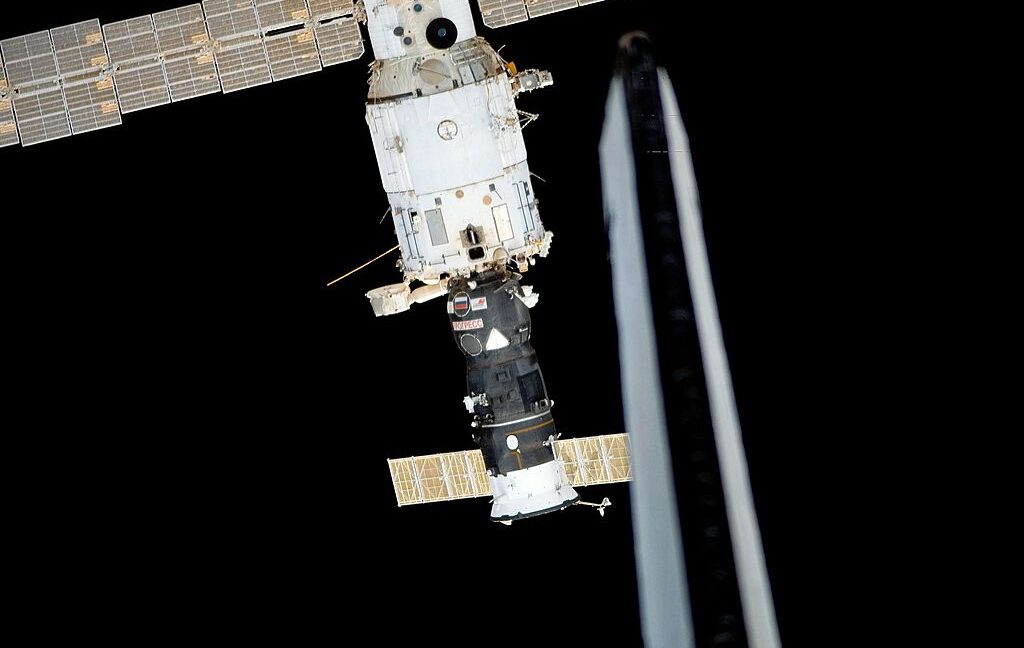
Russia appears set to finally address long-term, serious space station cracks
NASA and Roscosmos have agreed to decommission the PrK module on the International Space Station (ISS) after a standoff involving threats to move astronauts into a SpaceX Crew Dragon “safe haven.” According to NASA officials cited by Ars Technica, the agreement removes a long-standing risk of rapid depressurization that NASA had previously accepted to maintain orbital operations.
Why did NASA move astronauts into the SpaceX Dragon?
NASA moved its crew into the SpaceX Crew Dragon Freedom spacecraft to prevent a potential catastrophic failure of the station’s pressure hull. According to a NASA source, the agency saw a “very high probability of a bad outcome” when Russian cosmonauts approached the PrK module with a saw, intending to remove a load-bearing bracket.
The evacuation included US astronauts Jessica Meir, Jack Hathaway, and Chris Williams, French astronaut Sophie Adenot, and Russian cosmonaut Andrey Fedyaev. NASA officials told Ars Technica they threatened to put astronauts in suits inside the Dragon to signal their disagreement to the world. This move prompted Roscosmos to back off their plans.
What happens to the PrK module now?
Russia has officially notified NASA that it will decommission the PrK module. This means cosmonauts will no longer enter the module or attempt to pressurize it, effectively neutralizing the risk of a sudden leak. According to the report, the module’s docking port will remain functional for Progress vehicles to transfer fluids, but all other supply movements must now use alternative ports.
For years, NASA operated under a state of reluctant risk. The PrK module’s instability created a constant threat of rapid depressurization. By agreeing to decommission the unit, the agencies have retired a critical safety vulnerability that threatened the longevity of the entire station.
How does this event signal a shift in space diplomacy?
The standoff highlights a growing reliance on commercial assets to manage geopolitical friction in orbit. In previous decades, NASA depended entirely on Russian Soyuz spacecraft for safety and transport. The decision to use the SpaceX Freedom as a tactical “safe haven” demonstrates a shift in leverage.
This incident mirrors a broader trend of “de-coupling” in space infrastructure. As the ISS nears its planned retirement, the transition toward private stations—such as those proposed by Axiom Space or Blue Origin’s Orbital Reef—becomes more urgent. These commercial platforms aim to reduce the risk of a single nation’s political decisions endangering the lives of an international crew.
What are the long-term risks for the ISS?
While the PrK module risk is gone, the station continues to age. The contrast between the “reluctant acceptance” of risk NASA showed for years and the aggressive stance taken during this standoff suggests a lower tolerance for safety compromises as the station’s hardware degrades.
The primary concern moving forward is whether the remaining shared modules can withstand the stress of another decade of operation. If communication between Roscosmos and NASA continues to break down—as it did during this standoff when Roscosmos officials ignored ground communications—the ability to perform emergency repairs becomes a critical failure point.
Comparison: Old Risk vs. New Resolution
| Factor | Previous Status | Current Status |
|---|---|---|
| PrK Module State | Pressurized/Active (High Risk) | Decommissioned (Low Risk) |
| NASA Safety Strategy | Reluctant risk acceptance | Active use of commercial safe havens |
| Supply Logistics | Used PrK for movement | Diversion to alternative ports |
Frequently Asked Questions
What is the PrK module?
The PrK is a Russian module on the International Space Station that had developed structural issues, posing a risk of rapid depressurization.

Who is Crew 12?
Crew 12 consists of US astronauts Jessica Meir and Jack Hathaway, French astronaut Sophie Adenot, and Russian cosmonaut Andrey Fedyaev.
Why is the SpaceX Dragon called a safe haven?
Because it is a self-contained, pressurized environment that can be detached from the ISS, allowing the crew to survive if the main station becomes uninhabitable.
What do you think about the increasing role of private companies in space safety? Let us know in the comments below or subscribe to our newsletter for more deep dives into orbital diplomacy.