
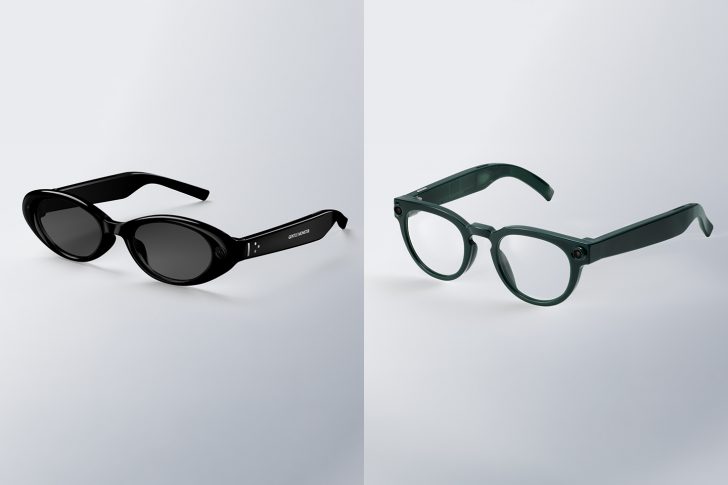
Samsung and Google Unveil AI Smart Glasses with Gentle Monster and Warby Parker
The Death of the Screen? The Rise of Ambient Computing
For over a decade, our relationship with technology has been defined by the “rectangle in the pocket.” We stop what we are doing, pull out a device and stare down into a glowing screen. The unveiling of the new Android XR smart glasses by Samsung and Google signals a fundamental shift toward ambient computing—technology that exists in the periphery of our lives, providing information exactly when we need it without demanding our full attention.
This isn’t just about adding a screen to your face; it’s about removing the friction between intention and action. When AI like Gemini is integrated into eyewear, the interface moves from a touch-screen to a natural, voice-driven experience. We are moving toward a “heads-up” society where the digital and physical worlds are no longer separate entities but a single, blended layer of reality.
Why Fashion is the Secret Sauce for Wearable Tech
The industry has learned a hard lesson: nobody wants to look like a cyborg in a coffee shop. The failure of early smart glasses wasn’t necessarily a lack of utility, but a lack of aesthetics. By partnering with Gentle Monster and Warby Parker, Samsung and Google are acknowledging that for wearables to achieve mass adoption, they must first be a fashion statement.
The trend here is “invisible technology.” The goal is to create a device that looks like a premium accessory but functions like a supercomputer. When tech is integrated into timeless frames or disruptive high-fashion designs, it stops being a “gadget” and becomes a part of a user’s identity.
We can expect future trends to lean even further into customization. Imagine 3D-printed frames tailored to your exact facial structure, with AI sensors embedded in materials that mimic organic textures, making the hardware virtually undetectable to the naked eye.
The Psychological Shift: From Distraction to Presence
One of the most significant potential trends is the recovery of “presence.” Currently, a notification on a smartphone pulls us entirely out of a social interaction. Smart glasses, however, allow for glanceable information.

Instead of scrolling through a text thread during a meeting, a summarized notification can be whispered via audio or displayed subtly in the periphery. This allows users to stay engaged with the people in front of them while remaining connected to their digital stream.
The “Gemini Effect”: AI That Sees What You See
The integration of multimodal AI—AI that can process text, audio, and visual data simultaneously—is the real game-changer. The ability to translate a menu in real-time or receive a navigation prompt based on the street you are currently looking at transforms the glasses into a cognitive prosthetic.
Looking ahead, we will likely see “Contextual Anticipation.” Rather than you asking the AI for help, the glasses will anticipate your needs based on your environment. For example, as you walk into a grocery store, your shopping list could automatically appear in your field of vision, or the glasses could highlight products that align with your dietary restrictions.
The Battle for the Face: Ecosystem Lock-in
The collaboration between Samsung and Google is a strategic move to create a unified Android XR ecosystem. This is a direct challenge to Meta’s Ray-Ban glasses and Apple’s vision for spatial computing. The winner of this “battle for the face” won’t be the company with the best hardware, but the one with the most seamless software integration.
Because these glasses act as a companion to the Galaxy ecosystem, the synergy is powerful. Your watch handles the health data, your phone handles the heavy processing, and your glasses handle the interface. This interconnectedness creates a “sticky” ecosystem that makes it difficult for users to switch brands.
For more on how these ecosystems are evolving, check out our deep dive into the future of Android connectivity or visit the official Google Blog for the latest on Gemini updates.
Frequently Asked Questions
Will these glasses replace my smartphone?
Not immediately. They are designed as “companion devices.” While they handle notifications, navigation, and quick AI tasks, the smartphone remains the central hub for complex tasks and data storage.
How do smart glasses handle privacy?
Privacy remains the biggest hurdle. Future trends suggest a move toward physical indicators (like bright LEDs) to signal when a camera or microphone is active, alongside strict on-device processing to ensure data isn’t constantly streamed to the cloud.
Can you get these with prescription lenses?
Yes. By partnering with Warby Parker and Gentle Monster, the focus is on integrating tech into actual eyewear, meaning prescription compatibility is a core part of the product design.
Are you ready to go screenless?
Do you think AI glasses will finally kill the smartphone, or are they just another accessory we’ll forget in a drawer? Let us know your thoughts in the comments below!