
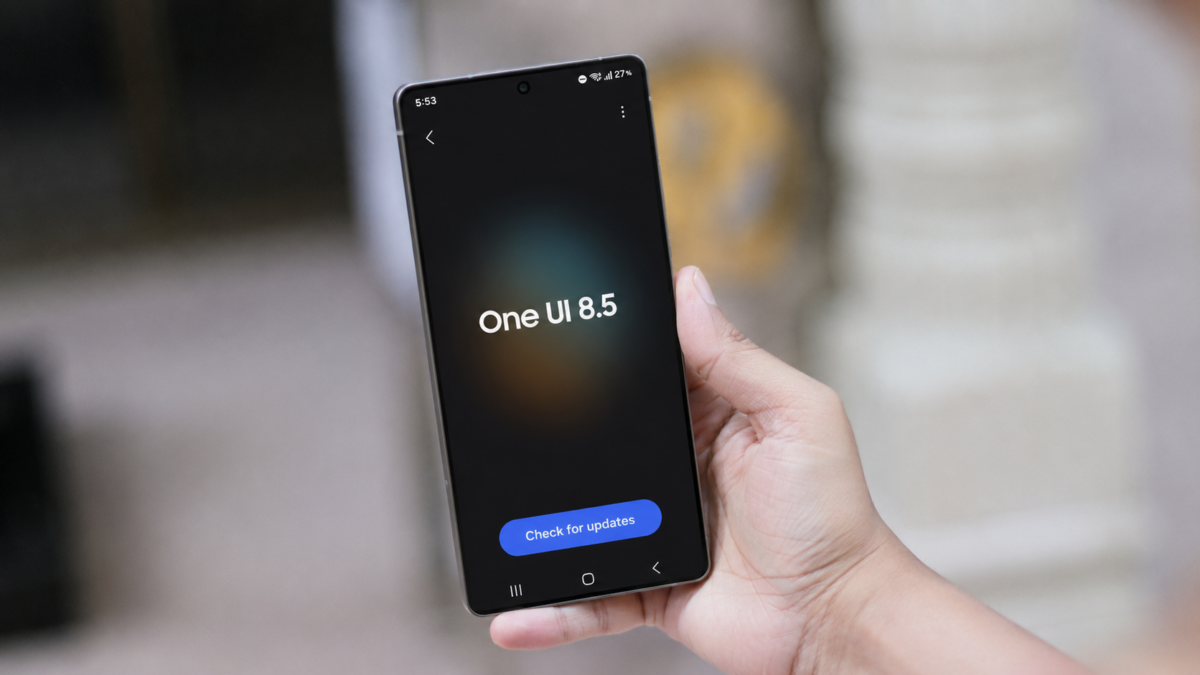
Samsung One UI 8.5 Customization Guide: Best Tips and Tricks
Beyond the Settings Menu: The Future of Hyper-Personalized Mobile OS
For years, smartphone customization was about changing a wallpaper or rearranging a few icons. But as we look at the trajectory of interfaces like One UI 8.5, we are seeing a fundamental shift. We are moving away from “static” customization and toward hyper-personalization—where the OS doesn’t just let you change the look, but evolves based on how you actually live.
The integration of tools like Good Lock and Creative Studio suggests that the “standard” user interface is becoming a suggestion rather than a rule. The future of mobile interaction isn’t about a one-size-fits-all layout; it’s about a fluid environment that adapts to the user’s cognitive load and aesthetic preference in real-time.
Generative UI: When Your Phone Designs Itself
The current ability to generate wallpapers via Creative Studio is just the tip of the iceberg. The next logical step is Generative UI. Imagine an interface that doesn’t just change its wallpaper, but reshapes its entire layout based on your current activity.
For instance, if the OS detects you are at the gym, your Quick Panel could automatically resize to prioritize music and heart-rate monitors, while shrinking distraction-heavy toggles. We are moving toward a world where AI analyzes your usage patterns—similar to how Samsung’s ecosystem handles routine automation—and suggests layout optimizations before you even realize you need them.
The Death of the “Standard” Grid
With modules like Home Up allowing for custom folder sizes, the traditional Android grid is dying. Future trends point toward “organic” layouts where apps float, cluster, or expand based on frequency of use. This reduces “app fatigue” by surfacing what matters most, reducing the time spent scrolling through pages of folders.
The Convergence of Mobile and Desktop: The DeX Evolution
The addition of widgets to Samsung DeX is a signal that the line between a “mobile app” and a “desktop program” is blurring. We are heading toward a Unified Computing Experience. The goal is no longer to mimic a PC, but to create a hybrid environment that offers the power of a desktop with the agility of a phone.
Industry experts predict that “Cloud-Native OS” will be the next big leap. Your phone will act as the primary authentication and processing hub, while the DeX environment becomes a window into a powerful cloud-based workstation. Which means you could start a complex project on your phone’s small screen and transition to a multi-monitor DeX setup without a single millisecond of lag or a manual “save” click.
For more on how this affects productivity, check out our guide on maximizing mobile workflows.
Privacy as a Feature, Not a Setting
The “Private Album” is a step toward Sovereign Data Control. In an era of constant cloud syncing, the trend is shifting back toward local, encrypted “vaults” that are decoupled from the main OS gallery.
Future iterations will likely integrate “Zero-Knowledge” encryption, where not even the manufacturer can access the contents of your private folders. People can expect this to expand beyond photos to include “Private Workspaces”—entire sections of the OS that vanish or encrypt themselves based on biometric triggers or GPS location (e.g., your work apps disappear the moment you leave the office geofence).
The “Invisible” Interface
Taking a cue from the Camera Assistant’s ability to hide indicators, the future of UI is “invisible.” The trend is toward Contextual Minimalism—where indicators and buttons only appear the moment your finger hovers over them or when the AI determines they are necessary. This clears the visual clutter and allows the content (the photo, the video, the document) to take centre stage.
Frequently Asked Questions
Will these customization features slow down my phone?
Generally, no. Tools like Good Lock are optimized for Galaxy devices. However, excessive use of AI-generated live wallpapers can marginally increase battery consumption.
Is the Private Album truly secure?
Yes, it uses system-level encryption tied to your biometric data (fingerprint/face) or secure passcode, making it significantly safer than standard hidden folders.
Can I use DeX widgets on any monitor?
Yes, as long as your device supports DeX and is connected to a compatible display via USB-C or wireless casting.
Do I need to pay for Good Lock modules?
No, Good Lock and its plugins are currently free for Samsung Galaxy users via the Galaxy Store.
Want to master your Galaxy device?
Join our newsletter for weekly deep-dives into hidden features, productivity hacks, and the latest in mobile tech. Don’t let your hardware outpace your knowledge!