
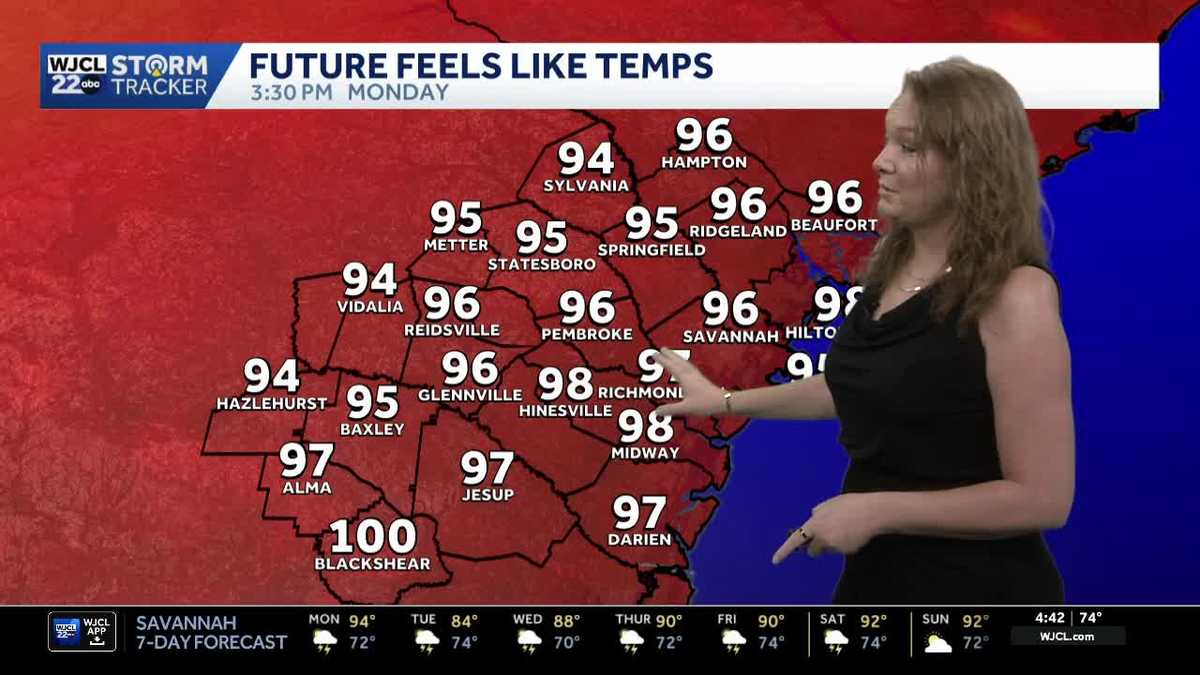
Savannah: Another hot and humid afternoon
Southeast Georgia residents face a period of persistent heat and humidity, with heat indices climbing near 104° as moisture flows into the region, according to WJCL meteorologists. While high temperatures dominate the early week, forecasters expect a shift toward mid-week that brings cooling relief through increased cloud cover and scattered thunderstorm activity.
Why Does Humidity Drive Extreme “Feels-Like” Temperatures?
High humidity prevents sweat from evaporating efficiently, which traps body heat and forces the National Weather Service to issue heat advisories when the heat index—the “feels-like” temperature—reaches dangerous levels. In Savannah and the Lowcountry, afternoon temperatures consistently hitting the mid-90s are exacerbated by high dew points. Data from WJCL indicates that even when air temperatures hover around 94°, the moisture content in the air can push the heat index well over 100°, creating an environment that stresses the human body during outdoor activities.
How Do Mid-Week Storms Impact Regional Temperatures?
Meteorological models for Tuesday and Wednesday show a transition toward lower temperatures, with highs expected to drop into the mid-to-upper 80s, according to WJCL. This cooling trend is tied to an increase in cloud cover and the arrival of scattered showers and thunderstorms. Unlike the isolated, heat-driven storms typical of early summer, these mid-week systems may bring gusty winds and heavy rainfall, which effectively disrupts the solar heating that drives daily temperature spikes.
What Are the Long-Term Trends for Coastal Summer Weather?
Coastal regions often experience a “sea breeze” effect, where cooler air from the Atlantic moves inland, but this is frequently neutralized by the high-pressure systems that lock in humidity. Historically, June in the Lowcountry is characterized by a mix of intense heat and afternoon convective storms. According to WJCL, the forecast for the remainder of the workweek suggests a return to the 90s by Thursday and Friday, indicating that the relief provided by mid-week storms is temporary rather than a seasonal shift.
Frequently Asked Questions
- Why does it feel hotter than the actual thermometer reading? The heat index combines air temperature and relative humidity. High humidity slows sweat evaporation, making it harder for your body to cool itself.
- When is the best time for outdoor activities this week? Early mornings are generally safer, as temperatures climb rapidly toward the mid-90s by the afternoon.
- Should I expect severe weather with the upcoming storms? While most storms will be standard summer showers, WJCL notes that some thunderstorms could become strong, bringing gusty winds and heavy rain.
Stay ahead of the changing weather conditions in Georgia. Subscribe to our daily newsletter for the latest updates, or join the conversation in the comments section below to share how you are staying cool this week.