
Scientists Develop a New Way To Measure Gravitational Waves in the Expanding Universe
Researchers at Leibniz University Hannover (LUH) have developed a new detector-based framework to measure gravitational waves within an evolving universe. According to a June 3, 2026, study in Physical Review Letters, the method isolates physical signals from mathematical artifacts, improving the search for primordial waves and enhancing data for the LISA space observatory.
Gravitational waves are distortions in spacetime first detected in 2015. While scientists can now identify signals from colliding black holes in quiet regions of space, measuring waves across the entire expanding universe is harder. The background isn’t still; it’s filled with expanding space and unevenly distributed matter that interferes with signal clarity.
Why is measuring gravitational waves in an expanding universe difficult?
The primary challenge is the lack of a stable background. In standard detections, like those from merging black holes, researchers treat the wave as a small disturbance passing through a relatively calm patch of space. This allows them to separate the “wave” from the “background” easily.
Cosmology complicates this. The universe expands and contains varying densities of matter, which constantly influence spacetime. According to the LUH research team, these fluctuations make it difficult to determine where the background ends and a gravitational wave begins. When the entire universe is in motion, traditional mathematical descriptions can create artifacts that look like signals but aren’t physically real.
How does the LUH framework change the measurement process?
Dr. Guillem Domènech and his colleagues shifted the focus from abstract mathematics to physical observables. Instead of calculating the gravitational field’s components, they modeled what a real detector actually records.
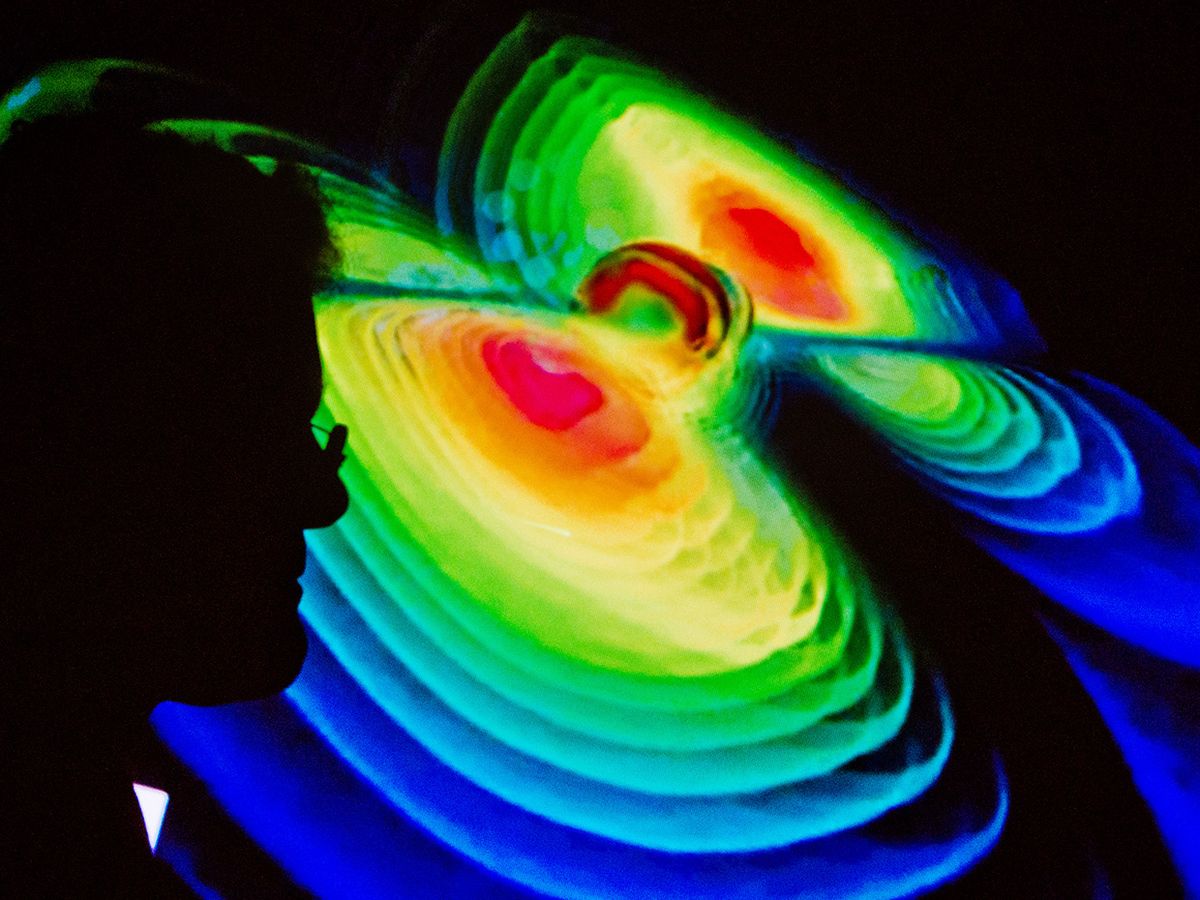
Their framework uses two freely falling test masses, such as atomic clocks, connected by a beam of light. As a gravitational wave passes, it alters the time the light takes to travel between these masses. This creates a measurable shift in timing or frequency.
The team derived this quantity in a coordinate-independent way, accounting for effects up to the second order in cosmic fluctuations. “We calculate these quantities exactly within an expanding spacetime and distinctly isolate what is genuinely measurable from effects that rely on the mathematical description,” lead author Guillem Domènech stated. This ensures that theoretical predictions for future experiments remain reliable.
Comparison: Traditional vs. Detector-Based Measurement
| Feature | Traditional Method | LUH Framework |
|---|---|---|
| Background | Assumed stable/quiet | Expanding and evolving |
| Primary Focus | Abstract mathematical fields | Physical detector observables |
| Accuracy | High in local space | High in cosmological scales |
What does this mean for the future of space observatories?
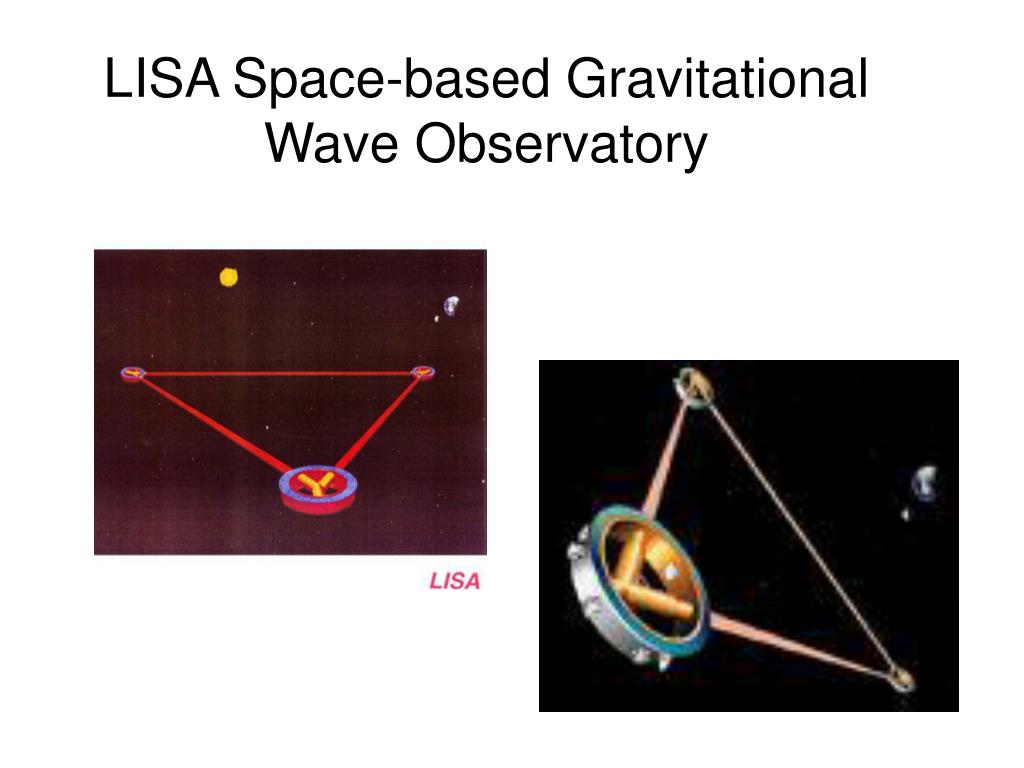
This framework provides a common language for theorists and experimentalists. It’s particularly relevant for the Laser Interferometer Space Antenna (LISA), a future space-based observatory designed to detect lower-frequency gravitational waves than ground-based systems can reach.
The new method also aids pulsar timing arrays, which monitor the precise pulses of distant stars to find cosmic ripples. By removing mathematical artifacts, scientists can more accurately search for primordial gravitational waves—signals created during the Big Bang.
Because the LUH model reproduces familiar signals in quiet spacetime but holds up in complex cosmological settings, it acts as a bridge. It allows researchers to apply the same rigorous standards to the entire universe that they currently apply to isolated black hole mergers.
Frequently Asked Questions
What are primordial gravitational waves?
According to the LUH study, these are subtle signals spread across the universe, believed to have originated from the rapid expansion of the universe immediately after the Big Bang.
Why are atomic clocks used in this model?
Atomic clocks serve as highly precise “test masses.” By measuring the time it takes for light to travel between them, scientists can detect the minute stretching and squeezing of spacetime caused by gravitational waves.
Will this affect current ground-based detectors?
The framework is compatible with current interferometers. In “quiet” spacetime, it reproduces the same signals currently measured on Earth, but it offers a more robust method for the complex data expected from space-based missions.
Want to stay updated on the latest cosmic discoveries? Let us know in the comments which space mission you’re following, or subscribe to our newsletter for more deep dives into theoretical physics.