
Scientists Discover Two Strange Dead Stars That Defy Astronomical Expectations
The Cosmic Outliers: How Gandalf and Moon-Sized are Rewriting the Rules of Stellar Death
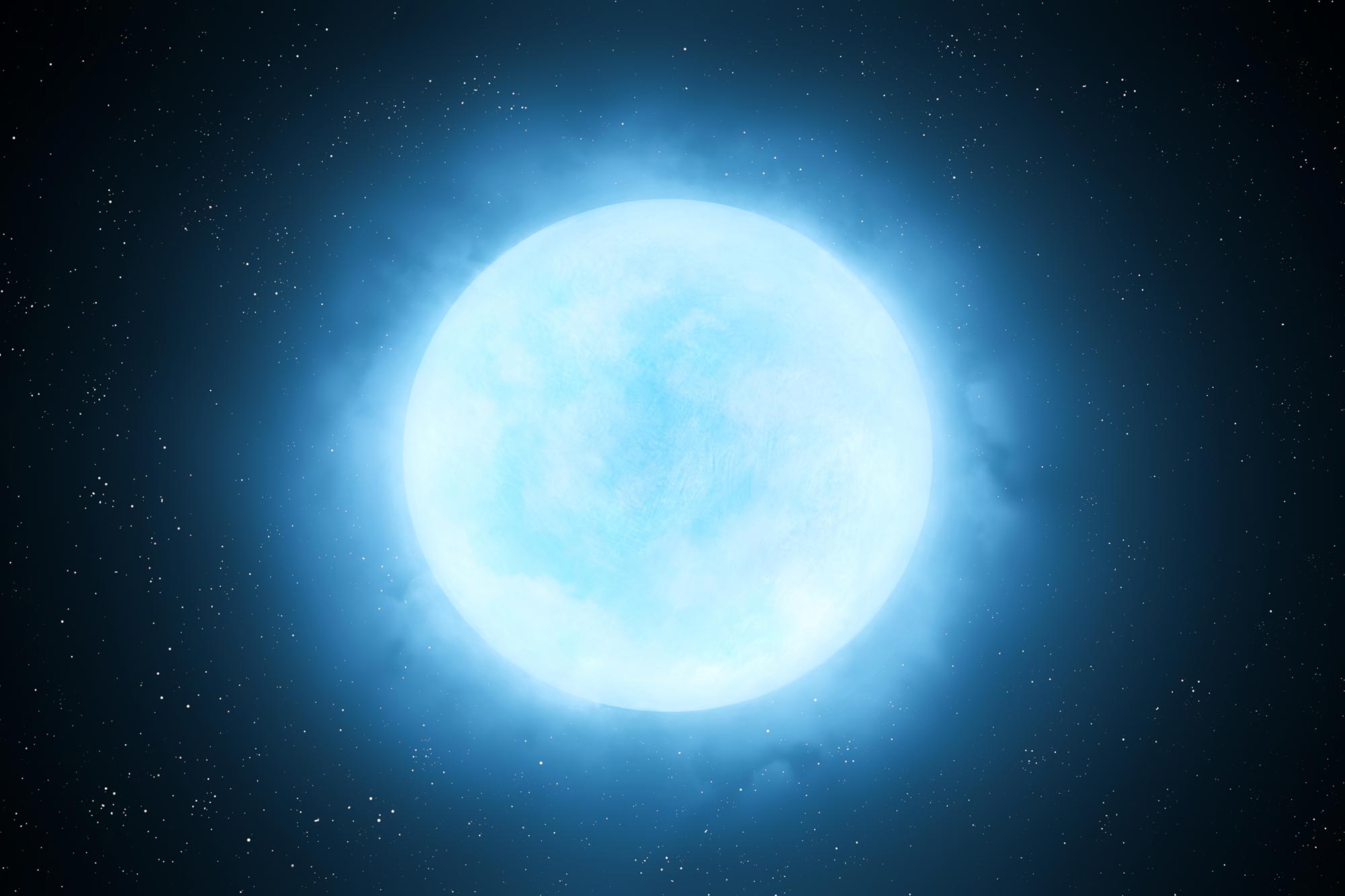
In the vast gallery of the cosmos, astronomers usually look for patterns. When they find one weird object, it’s a curiosity. When they find two that share a specific, bizarre set of DNA, it’s a discovery. The identification of two exotic white dwarf merger remnants—nicknamed Gandalf and Moon-Sized—has just signaled the birth of an entirely new class of stellar remnants.
For decades, we believed that X-ray emissions from white dwarfs were the “smoking gun” for binary systems, where one star cannibalizes its neighbour. But Gandalf and Moon-Sized are lonely. They have no companions, yet they scream in X-rays, challenging everything we thought we knew about how stars die and what happens after a violent cosmic collision.
The “Five-Finger” Signature: Defining a New Stellar Class
To establish a new category of celestial object, you need more than a hunch; you need data. Researchers from the Institute of Science and Technology Austria (ISTA) found that these two remnants share five specific, overlapping traits that are almost never seen together in isolated stars:

- Ultra-Massive: They pack significantly more mass than your average white dwarf.
- Highly Magnetic: Their magnetic fields are intense enough to warp the space around them.
- Rapid Rotation: They spin at breakneck speeds (Gandalf, for instance, completes a rotation every six minutes).
- Companionless: They are isolated, meaning there is no second star to provide fuel or gravitational influence.
- X-ray Emission: They emit high-energy X-rays, a trait usually reserved for stars in “accreting” binary pairs.
This combination is the astrophysical equivalent of finding two people in different cities who speak the same invented language. It suggests that these aren’t random anomalies, but the result of a specific evolutionary path: the merger of two white dwarfs into one massive, magnetic powerhouse.
Gandalf: The Lord of the Half-Rings
Gandalf is perhaps the more enigmatic of the two. While most merger remnants might have a full disk of debris, Gandalf possesses a “half-ring” of material. By analysing optical emission spectra, scientists noticed a “double-peaked” signature—resembling cat ears—that alternated every six minutes.
This indicates an asymmetric magnetic field so strong that it traps ionized material in a partial ring rather than a full circle. It is a structural rarity that has never been observed in any other white dwarf, making Gandalf a primary case study for asymmetric magnetization in the universe.
Moon-Sized: The Evolved Twin
If Gandalf is the “youthful” version of this class, Moon-Sized is the elder statesman. While Gandalf’s merger happened roughly 60 to 70 million years ago, Moon-Sized dates back about 500 million years.

Interestingly, Moon-Sized lacks the half-ring of material seen around Gandalf and emits X-rays about 100 times more faintly. This suggests a timeline for this new class of stars: they start as bright, debris-shrouded magnets and gradually evolve into quieter, cleaner remnants as they age.
The X-Ray Mystery: Where is the Energy Coming From?
The most disruptive part of this discovery is the X-ray emission. Typically, X-rays in white dwarfs come from accretion—material falling from a companion star onto the white dwarf. But since these stars are isolated, scientists are exploring three groundbreaking theories:
1. The Internal Outflow (The Pulsar Model)
Some researchers believe the star’s extreme magnetism and rapid spin create a force that rips material out of the star itself. This is a phenomenon well-documented in neutron stars (pulsars), but seeing it in a white dwarf would be a first, fundamentally changing our models of stellar magnetism.
2. The Late-Stage Fallback
the original merger wasn’t “clean.” A stream of leftover material from the collision might be on a highly eccentric orbit, returning to crash into the star every few million years, sparking X-ray bursts.
3. Planetary Pollution
White dwarfs are so dense that they often “eat” their own remaining planetary systems. The X-rays could be the result of asteroids or disrupted planets collapsing onto the stellar surface. However, this is less likely for Moon-Sized, as it shows fewer signs of “pollution” than Gandalf.

Future Trends: What This Means for Astrophysics
The discovery of Gandalf and Moon-Sized isn’t just about two weird stars; it’s a roadmap for future surveys. We are entering an era of “Big Data” astronomy where AI and automated surveys can scan millions of stars to find the “needle in the haystack.”
Expected trends in the coming decade include:
- The Hunt for “Siblings”: Now that a five-trait profile exists, astronomers will likely find dozens more of these remnants, allowing them to map the exact lifecycle of white dwarf mergers.
- Refining Gravitational Wave Models: White dwarf mergers are key sources of gravitational waves. Understanding the remnants helps scientists better predict the signals that detectors like LIGO or the future LISA mission might pick up.
- Planetary Survival Studies: By studying how these remnants “pollute” themselves with asteroids, we can learn more about whether any planets can survive the violent merger of two stars.
Frequently Asked Questions
Q: What exactly is a white dwarf?
A: A white dwarf is the dense, Earth-sized core left behind after a medium-sized star (like our Sun) exhausts its nuclear fuel and sheds its outer layers.
Q: Why is the “half-ring” of material significant?
A: Most material around a star forms a full disk. A half-ring implies an asymmetric magnetic field, which is incredibly rare and provides clues about the violence of the original merger.
Q: Do these stars pose any threat to Earth?
A: No. These objects are located deep in space. Their discovery is purely scientific and helps us understand the long-term evolution of the universe.
Q: How do astronomers “see” X-rays from space?
A: Since Earth’s atmosphere blocks X-rays, astronomers use space-based telescopes (like Chandra or XMM-Newton) to detect these high-energy signals.
What do you think? Does the idea of a “half-ringed” star change how you visualize the afterlife of a sun? Or are you more fascinated by the possibility of planetary remains being consumed by these magnetic giants? Let us know in the comments below or subscribe to our newsletter for more deep dives into the mysteries of the cosmos!