

Scientists Discovered Remains of the Earliest Animals on Earth. They May Have Made a Big Mistake.
Beyond the Naked Eye: The New Era of Nano-Paleontology
For decades, paleontology relied heavily on the human eye and the basic microscope. If a fossil looked like a burrow, it was labelled a burrow. If it looked like a shell, it was a shell. However, the recent work of paleontologist Bruno Becker-Kerber in Brazil is signaling a massive shift in how we uncover the secrets of the Ediacaran period.
The discovery that supposed “animal burrows” were actually pyritized microbial consortia wasn’t a result of better digging, but better imaging. By utilizing the MONGO beam line at the Sirius CNPEM particle accelerator, researchers can now perform “zoom tomography,” allowing them to peer inside a rock without destroying the sample.
The future of this field lies in the integration of particle physics and biology. We are moving toward a “Nano-Paleontology” era where the focus shifts from the shape of the fossil to its chemical and atomic signature. Expect to see more “corrected” histories as we re-examine 20th-century collections with 21st-century tech.
Rewriting the Ediacaran Script: The Search for the First Animals
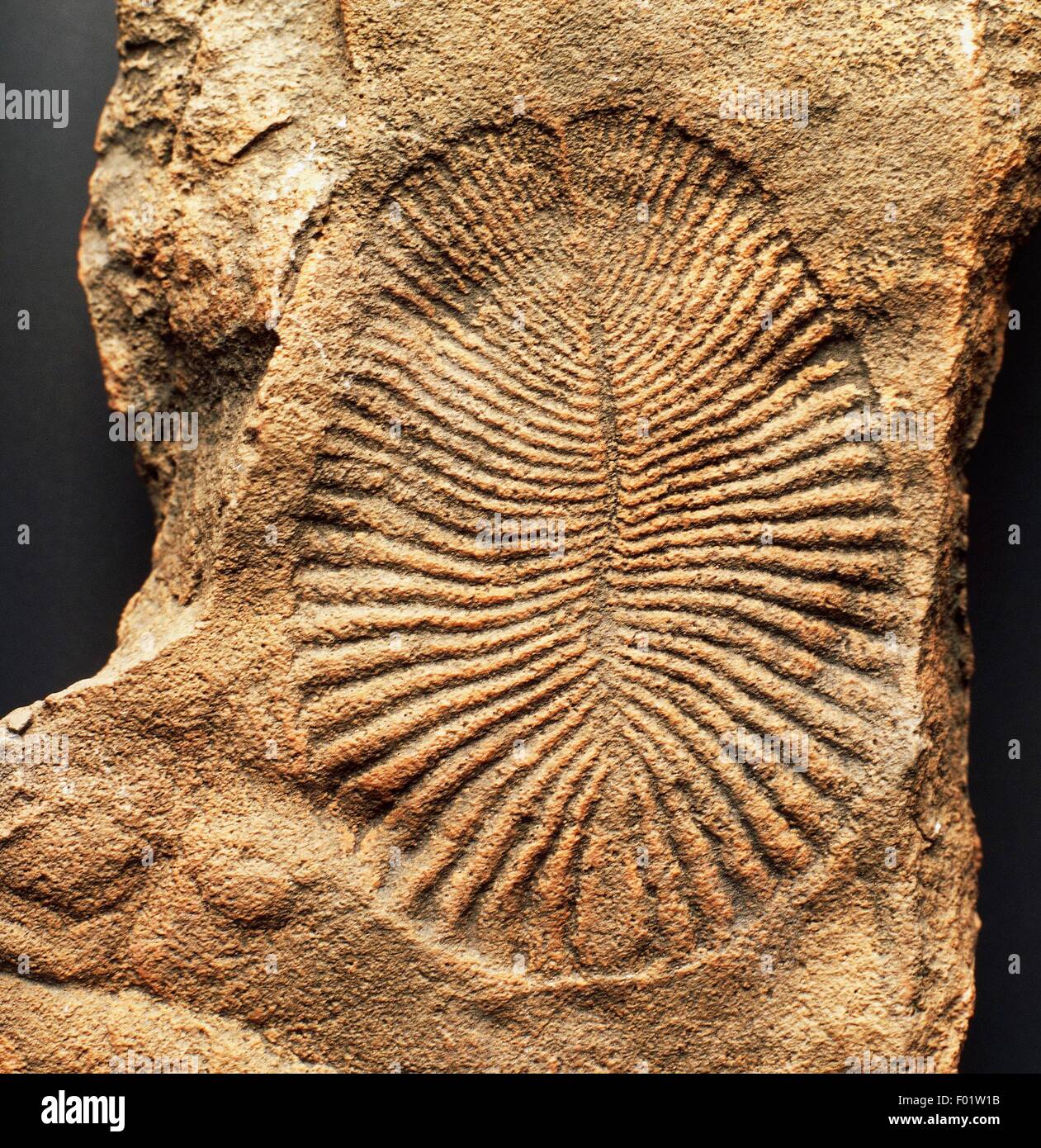
The Ediacaran period (roughly 635 to 541 million years ago) remains one of the most mysterious chapters in Earth’s history. This proves the bridge between a world dominated by single-celled microbes and the “Cambrian Explosion” of complex animal life.
The trend in current research is a move toward biological skepticism. As seen in the Brazil study, the tendency to assign “animal” status to any complex structure is being replaced by rigorous chemical analysis. This suggests that the emergence of meiofauna—the microscopic invertebrates that live between sand grains—might have happened later than previously thought, or was preserved much more rarely.
Future trends suggest we will find that the “first animals” weren’t just a few lucky survivors, but part of a complex, failed experiment in evolution. We are likely to discover more “stem-group” organisms—creatures that have some, but not all, of the characteristics of modern animals.
The Role of Microbial Consortia
We are also seeing a growing interest in “microbial mats.” Instead of looking for a single animal, scientists are now studying how colonies of bacteria, algae, and sulfur-oxidizing microbes worked together to create the environments that eventually allowed animals to evolve. This holistic approach to ancient ecosystems is the new gold standard in evolutionary biology.
From Brazil to the Stars: How Ancient Microbes Guide Astrobiology
The implications of Becker-Kerber’s research extend far beyond the shores of Brazil. This work is a masterclass in avoiding “false positives,” a critical lesson for NASA and other space agencies searching for life on Mars or the icy moons of Jupiter and Saturn.
In astrobiology, a “biosignature” is any substance or feature that provides scientific evidence of past or present life. The problem? Non-biological processes can often mimic biological ones. For example, certain mineral formations can look exactly like microbial filaments.
The trend moving forward is the development of cross-verification protocols. By studying how pyrite can “mimic” animal traces on Earth, scientists can better calibrate the instruments on the Perseverance rover or future Europa Clipper missions. If we can’t tell the difference between a bacterium and a burrow in a Brazilian rock, we certainly can’t do it on a Martian sample without advanced spectroscopy.
The Future of Fossil Analysis: AI and Machine Learning
As we generate terabytes of data from particle accelerators and Raman spectroscopy, the bottleneck is no longer data collection—it’s data analysis. The next major trend is the application of Artificial Intelligence (AI) to paleontology.
Machine learning algorithms are being trained to recognize the subtle difference between a biological cell wall and a mineral crystal. In the future, AI will likely scan thousands of tomographic slices in seconds, flagging “anomalies” that human researchers might miss. This will accelerate the pace of discovery, turning the search for early life into a big-data challenge.
We can expect a surge in “digital paleontology,” where fossils are shared as open-source 3D models, allowing researchers globally to collaborate on a single specimen without the risk of shipping fragile rocks across borders.
Frequently Asked Questions
A: A body fossil is the actual remains of the organism (like a bone or a pyritized cell wall), whereas a trace fossil is evidence of the organism’s activity, such as a footprint or a burrow.
A: It represents the first time in Earth’s history that large, complex organisms appeared, setting the stage for all animal life that followed.
A: It is a process where organic matter is replaced by pyrite (fool’s gold), often facilitated by sulfate-reducing bacteria, which can preserve the shape of an organism in incredible detail.
A: While complex animals are unlikely, the search for “microbial consortia” similar to those found in the Ediacaran is the primary goal of current astrobiology.
Want to dive deeper into the mysteries of early Earth? Share your thoughts in the comments below—do you think we’ll find evidence of complex life on other planets, or is the Ediacaran “experiment” unique to Earth? Subscribe to our newsletter for more updates on the intersection of technology and ancient history!