
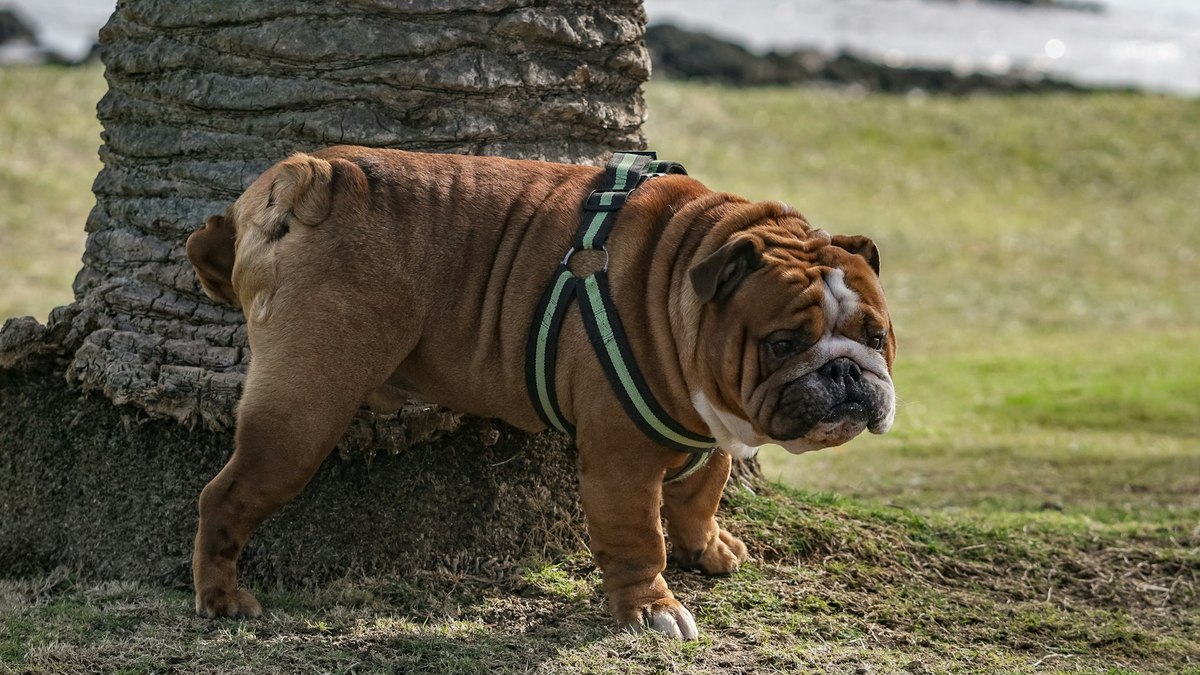
Scientists Reveal Most Earth Water Passed Through Animal Urine
The Water Cycle and the Urine Connection
According to researchers Neil Donahue and David Kreamer, most of Earth’s water has likely passed through the urine of animals at some point in history. This revelation stems from studies on the planet’s water cycle, which involves continuous movement through oceans, rivers, clouds, and living organisms. Donahue, a scientist at Carnegie Mellon University, and Kreamer, from the University of Nevada, explored how water interacts with life forms over millions of years.
How Scientists Calculated the Urine Turnover
Donahue’s calculation hinges on estimating daily urine production across all animals. He assumed a 50-kilogram human produces about one liter of urine daily, equivalent to 1% of body weight. Extending this to all animals, he estimated cordates—mammals, birds, reptiles, amphibians, and fish—produce roughly 0.02 gigatonnes of urine daily, equivalent to 8,000 Olympic-sized pools. Dividing Earth’s total water volume (1.4 billion gigatonnes, per the U.S. Geological Survey) by this daily output suggests a turnover time of 191 million years.
“This timeframe is sufficient for all water to pass through animal urine at least once,” Donahue explained. However, he emphasized the calculation is approximate, relying on assumptions about animal behavior and water distribution.
Exceptions to the Rule: Water That Hasn’t Been Urinated
Not all water has cycled through animals. David Kreamer highlighted that some water remains locked in glaciers, deep aquifers, or “juvenile water” trapped in Earth’s crust for millennia. These reserves, inaccessible to the surface, may never have interacted with living organisms. “Some water is still waiting to be urinated,” Kreamer noted, adding that volcanic activity can release this hidden water, but such events are rare.
For example, the Antarctic ice sheet holds about 60% of the planet’s freshwater, much of it untouched by biological processes. Similarly, deep groundwater in regions like the Great Artesian Basin in Australia has remained isolated for tens of thousands of years.
Why This Matters for Environmental Science
The research underscores the interconnectedness of Earth’s systems. Water’s journey through ecosystems affects everything from climate regulation to biodiversity. Understanding these cycles helps scientists model future water availability, especially as climate change alters precipitation patterns and glacial melt rates.
“This study reminds us that even the most abundant resources are part of a dynamic system,” said Dr. Emily Carter, a hydrologist at Stanford University, who was not involved in the study. “It highlights the need for sustainable water management to preserve these delicate balances.”
Real-World Implications and Future Research
Experts suggest the findings could influence policies on water conservation and pollution control. For instance, if all water has cycled through animals, contaminants like microplastics or pharmaceuticals might persist longer in the environment than previously thought. A 2022 study in *Nature Water* found that 80% of global freshwater is now contaminated with at least one pollutant, raising concerns about long-term ecological impacts.
Future research may focus on tracking water’s path through specific ecosystems. The European Space Agency’s *Water Cycle Observing System* (WACOS) uses satellites to monitor evaporation and precipitation, offering new data to refine models like Donahue’s.
Frequently Asked Questions
What is the water cycle, and why is it important?
The water cycle describes the continuous movement of water on, above, and below Earth’s surface. It sustains life, regulates climate, and distributes fresh water. Understanding it helps predict droughts, floods, and water scarcity.
How do scientists estimate water turnover through urine?
Researchers use approximations based on animal biomass, urine production rates, and total water volume. Donahue’s model assumes all animals contribute similarly to water cycling, though this simplifies complex ecological interactions.
Are there places where water hasn’t been urinated?
Yes. Water locked in glaciers, deep aquifers, or juvenile reservoirs has likely never passed through an animal. These reserves remain isolated for millennia, making them critical for studying Earth’s ancient hydrology.
Did you know? The average person urinates about 1.5 liters daily, but only 1% of Earth’s water is freshwater—most is saltwater in oceans.
Pro Tip: Supporting water conservation efforts, like reducing single-use plastics, helps protect ecosystems that rely on the water cycle for survival.
For more insights into Earth’s natural systems, explore our guides on sustainable living or recent updates on environmental research.