
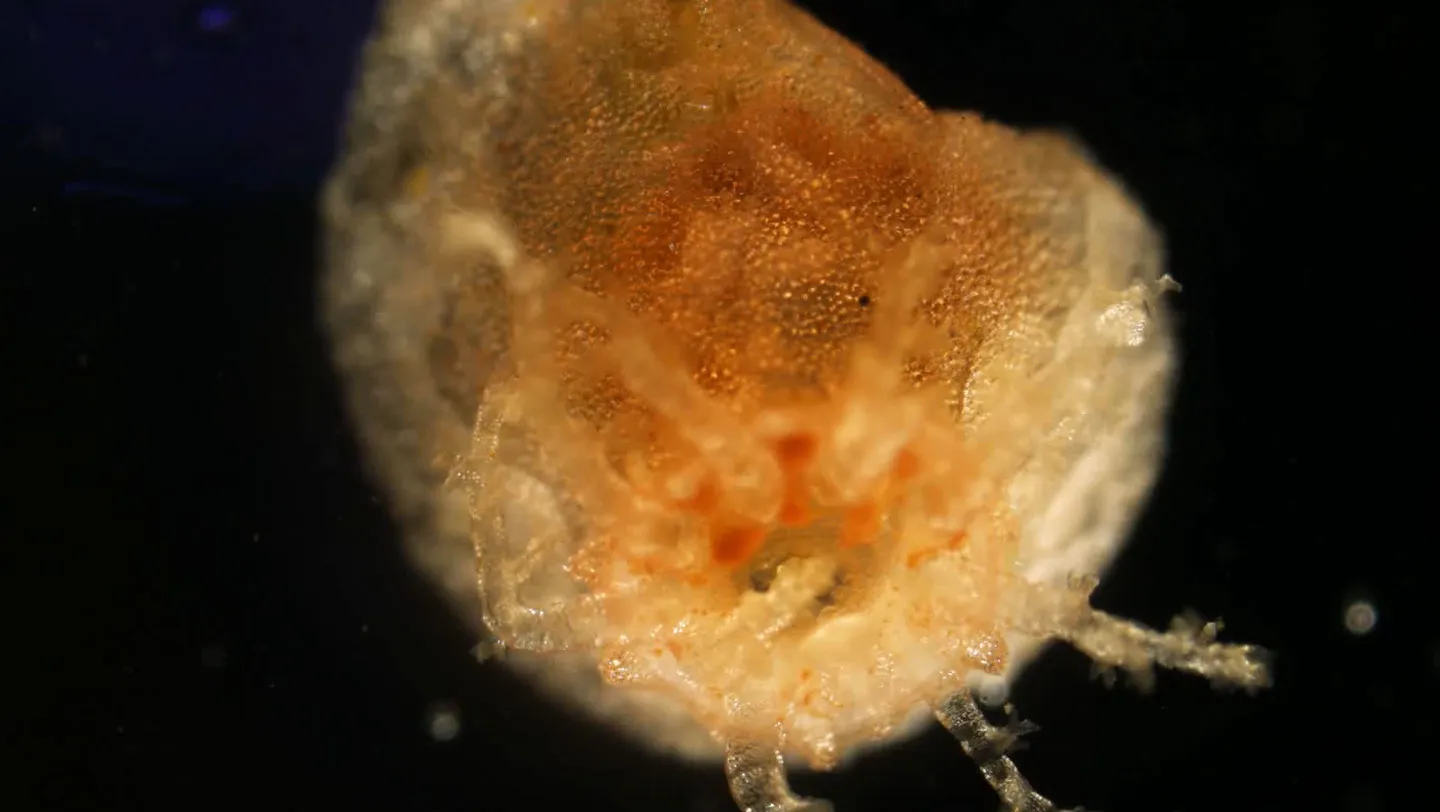
Sea Cucumber Tissue Survives for Years Without an Organism
Detached tissues from the scarlet sea cucumber (Psolus fabricii) can survive for more than three years in flowing seawater without antibiotics or special nutrients, according to research published May 29 in Science Advances. Marine ecologist Annie Mercier and her team found that tube feet and tentacles remained alive and absorbed nutrients independently.
The discovery occurred during a routine transfer of animals between tanks. A colleague of Mercier noticed that the sea cucumber had left behind podia, which are small tubelike appendages used for movement, on the tank floor. While these tissues usually decay rapidly, these specific appendages remained intact after several days.
How did the sea cucumber tissue survive?
Researchers used a compound microscope to observe the detached tissue. They found the tissue cleaned its own wound, cleared out dead cells, and performed cell division. The tissue also remained viable after being buried in several centimeters of mud.
To verify nutrient intake, Mercier’s team added amino acids labeled with a trackable atomic tag to the seawater. The researchers observed that the detached tissue absorbed these nutrients. However, this survival was not universal; tissue from the body wall died within weeks.
Why does this discovery matter for science?
The finding may force scientists to rethink the definition of what it means for tissue to be alive. Annie Mercier described the effort as a “zombie project” because the tissue reshapes and evolves without being a traditional living organism.
José García Arrarás, a regenerative biologist at the University of Puerto Rico in San Juan, noted that some sea cucumber species can regenerate completely after being cut in half. He stated that this work could offer new ways to study aging because researchers now have tissues from the same original source that range from one week to three years old.
What happens next in the research?
A possible next step for researchers is to detail the specific characteristics of the cells within these surviving tissues. According to García Arrarás, scientists need to know exactly what they have before they can fully understand the biological processes at work.
Future analysis may investigate whether these detached tissues could potentially outlive the original animal. Researchers may also explore the specific cell types that allow tentacles and tube feet to survive while other tissues perish.
Frequently Asked Questions
Which parts of the scarlet sea cucumber survived detachment?
The tube feet (podia) and tentacles survived for more than three years, while body wall tissues died within weeks.
How did researchers prove the tissue was still feeding?
Scientists added amino acids with a trackable atomic tag to the seawater and observed the tissue absorbing the nutrients.
Where was this research conducted?
The research involved Annie Mercier of Memorial University of Newfoundland in St. John’s, Canada.
Do you think the ability of detached tissue to survive changes how we should define a living organism?