
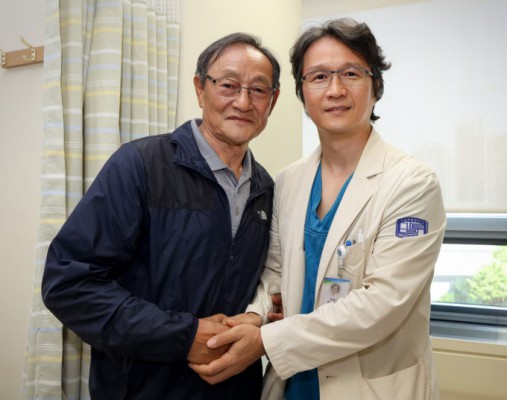
Seoul St. Mary’s Hospital Performs World’s Second Retroperitoneal Single-Port Robotic Kidney Cancer Surgery
Surgeons at Seoul St. Mary’s Hospital have performed the world’s second and South Korea’s first retroperitoneal single-port robotic surgery on a patient with stage 3 kidney cancer. Led by Professor Hong Sung-hoo of the Department of Urology, the team successfully removed a tumor and a thrombus from the inferior vena cava—the body’s largest vein—through a single incision on February 27.
The Procedure and Patient Recovery
The patient, a man in his 70s identified as Mr. Heo, sought medical attention after experiencing hematuria following evening exercise. Diagnostic imaging revealed an 8cm kidney tumor accompanied by a thrombus in the right renal vein. Because the patient had previously undergone open surgery, surgeons anticipated significant abdominal adhesions, which typically complicate traditional surgical access.
Professor Hong’s team utilized a retroperitoneal approach, bypassing the abdominal cavity by operating through the space behind the peritoneum near the flank. During the procedure, surgeons discovered the thrombus had extended into the inferior vena cava. The team removed both the tumor and the thrombus in a 2-hour and 20-minute operation using only one incision. Mr. Heo was discharged four days after the surgery.
The retroperitoneal space is the anatomical area situated behind the peritoneum, which contains the organs of the abdominal cavity. Accessing this space allows surgeons to operate without traversing the abdominal cavity, which is particularly beneficial for patients with previous abdominal scarring or adhesions.
Why This Surgical Approach Matters
Kidney cancer involving the inferior vena cava is considered one of the most high-risk procedures in urological oncology. According to clinical data, the one-year survival rate for untreated inferior vena cava thrombus is less than 30%. However, when the tumor and thrombus are completely removed, the five-year survival rate rises to over 50%, making surgical intervention a critical necessity.
Historically, surgeons performed this procedure via open surgery with extensive abdominal incisions. While robotic multi-port platforms have been used since the 2010s, this specific case demonstrates the viability of a single-port retroperitoneal approach. Although this technique requires working in a highly restricted space, it offers potential benefits for patients with abdominal adhesions, including faster recovery times and reduced instances of pain, bleeding, and complications.
This procedure marks a shift in how surgeons manage complex, high-risk cases where traditional entry points are compromised by prior surgeries. By demonstrating that a retroperitoneal single-port approach is feasible for vascular-involved kidney cancer, the team has established a new technical precedent for managing patients who were previously considered difficult candidates for minimally invasive surgery.
Future Implications for Robotic Surgery
The success of this operation suggests that surgeons may increasingly consider retroperitoneal single-port methods for patients with complex medical histories. Professor Hong noted that the primary significance of this case lies in proving that high-difficulty surgeries involving vascular invasion can be performed even when the abdominal cavity is inaccessible. Future clinical applications could focus on refining these techniques to further improve patient safety and comfort during similarly complex procedures.

Frequently Asked Questions
What is the main advantage of the retroperitoneal approach?
The retroperitoneal approach avoids the abdominal cavity, making it a suitable option for patients who have undergone previous surgeries and suffer from abdominal adhesions.
Why is removing a thrombus from the inferior vena cava necessary?
If left untreated, an inferior vena cava thrombus associated with kidney cancer results in a one-year survival rate of less than 30%. Full removal can increase the five-year survival rate to over 50%.
How does this surgery differ from traditional methods?
Unlike traditional open surgery, which requires a wide abdominal incision, this method uses a single-port robotic system to perform the operation through a small incision, potentially reducing pain and recovery time.
Would you consider minimally invasive robotic techniques as a preferred option for complex cancer surgeries if provided the choice?