
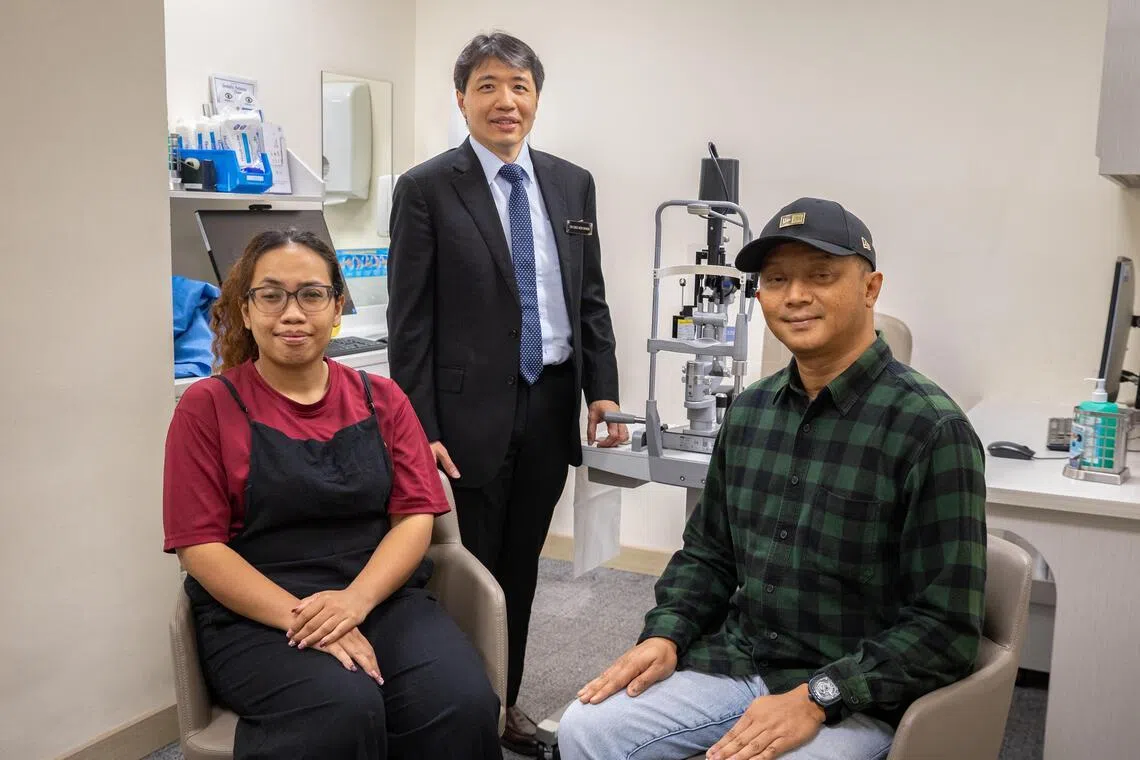
Singapore surgeon treats severe eye damage using mouth tissue, donated stem cells
Specialists at the Singapore National Eye Centre (SNEC) are utilizing advanced mucous membrane grafting and stem cell transplants to treat Stevens-Johnson syndrome (SJS). Senior consultant Ong Hon Shing has helped patients recover eye function and sight after this rare disorder caused severe scarring and functional blindness.
What is Stevens-Johnson syndrome and how does it affect the eyes?
Stevens-Johnson syndrome (SJS) is a rare and serious disorder affecting the skin and mucous membranes. According to medical details provided by SNEC, the condition causes blisters on the eyes, mouth, nose, and genitals, and in severe cases, the skin can detach and peel away.
If the condition remains unchecked, it often results in death due to organ failure, severe fluid loss, or sepsis. While often triggered by reactions to medications like antibiotics, the cause can remain unknown, as was the case for 30-year-old Fikriyah Mohamad Nor.
For Fikriyah, who developed the condition in 2018, the aftermath involved a “sandpaper” effect. Senior consultant Ong Hon Shing explained that chronic inflammation can cause the lid margin to produce keratin, making the eyelid rough and causing it to scrape against the cornea with every blink.
How are surgeons restoring eye function at SNEC?
To combat the scarring of the eyelids, Dr. Ong performs mucous membrane grafting. This procedure involves harvesting healthy mucosal tissue, typically from the inside of the patient’s mouth, and transplanting it to the affected eye to replace scarred tissue.
Fikriyah underwent this operation in February, where tissue from her lower lip was used to replace the keratinized lid margin of her left eye. This restored the moist, smooth surface necessary for blinking, allowing her to open the eye.
Dr. Ong, who trained at Moorfields Eye Hospital in London, has performed this procedure on about 12 patients at SNEC since 2022. The surgery is designed to prevent the condition from progressing to a stage where essential corneal stem cells stop regenerating.
What happens when SJS leads to functional blindness?
In more advanced cases, such as that of 43-year-old Indonesian shipping agent Sunarya, the condition can lead to total limbal stem cell deficiency. Sunarya developed SJS in 2019 due to gout medication, and his condition deteriorated during the Covid-19 pandemic.
Because his cornea lost all its stem cells, it became overgrown with blood vessels and opaque tissue, resulting in functional blindness. This required a more complex intervention known as simple limbal epithelial transplantation (SLET).
Dr. Ong learned the SLET procedure at the Sankara Nethralaya Ocular Surface Disease Centre in Chennai, India. The surgery uses stem cells from a cadaveric donor to restore the corneal surface. Sunarya was able to return to driving for work eight weeks after his March 31 operation.
What may happen next for these patients?
Recovery for SJS patients often occurs in stages. Fikriyah Mohamad Nor is currently awaiting a scheduled date for the same grafting procedure to be performed on her right eye.
For Sunarya, the road to full recovery is more complex. While sight was restored in his right eye, his left eye is more severely affected and may require both a stem cell transplant and a cornea transplant.
The success of these interventions likely depends on patient selection. Dr. Ong noted that patients must have sufficient moisture in their eyes for the SLET procedure to be successful.
Frequently Asked Questions
What typically triggers Stevens-Johnson syndrome?
SJS is usually triggered by a reaction to medication, such as antibiotics, though in some cases the cause remains unknown.
How does a mucous membrane graft work?
Healthy mucosal tissue is harvested from the patient’s mouth (such as the lower lip) and transplanted to the eyelid to replace abnormal, keratinized tissue with a moist, smooth lining.
What is the difference between a graft and a SLET procedure?
A mucous membrane graft uses the patient’s own tissue to fix the eyelid margin, while a Simple Limbal Epithelial Transplantation (SLET) uses stem cells from a cadaveric donor to treat total limbal stem cell deficiency in the cornea.
Do you believe more specialized training in international centers is the key to treating rare medical conditions locally?