

Social Security Benefits May Face Cuts by 2032 as Trust Fund Reserves Dwindle
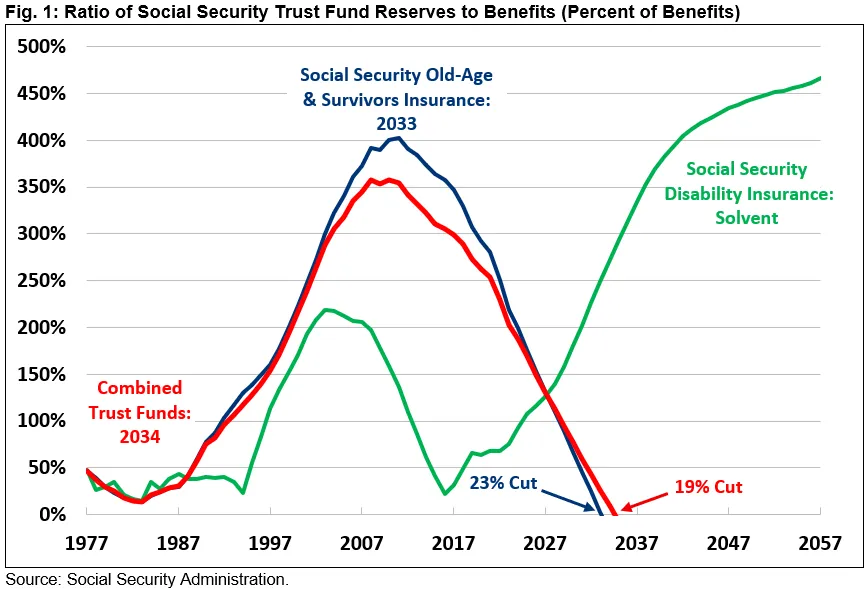
The Old-Age and Survivors Insurance (OASI) Trust Fund, which finances the majority of Social Security payments, could exhaust its reserves by the end of 2032, according to the latest report from the Social Security Board of Trustees. This projection marks a one-year acceleration in the fund’s timeline compared to previous estimates, creating a potential funding gap that may force a reduction in benefit payments unless Congress enacts legislative reforms.
What Happens When Reserves Are Depleted?
If the reserves are exhausted without congressional intervention, the Social Security program would rely solely on incoming payroll tax contributions. According to the trustees’ report, these tax revenues would only be sufficient to cover approximately 78% of scheduled benefits. While current beneficiaries would continue to receive payments, the total amount disbursed would be adjusted downward to align with available income.
For an individual expecting a $1,500 monthly benefit, this could mean a reduction to roughly $1,170. Similarly, a couple projected to receive $3,000 per month could see their combined income drop to approximately $2,340. Experts emphasize that while the program will not cease to exist, the risk of automatic benefit reductions remains a primary concern as the 2032 deadline approaches.
The Social Security Trustees’ newest projection indicates the OASI fund depletion date has moved forward by one year compared to the findings released in the previous annual report.
Pressure on Medicare Financing
Medicare faces a similar, though distinct, fiscal challenge. The fund supporting Medicare Part A, which covers hospitalizations and specialized services, could struggle to meet its full obligations beginning in 2033. Should this occur, the program would continue to function, but with limited resources to cover all currently authorized medical costs. This creates a dual burden for older adults who rely on both Social Security income and Medicare health coverage.
The financial strain on these programs is largely driven by a demographic shift: the mass retirement of the “baby boom” generation. As the number of beneficiaries rises, the ratio of active workers contributing to the system has slowed due to lower birth rates and shifting migration patterns, complicating the long-term sustainability of the current funding model.
Strategies for Future Retirees
While legislative action remains the only path to fully securing the system, financial planners suggest that workers can take individual steps to mitigate potential impacts. Specialists recommend that individuals review their Social Security earnings history to ensure all years of work are accurately reported, as errors can lead to lower-than-earned benefits. Other strategies include delaying the age of retirement to increase monthly payments and diversifying retirement assets through personal savings vehicles such as 401(k) plans or IRAs.
Frequently Asked Questions
Will Social Security stop paying benefits in 2032?
No. The report indicates that the program will continue to pay benefits, but they may be reduced to approximately 78% of the originally scheduled amounts if the OASI reserves are exhausted and no new legislation is passed.
What is the primary cause of the projected funding shortfall?
Analysts attribute the shortfall to the retirement of the “baby boom” generation, which has increased the number of beneficiaries, combined with a slower growth rate in the number of active workers paying into the system.
Is Medicare facing the same timeline as Social Security?
The Medicare Part A fund faces a slightly different timeline, with potential difficulties in meeting full obligations beginning in 2033, one year after the projected exhaustion of the OASI reserves.
How do you plan to adjust your personal savings strategy in light of these long-term projections?