

South Korea Beats Czechia in 2026 World Cup Opening Match
South Korea’s 2-1 victory over Czechia in their 2026 FIFA World Cup opening match drew up to 16,000 fans to Seoul’s Gwanghwamun Square, according to Seoul real-time city data. The event underscores a shift toward data-driven urban crowd management and the increasing role of public spaces as hubs for national sporting celebrations.
How is real-time data improving urban crowd management?
City officials are moving away from static estimates toward dynamic, real-time tracking to ensure public safety during mass gatherings. During the June 12 match, the Korea Football Association expected roughly 6,000 attendees, but Seoul’s real-time city data revealed the crowd had swelled to between 14,000 and 16,000 people by noon, according to Asia Today.
This discrepancy shows why real-time monitoring is becoming essential. When the crowd exceeded expectations by more than double, police deployed 260 officers from three mobile units to manage pedestrian flow. Officers focused on keeping fans moving in one direction and managing the use of parasols to prevent bottlenecks in the square.
Why are global sporting events changing workplace behavior?
The tradition of the “office-bound” workday is shifting as employees increasingly integrate global events into their professional schedules. Asia Today reported that Gwanghwamun Square saw a sharp increase in attendance near halftime as office workers joined during lunch breaks, some opting to eat convenience store food rather than visiting restaurants.
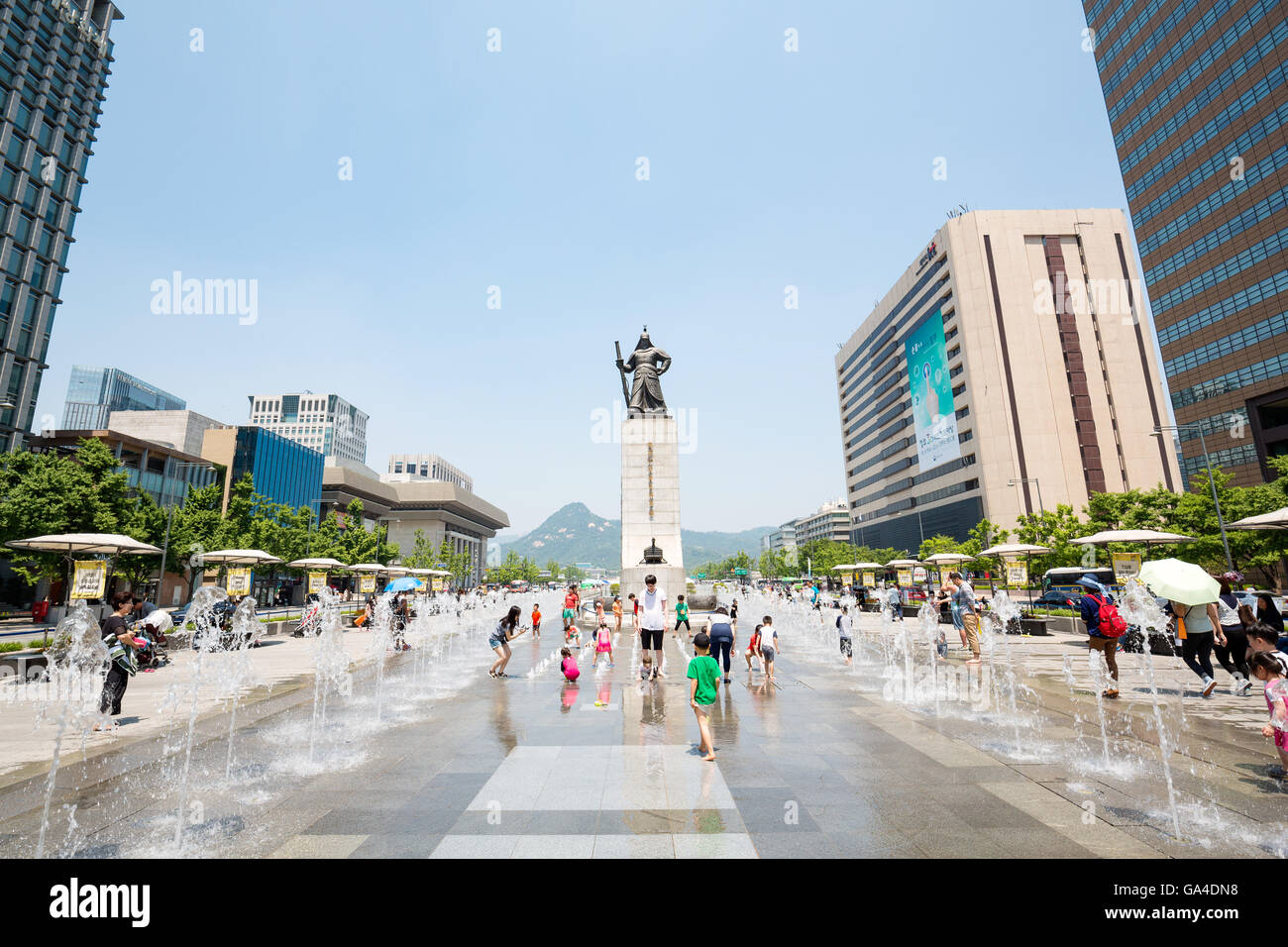
Beyond lunch breaks, more employees are utilizing formal leave to participate in collective cultural moments. Lee Hyun-soo, a 37-year-old office worker, told Asia Today he used annual leave specifically to watch the match with his child. This suggests a growing trend where “experiential” time off is prioritized over traditional leisure.
For companies, this shift indicates a need for more flexible scheduling during high-stakes national events. When employees like Kim Sung-il, a 28-year-old worker near Gwanghwamun Station, express that a win helps them “start the afternoon shift happily,” it links team performance directly to workplace morale.
What does the rise of “Public Viewing Culture” mean for city planning?
The success of the Gwanghwamun Square event demonstrates that urban centers are being redesigned as “emotional infrastructure.” These spaces allow citizens to experience high-stress events—like the 59th-minute goal by Czechia’s Ladislav Krejci that briefly silenced the crowd—within a supportive community.
The logistical requirements for these events are evolving. With temperatures hitting 28 degrees Celsius (82.4 degrees Fahrenheit) during the match, fans relied on portable fans and parasols. Future city planning for public viewings will likely incorporate more permanent climate-control solutions, such as integrated misting systems or shaded architectural zones, to accommodate crowds in extreme weather.
Comparing Estimated vs. Actual Attendance
The gap between projected and actual attendance at the Gwanghwamun viewing event highlights the volatility of sports fandom. Based on the Asia Today report, the following figures illustrate the difference:
| Source | Attendance Figure |
|---|---|
| Korea Football Association (Estimate) | 6,000 |
| Seoul Real-Time City Data (Actual) | 14,000 – 16,000 |
FAQs About Public World Cup Viewings
How do cities manage crowds for World Cup matches?
Cities use a combination of mobile police units and real-time data tracking. In Seoul, 260 officers were used to direct pedestrian flow and manage safety during the match against Czechia, according to Asia Today.
Is it common for fans to take leave for soccer matches?
Yes, particularly for opening matches or knockout stages. Reports from the Gwanghwamun event show fans using annual leave and “experiential learning days” for children to attend public viewings.
What are the risks of large public viewings?
The primary risks include overcrowding and weather-related health issues. During the June 12 match, heat was a primary concern, with temperatures reaching 28 degrees Celsius.
Do you think public viewing events are better than watching from home? Share your experience in the comments below or subscribe to our newsletter for more insights on global sports culture.