
South Korea-EU Strategic Partnership and G7 Summit: Key Diplomatic Outcomes and Future Outlook
South Korean President Lee is currently conducting his first European tour, a diplomatic mission timed to coincide with the G7 summit in France. According to Min Jeong-hun of the Korea National Diplomatic Academy and Professor Yoon Sung-wook of Chungbuk National University, the trip serves to formalize South Korea’s role as a global partner, shifting focus from regional concerns to broader international cooperation in security and technology.
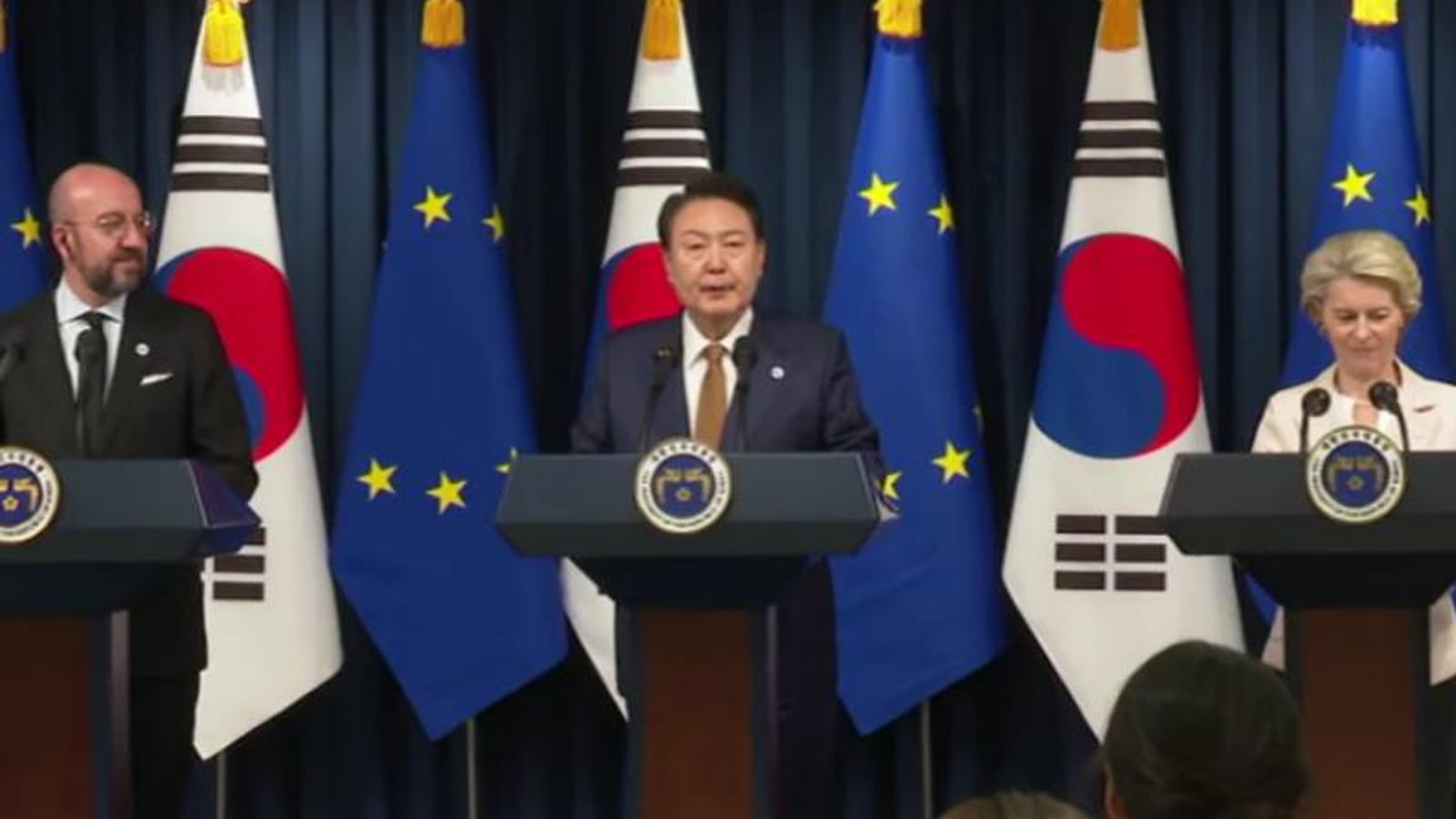
Did You Know? During the official welcome at the EU Council in Brussels, the South Korean national anthem was performed through the second verse, accompanied by a specialized arrangement of Beethoven’s Ninth Symphony, which serves as the European Union’s anthem.
Strategic Alignment with the European Union
The visit to Brussels and subsequent meetings with EU leadership are intended to move beyond simple diplomatic exchanges toward a “strategic partnership.” As noted by Min Jeong-hun, the tour aims to capitalize on the momentum established during previous international summits. The joint statement released between South Korea and the EU addresses shared concerns regarding the war in Ukraine and the recent deployment of North Korean troops, which the parties have formally condemned.
Expert Insight: The diplomatic stakes hinge on the “Brussels Effect”—the EU’s capacity to set global regulatory standards. By aligning with EU norms in digital and security sectors, South Korea is positioning itself as a vital partner for a Europe currently seeking to reduce its economic and security dependencies on the United States and China.
Addressing Security and Economic Dependencies
A primary objective of the tour is the initiation of negotiations for a secret information-sharing agreement, according to Professor Yoon Sung-wook. This move reflects the EU’s current internal security anxieties and its need to strengthen defense capabilities. With European manufacturing capacity in defense and advanced technology having declined under previous economic models, South Korea’s established industrial base in shipbuilding, semiconductors, and artificial intelligence offers a practical alternative for European partners.

The delegation noted that while the EU and South Korea share democratic values, both sides face the challenge of navigating existing military and economic ties to the U.S. and China. This tour is viewed by analysts as the foundational phase for long-term cooperation, despite the logistical constraints of a brief, multi-country schedule.
Future Outlook and G7 Objectives
Following the visit to Belgium and Italy, President Lee is scheduled to attend the G7 summit in Evian, France. Observers are looking for potential developments regarding middle-power cooperation. Professor Yoon suggests that the summit may provide a platform for “like-minded” nations—including Canada, South Korea, and Japan—to reinforce the principles of multilateralism in an international order currently strained by unilateralist trends.
While some observers have questioned the tone of the President’s statements regarding North Korea, analysts argue there is no shift in policy. The administration maintains a stance of seeking peace and denuclearization while utilizing humanitarian aid as a tool for engagement, distinguishing this approach from the restrictive policies of previous administrations.
Frequently Asked Questions
Why is this European tour considered critical at this time?
According to Professor Min Jeong-hun, the tour is essential to move South Korea’s diplomatic role beyond the Korean Peninsula and into a global context, specifically by acting as a partner to a Europe that is currently reassessing its security and economic dependencies.
What is the significance of the joint statement with the EU?
The statement serves as a foundation for future cooperation in defense and technology, specifically condemning North Korea’s troop deployment and creating a framework for potential collaboration in the semiconductor, AI, and defense industries.
How does this administration’s stance on North Korea compare to the past?
According to Min Jeong-hun, while the goal remains denuclearization, the current administration emphasizes humanitarian aid and low-level cooperation as a means to improve inter-Korean relations, rather than using human rights issues primarily as a tool for pressure or dialogue blockage.
How do you perceive the long-term impact of South Korea strengthening its defense and technological ties with the European Union?