

SpaceX Falcon 9 Rocket Predicted to Hit the Moon in 2026
A SpaceX Falcon 9 rocket upper stage is projected to impact the Moon on August 5, 2026, according to independent astronomer Bill Gray. The object, roughly the size of a five-story building, is expected to hit near the Einstein crater at seven times the speed of sound, though the flash won’t be visible from Earth.
Bill Gray, the developer of Project Pluto software used to track near-Earth objects, predicts the collision will occur around 06:44 UTC. The impact site is located in a crater-dense region on the border between the Moon’s near and far sides, specifically near the Einstein crater, as reported by Science Alert.
When will the SpaceX rocket hit the Moon?
The predicted impact date is August 5, 2026. While the trajectory is largely predictable due to the known gravitational influences of the Earth, Moon, and Sun, Gray notes a small margin of uncertainty. This is caused by solar radiation pressure.
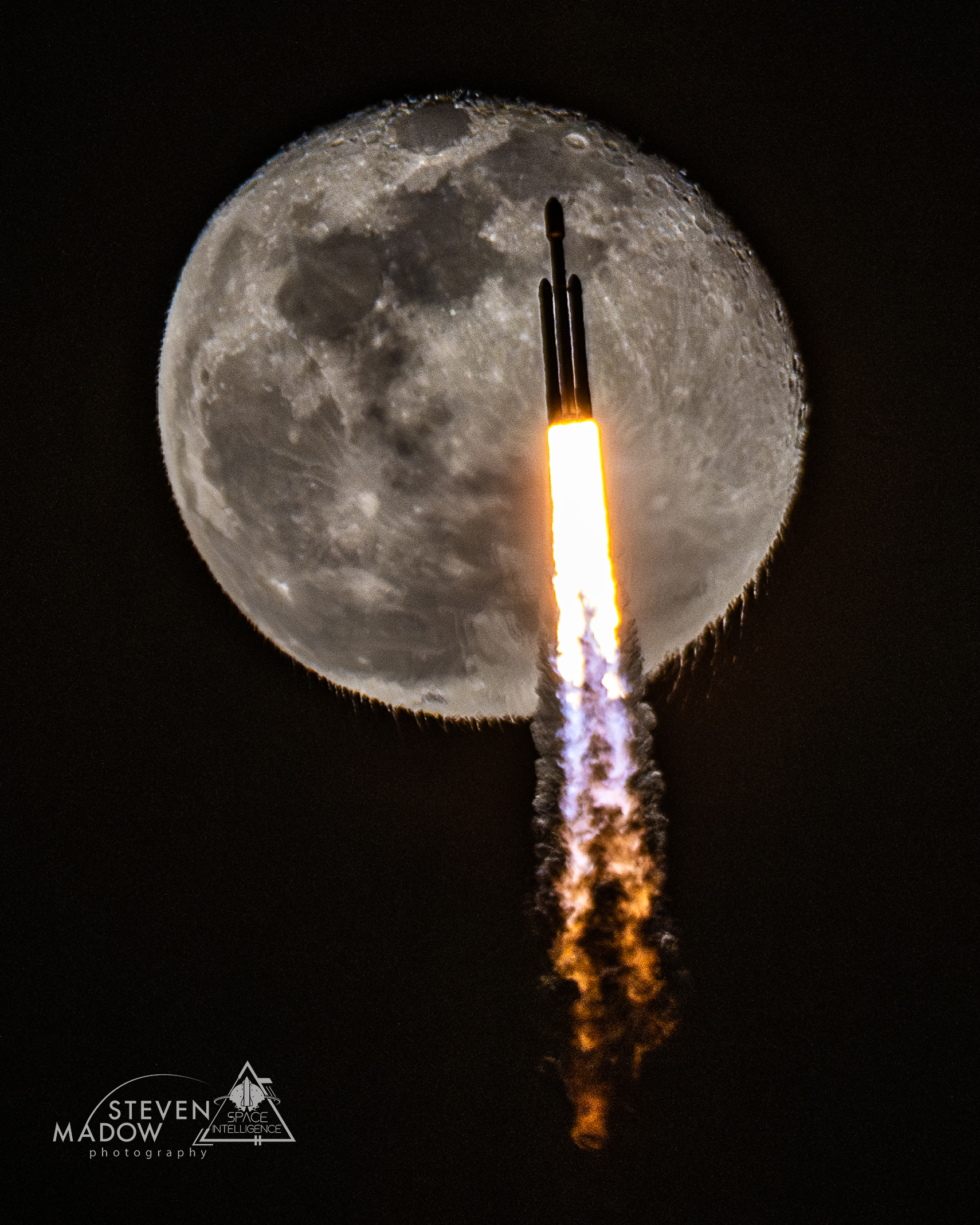
Because the rocket stage is tumbling, the way it reflects sunlight changes. These shifting reflections create tiny pushes that subtly alter its orbit over time. Despite this, the object remains on a collision course with the lunar surface.
Why is a Falcon 9 rocket heading for the Moon?
The debris is the second stage of a Falcon 9 rocket from mission 2025-010D, launched in January 2025. That specific mission delivered two lunar landers: Blue Ghost Mission 1 and Hakuto-R Mission 2.

While SpaceX’s first-stage boosters are designed to land back on Earth for reuse, the second stages typically burn up in the atmosphere or enter solar orbit. In this instance, the stage became trapped in a local orbit. It currently takes about 26 days to orbit Earth, reaching a maximum distance (apogee) of 510,000 kilometers.
What happens when man-made debris hits the lunar surface?
The impact will generate significant energy, but it won’t be a spectacle for backyard stargazers. According to reports, NASA’s Lunar Reconnaissance Orbiter (LRO) will likely be the only way to see the aftermath through high-resolution photography.
This isn’t a first. In 2022, the LRO photographed a similar event where a rocket booster—believed to be from China’s Chang’e 5-T1 mission—struck the far side of the Moon, leaving a distinct double crater. This creates a measurable contrast between accidental debris impacts and intentional scientific missions.
Intentional vs. Accidental Impacts
Astronomers distinguish this SpaceX event from past deliberate collisions. In the 1970s, Apollo modules were intentionally crashed into the Moon to trigger “moonquakes” to study the interior. Later, in 2009, NASA’s LCROSS mission intentionally slammed a probe into the lunar south pole to search for water ice.
Is this impact dangerous for Earth or the Moon?
No. Experts confirm the collision won’t shift the Moon’s orbit or pose any risk to Earth. The mass of a rocket stage is negligible compared to the lunar mass.
Instead, the event offers a rare data point. By observing the resulting crater, scientists can better understand how objects without atmospheres react to high-velocity impacts. It’s a case of accidental science.
Frequently Asked Questions
Will we see the SpaceX rocket hit the Moon?
No. The flash of the impact is expected to be too faint to see from Earth, though NASA satellites may photograph the crater later.
Does this increase the risk of space junk?
In this case, no. The debris is leaving Earth’s immediate environment by colliding with the Moon, effectively removing it from Earth’s orbital paths.
What is the speed of the impact?
The rocket stage is traveling at approximately seven times the speed of sound.
What do you think about the increasing amount of man-made debris reaching the Moon? Should there be stricter “cleanup” protocols for lunar orbits? Let us know in the comments below.