
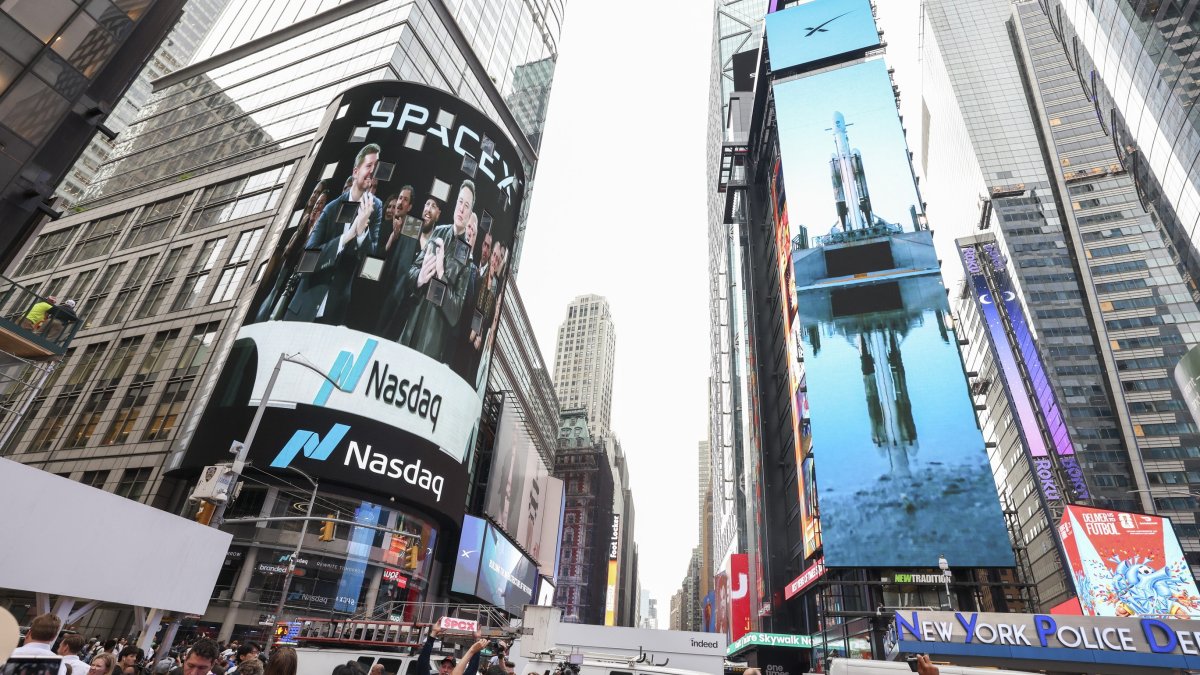
SpaceX Soars Past $2 Trillion Valuation in Historic Nasdaq Debut
SpaceX’s stock surged over 20% in its Nasdaq debut on Friday, pushing the company’s valuation past $2 trillion, according to multiple reports. The shares opened at $150, up from an IPO price of $135, and closed at $164, making it the sixth-largest U.S. company by market value. The offering, valued at $75 billion, surpassed Saudi Aramco’s 2019 IPO as the largest in history, according to filings.
The company’s market debut drew scrutiny as a potential indicator for future IPOs, including those of AI firms Anthropic and OpenAI. Analysts noted the event tested the “Musk premium,” a valuation driver behind Tesla’s $1 trillion-plus market cap, despite Musk’s controversial political involvement. SpaceX’s $5 billion loss in 2025 and lower revenue compared to peers contrasted with its soaring valuation.
Why It Matters
SpaceX’s IPO redefined Wall Street’s approach to tech valuations, attracting retail investors and positioning the company as a potential cornerstone for ETFs. Its $28.5 trillion market opportunity—spanning space infrastructure and Starlink services—was cited as a key growth catalyst. However, analysts cautioned that the price-to-revenue ratio of 94, based on 2025 revenue of $18.7 billion, reflects speculative bets rather than traditional fundamentals.

The listing also solidified Musk’s status as the first trillionaire, despite the company’s financial performance. SpaceX President Gwynne Shotwell and CFO Bret Johnsen rang the Nasdaq opening bell, signaling the company’s shift from private to public scrutiny. Analysts like Joel Shulman of ERShares highlighted Musk’s unique ability to execute ambitious projects, comparing him to historical innovators.
What May Happen Next
SpaceX’s valuation could rise if underwriters exercise options to sell additional shares within 30 days. The company is expected to join the Nasdaq 100 within a month, increasing demand from passive investment funds. However, analysts warned that its high valuation leaves little room for error, with some suggesting a $100 share price would not alter long-term investor confidence.
Competition from rivals like Blue Origin and regulatory challenges in space commercialization may impact future growth. The IPO also raises questions about how investor portfolios will shift, with some predicting selling pressure on other tech giants as funds rotate into SpaceX shares.
Frequently Asked Questions
What caused SpaceX’s valuation to exceed $2 trillion? The stock’s 20% surge on its Nasdaq debut, coupled with its $75 billion IPO, driven by investor confidence in Musk’s vision for space and AI.
How does SpaceX’s financial performance compare to its valuation? The company reported a $5 billion loss in 2025, with revenue significantly lower than similarly valued tech firms, yet its market cap reflects speculative growth expectations.
What role do ETFs play in SpaceX’s future? SpaceX’s anticipated inclusion in the Nasdaq 100 could make it a major holding for passive funds, increasing share demand and stability.
How might SpaceX’s IPO influence upcoming tech listings? Analysts suggest it could set a precedent for valuations, but risks remain if investor enthusiasm wanes.