
Spain Digital Nomad Visa 2026: Key Changes and Stricter Requirements
Spain’s Digital Nomad Visa (DNV) has transitioned from a flexible post-pandemic incentive to a strictly regulated immigration pathway, with authorities now enforcing higher income thresholds and rigorous proof of remote employment. According to the Unidad de Grandes Empresas (UGE), the body overseeing these applications, officials are mandating stricter documentation to combat fraudulent filings and ensure applicants maintain a 100% remote work status throughout their residency.
Why are Spain’s Digital Nomad Visa requirements becoming stricter?
The UGE has tightened its oversight to address three primary issues identified since the program’s 2023 launch: the submission of fraudulent work contracts, applicants failing to meet financial benchmarks, and successful visa holders neglecting to register with the Spanish social security system. Legal experts at Remote Work Europe and Remote from Spain report that these enforcement measures mean the administration is now rejecting incomplete or inconsistent applications outright, rather than offering applicants the opportunity to rectify errors.

How do current income requirements impact applicants?
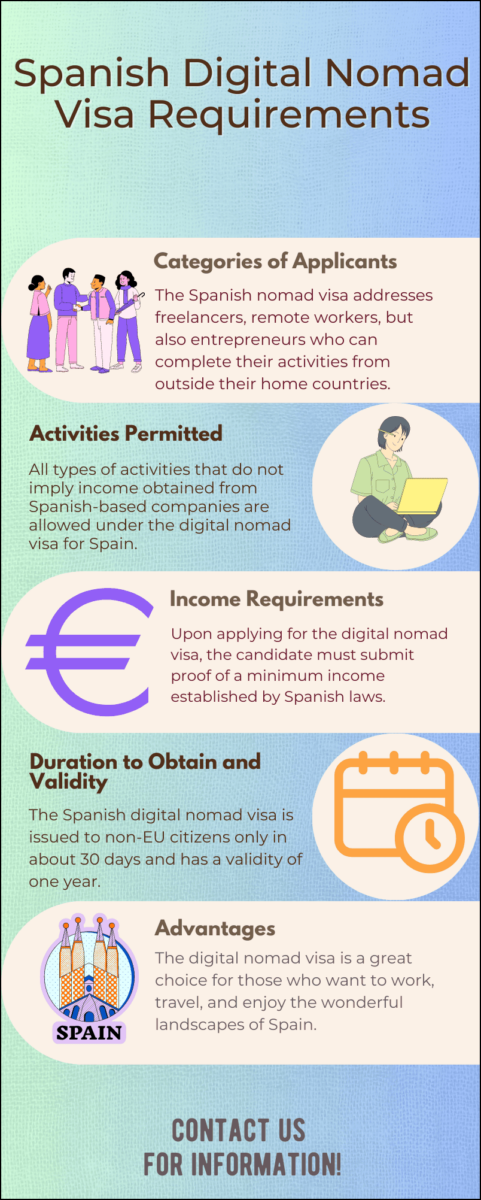
Financial thresholds for the DNV are tied to Spain’s minimum wage and rise annually. As of 2026, a primary applicant must prove a monthly gross income of at least €2,849. Family reunification adds further costs: applicants must demonstrate an additional €1,068.37 per month for a partner and €356.12 for each accompanying child, according to official government data.
What constitutes “100% remote work” for the UGE?
The UGE requires that all professional duties be performed exclusively through digital or telecommunication systems. UGE president Luis Esteban has explicitly warned that any role requiring physical presence in Spain—even if the company is based abroad—will jeopardize an applicant’s standing. Furthermore, while visa holders are permitted to earn up to 20% of their income from Spanish sources, they are strictly prohibited from holding contracts with national Spanish companies.
Are there specific challenges for US applicants?
US citizens must navigate unique social security and insurance hurdles. While the US Social Security Administration previously did not issue Certificates of Coverage for digital nomads, policy has shifted; the US will now issue these certificates if an employer provides a letter confirming the worker is being sent to Spain as an intra-company transfer. Additionally, because the US-Spain bilateral agreement does not cover public health, applicants must secure comprehensive private medical insurance with no co-payments or waiting periods, as noted by the UGE.
How has the renewal process changed?
Renewing a DNV now requires more than just maintaining the status quo. According to Remote Work Europe, applicants seeking to extend their stay must provide concrete evidence of their physical presence in Spain, requiring proof of at least six months of residency per year. The UGE has also curtailed the ability to easily modify the DNV into other residency categories, a measure designed to prevent individuals from using the digital nomad route as a backdoor to general work visas.

Frequently Asked Questions
- Can I apply for the DNV if I am a freelancer in Spain? No. The visa requires that your work be performed for companies outside of Spain, and you cannot seek clients locally once you arrive.
- Is private health insurance mandatory? Yes, unless you have social security coverage from your home country or your company registers you within the Spanish system.
- What happens if I don’t register for Spanish social security? If you are self-employed, failing to register and pay the required monthly fees can lead to significant issues, particularly during your visa renewal process.
- Can I switch to a standard work visa later? The UGE has restricted the ability to modify the DNV into the general residency regime to prevent misuse of the system.
Are you preparing to apply for your Spanish Digital Nomad Visa? Share your experience with the application process in the comments below, or subscribe to our newsletter for the latest updates on Spanish immigration law.