
Spanish Public Sector AI Spending Surges as Chatbot Adoption Grows
The Silent AI Revolution: How Public Administrations Are Quietly Adopting Generative Tools
In the corridors of Spanish public institutions, a subtle but significant shift is underway. What began as a handful of curious researchers experimenting with new technology has rapidly evolved into a recurring line item in public budgets. The adoption of generative artificial intelligence—specifically tools like ChatGPT and Claude—is no longer a futuristic concept; it is becoming a standard operational expense.
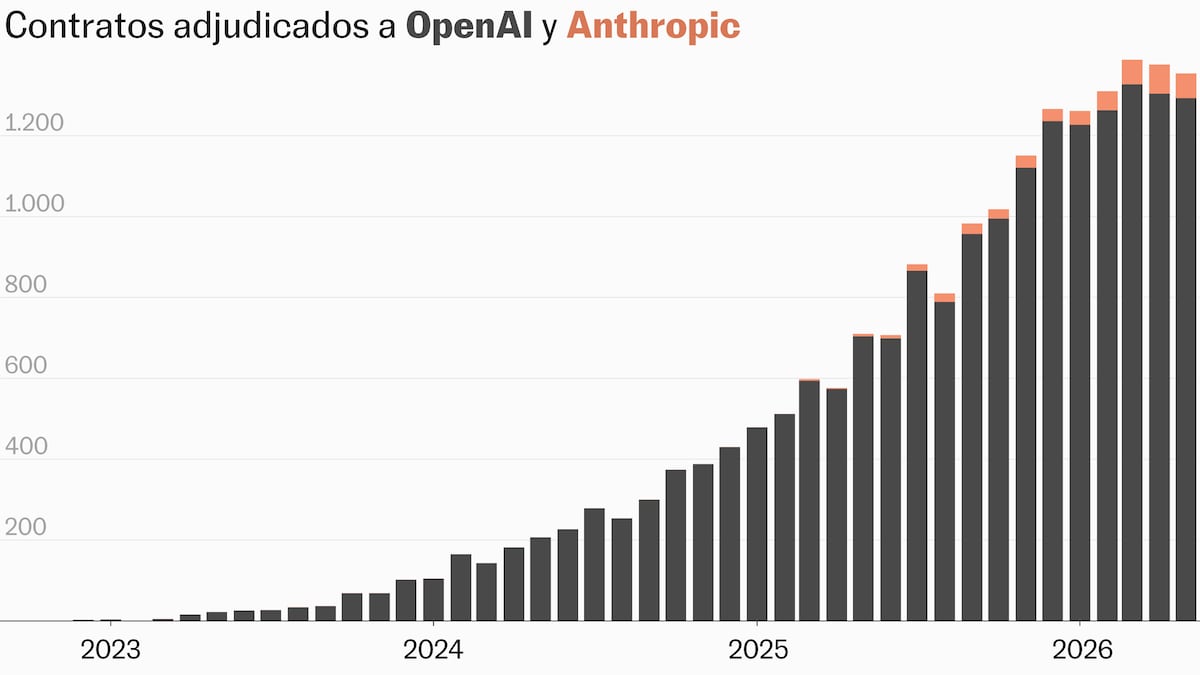
Recent data reveals a rapid acceleration in AI procurement. From a single contract in late 2022, the number of public sector agreements for these services has ballooned into the thousands. While individual contracts often appear modest, the trend signals a broader, systemic integration of AI into the daily workflows of civil servants, academics and municipal workers.
The first public sector contract for OpenAI-related services in Spain was signed just five days before the global public launch of ChatGPT. It was used by a public foundation to generate graphic assets for a digital conference.
Beyond the Hype: Where Is the Money Going?
While headlines often focus on massive multi-million euro infrastructure projects involving major tech firms like Indra or Telefónica, the current wave of AI adoption is different. It is decentralized, bottom-up, and highly practical.
Most of the current spending—exceeding €394,000 across hundreds of contracts—is driven by individual departments, universities, and small municipal bodies. For example, the Barcelona municipal services entity recently invested €70,000 for enterprise-grade access to optimize internal processes for everything from cemetery management to public bike-share systems.
The “Shadow IT” Factor
A significant portion of AI usage in the public sector remains hidden under broader software umbrellas. Many institutions purchase Google Workspace or Microsoft 365 licenses that include integrated AI features like Gemini or Copilot. Because these are bundled, the specific spend on “AI” is often obscured, making the true scale of adoption likely much higher than the public data suggests.
If your organization is exploring AI, don’t just look at standalone chatbot subscriptions. Audit your existing enterprise software licenses; you may already have access to powerful generative AI tools included in your current service packages.
Future Trends: Scaling from Experiments to Strategy
As we look toward the next few years, the “wild west” phase of individual subscriptions will likely give way to centralized, secure, and policy-driven AI deployment. Here is what to watch for:
- Standardized Procurement: Expect governments to move away from fragmented, individual subscriptions toward “Enterprise” agreements that offer better data privacy and compliance.
- Focus on Specialized Tasks: While general-purpose chatbots are popular now, the next phase will involve fine-tuned models trained on specific administrative regulations and local legal frameworks.
- Ethical Guardrails: As usage grows, public institutions will prioritize internal training to ensure that AI is used to augment—not replace—human judgment, particularly in sensitive decision-making roles.
Frequently Asked Questions (FAQ)
1. Are public administrations replacing staff with AI?
Current evidence suggests the opposite. Most institutions are using AI to handle repetitive tasks, data analysis, and documentation, allowing employees to focus on higher-value public services.
2. Is the data used in these chatbots secure?
This is a major concern. Many public entities are transitioning from consumer-grade versions to “Enterprise” editions, which offer significantly higher levels of data privacy and prevent the AI from training on sensitive public information.
3. Which AI tools are most popular in the public sector?
OpenAI’s ChatGPT currently leads the market, followed by Anthropic’s Claude. However, integrated AI tools from Microsoft (Copilot) and Google (Gemini) are seeing rapid growth due to their existing presence in office software suites.
What is your take on the role of AI in public governance? Are you seeing these tools being integrated in your workplace, or are you concerned about the privacy implications? Share your thoughts in the comments below or subscribe to our weekly tech policy digest for more updates on the digital transformation of the public sector.