
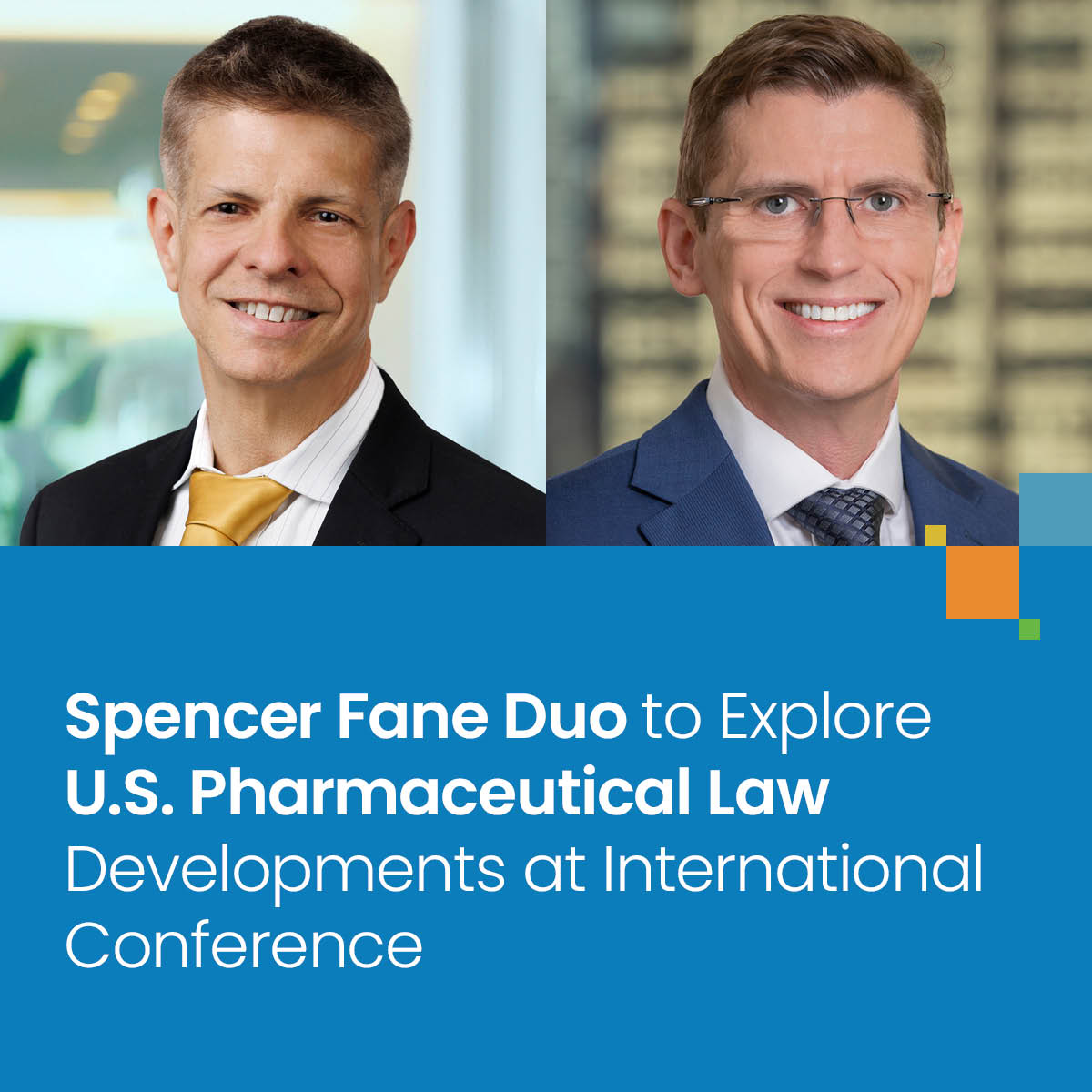
Spencer Fane Duo to Explore U.S. Pharmaceutical Law Developments at International Conference
The intersection of pharmaceutical law and healthcare access is taking centre stage at the Medicines for Europe 20th Legal Affairs Conference. Held on June 8-9 in Athens, Greece, the event serves as a critical junction for EU policymakers, industry leaders, and healthcare stakeholders.
Examining Two Decades of Pharmaceutical Policy
This annual gathering focuses on twenty years of European pharmaceutical law and policy. Discussions centre on generic and biosimilar drug products, as well as follow-on hybrid products, known in the U.S. As 505(b)(2) NDAs.
The conference agenda covers a broad spectrum of regulatory challenges. Key topics include patent quality, SPC updates, and the ongoing reform of pharmaceutical legislation.
U.S. Legal Developments and Global Impact
Attorneys Brian Malkin and Jeremy Lowe of Spencer Fane are leading a roundtable focused on U.S. Developments. Their discussion addresses the FDA’s skinny label dispute and the 2026 Appropriations Act.

The team is examining how the 2026 Appropriations Act affects generic drugs, specifically where identical inactive ingredients (Q1) and amounts (Q2) are essential to prove similarity. They are also analyzing the evolution of inter parte review of patents following the U.S. Patent and Trademark Office’s discretionary denial process.
Strategic Implications for Market Access
These legal shifts have direct consequences for patent strategy and market access for generic and biosimilar manufacturers. The outcomes of these disputes could influence how transatlantic regulatory alignment is handled in the future.
Brian Malkin and Jeremy Lowe, who co-lead the Life Sciences and FDA Market Team at Spencer Fane, provide the strategic counsel necessary to navigate these complexities. Jeremy Lowe further specializes in Hatch-Waxman and BPCIA litigation, as well as Federal Circuit appeals.
Potential Future Trajectories
As these legal challenges evolve, there may be a shift in how manufacturers approach patent strategy to avoid discretionary denials from the U.S. Patent and Trademark Office.
Future regulatory adjustments could lead to a more streamlined alignment between U.S. And European standards for biosimilars. This is likely to impact how follow-on hybrid products are developed and approved across different jurisdictions.
Frequently Asked Questions
What is the primary focus of the Medicines for Europe Legal Affairs Conference?
The conference explores two decades of European pharmaceutical law and policy, with a specific focus on generic drug products, biosimilars, and follow-on hybrid products.
How does the “skinny label” practice work?
It’s the practice of seeking FDA approval for a version of a branded drug that excludes, or “carves out,” uses that are still patented or protected from the drug’s label.
What role does the 2026 Appropriations Act play in generic drug manufacturing?
The Act has impacted generic drugs in cases where having the same inactive ingredients (Q1) in the same amounts (Q2) is critical to demonstrating similarity.
How do you think the balance between patent protection and generic drug accessibility affects patient care?